


The Role of Facials in Skin Health: A Complete Guide


Facials are defined as professional skin treatments that combine cleansing, exfoliation, extraction, hydration, and massage to improve skin function and appearance. The role of facials in skin health goes well beyond a relaxing spa visit. These treatments actively stimulate circulation, remove cellular debris, and prepare your skin to absorb the products you use every day. Dermatologists consistently recommend professional facials as a complement to daily skincare, not a replacement for it. This guide explains exactly how facials work, which types address which concerns, and how to build them into a routine that delivers real, lasting results.
How do facials improve skin health immediately and over time?
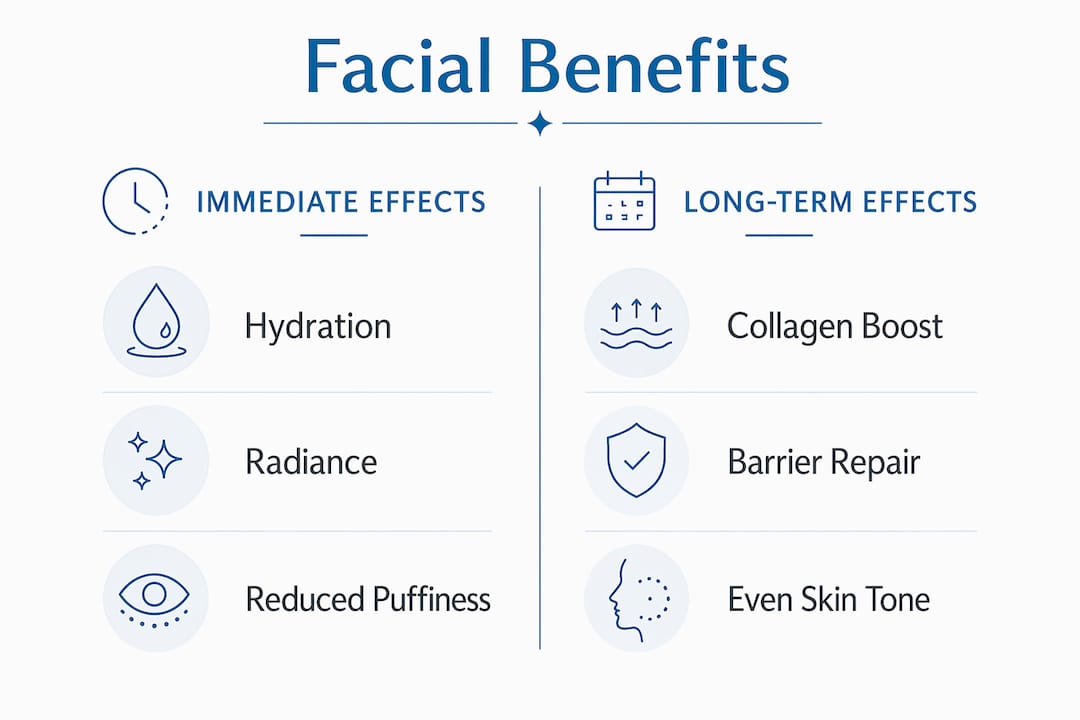
Facials deliver two distinct categories of benefit: immediate effects you see the same day, and cumulative improvements that build over weeks of consistent treatment. Understanding both helps you set realistic expectations and commit to the right schedule.
Immediate effects after a single treatment
Facials provide visible improvements such as increased hydration, reduced puffiness, and enhanced radiance, with some effects continuing to develop for up to 7 days after treatment. The glow you notice walking out of the spa is real, but it is only the beginning of what the treatment does. Facial massage stimulates blood flow, delivering oxygen and nutrients directly to skin cells. That surge in microcirculation is the primary driver of the instant brightness most people notice.
The extraction and exfoliation steps clear congested pores and remove the layer of dead cells sitting on the surface. This physical clearing reduces dullness and allows light to reflect more evenly off the skin. Steam softens the skin before extraction, making the process more effective and less irritating than attempting it at home.

Long-term benefits tied to the skin’s renewal cycle
The skin completes a full cell turnover cycle roughly every 28 days. Collagen synthesis and barrier repair require consistent treatments every 4–6 weeks to produce lasting improvements. A single facial gives you a clean, bright surface. Monthly facials rebuild the structural quality of the skin over time.
“Consistent monthly facials act like a fitness routine for your skin, improving resilience and preventing visible skin problems over time.” — TheBeautyFoodie
This comparison is accurate and useful. Just as one gym session improves your mood but not your fitness, one facial refreshes your skin but does not rebuild it. The cumulative effects include stronger barrier function, improved collagen density, and reduced frequency of breakouts.
Hydration: Masks and serums applied during facials penetrate more deeply than products applied to uncleaned skin at home.
Circulation: Regular massage during facials trains the skin’s vascular response over time.
Cell renewal: Consistent exfoliation accelerates the removal of older, damaged cells.
Barrier repair: Targeted treatments rebuild lipid layers compromised by sun, pollution, or harsh products.
What types of facial treatments are available for different skin concerns?
Different facial types target specific concerns such as acne, pigmentation, dryness, and aging, and choosing the right one requires a professional assessment of your skin. The market offers dozens of options, but most fall into a handful of categories that address distinct skin goals.
Common facial types and what they do
HydraFacial uses a patented vortex suction system to cleanse, exfoliate, and infuse serums simultaneously. It suits nearly every skin type and is particularly effective for dehydration and fine lines. Chemical peels use acids such as glycolic, lactic, or salicylic acid to dissolve dead cell bonds and resurface the skin. They address pigmentation, acne scarring, and uneven texture more aggressively than physical exfoliation alone. Hydrating facials focus on moisture delivery through hyaluronic acid, ceramide-rich masks, and gentle massage. They work best for dry or sensitized skin. Acne-focused facials combine salicylic acid cleansing, extractions, and antibacterial masks to reduce active breakouts and prevent new ones.
Facial type | Primary concern | Key benefit | Typical frequency |
HydraFacial | Dehydration, fine lines | Deep cleanse and serum infusion | Every 4–6 weeks |
Chemical peel | Pigmentation, texture | Resurfacing and cell renewal | Every 6–8 weeks |
Hydrating facial | Dryness, sensitivity | Moisture restoration | Every 4–6 weeks |
Acne facial | Active breakouts, congestion | Extraction and antibacterial treatment | Every 3–4 weeks |
Anti-aging facial | Fine lines, firmness | Collagen stimulation and lifting | Every 4–6 weeks |
Choosing between these options is not a matter of personal preference alone. Your skin type, current concerns, and lifestyle all affect which treatment delivers the best outcome. A professional skin assessment before your first facial prevents the common mistake of choosing a treatment based on marketing rather than skin biology.
Oily or acne-prone skin benefits most from salicylic-based cleansing and extractions.
Dry or mature skin responds better to enzyme exfoliation and hyaluronic acid infusion.
Sensitive skin requires patch testing and fragrance-free formulations.
Combination skin often needs a customized approach that addresses multiple zones differently.
Pro Tip: Ask your esthetician to map your skin zones before selecting a facial. A treatment that targets your T-zone differently from your cheeks produces far better results than a one-size-fits-all approach.
How often should you get facials for the best results?
Professional facial frequency of once every 4–6 weeks aligns with the skin’s natural 28-day regeneration cycle and prevents barrier compromise. This interval is not arbitrary. It gives the skin enough time to complete one full renewal cycle before the next treatment clears the way for the next one.
Risks of going too often or too infrequently
Facials done more often than every 4 weeks risk skin irritation and damage to the protective barrier. Over-treatment strips the skin of its natural oils and disrupts the microbiome, leading to increased sensitivity and breakouts. The skin needs recovery time to rebuild what the treatment stimulates. Going too infrequently, on the other hand, allows dead cell buildup and congestion to return fully before the next session, reducing the compounding benefit of regular care.
Chemical peels are the main exception to the 4–6 week rule. Deeper peels require 6–8 weeks between sessions because the resurfacing process is more intensive and the recovery period longer. Lighter enzyme peels can be done more frequently, sometimes every 2–3 weeks, depending on skin tolerance.
Schedule facials at the end of your skin’s renewal cycle, roughly every 4–6 weeks.
Book chemical peels every 6–8 weeks to allow full recovery.
Reduce frequency during periods of active skin sensitivity or after sun exposure.
Increase frequency temporarily when addressing a specific concern like pre-event preparation or acne flare-ups, but only under professional guidance.
Pro Tip: Mark your facial appointments on a calendar the same way you schedule a dentist visit. Treating it as routine maintenance rather than an occasional treat is what produces visible, lasting change.
Integrating facials with your daily skincare routine amplifies both. Use gentler products in the 48 hours before and after a facial to avoid compounding the exfoliation effect.
Do facials make your at-home skincare products work better?
Professional facials enhance the absorption of active ingredients from daily skincare by deeply cleansing and removing surface barriers like dead cells. This is one of the most underappreciated benefits of regular facial treatments. When dead cells, sebum, and environmental debris sit on the skin’s surface, they physically block serums and moisturizers from reaching the living layers where they do their work.
The clean slate effect
Facials create what practitioners describe as a clean slate. The exfoliation and extraction steps remove the physical barriers that reduce product penetration. After a facial, the same serum you apply every night reaches deeper into the skin and produces a stronger response. Removing dead cells and debris allows serums and moisturizers to act more effectively on the skin below.
This effect is especially significant for active ingredients like retinol, vitamin C, and hyaluronic acid. These molecules need direct contact with living skin cells to trigger the responses they are formulated to produce. A congested surface dilutes their impact. A freshly treated surface maximizes it.
Vitamin C serums penetrate more deeply after exfoliation, producing stronger brightening effects.
Retinol reaches the dermis more efficiently when the stratum corneum is clear of buildup.
Hyaluronic acid binds more water when applied to clean, freshly treated skin.
SPF applied after a facial adheres more evenly, improving sun protection coverage.
The relationship between professional facials and at-home products is not competitive. It is additive. Regular facials make your existing skincare investment work harder. For those managing specific concerns like post-acne marks or early signs of aging, this amplification effect is the difference between slow progress and visible results. Pairing facial oils for aging skin with regular professional treatments creates a compounding benefit that neither approach achieves alone.
Key Takeaways
Facials improve skin health through a combination of deep cleansing, circulation stimulation, and barrier repair, with lasting results requiring consistent treatment every 4–6 weeks aligned to the skin’s natural renewal cycle.
Point | Details |
Immediate and cumulative benefits | Facials deliver visible glow within hours, but collagen and barrier repair require monthly consistency. |
Frequency matters | Treat every 4–6 weeks to match the 28-day cell cycle without damaging the skin barrier. |
Treatment type selection | Choose facials based on your specific skin concern, not general popularity or marketing. |
Product absorption boost | Facials remove surface barriers, allowing serums and moisturizers to penetrate more effectively. |
Professional assessment first | A skin assessment before your first facial prevents mismatched treatments and wasted investment. |
Why I think most people underestimate what facials actually do
Most clients walk in expecting a facial to fix something. They walk out glowing and assume the job is done. That single-session mindset is the biggest obstacle to real skin improvement I see at Luxveritae.
The glow after one facial is real, but it is surface-level. The deeper work, collagen stimulation, barrier repair, and lasting clarity, only happens when treatments are spaced consistently over months. I have seen clients with persistent dullness and congestion transform their skin in three to four months simply by committing to a monthly schedule and adjusting their home routine to match.
The other misconception I encounter constantly is that more aggressive treatments produce faster results. They do not. Stripping the skin with overly frequent peels or harsh extractions sets back the barrier and creates the sensitivity people are trying to avoid. Patience and consistency outperform intensity every time.
One practical tip I give every client: treat your facial appointment as the anchor of your skincare month, not an add-on. Schedule it, protect the 48 hours before and after with gentle products, and let the treatment do its work. The results speak for themselves within two to three cycles.
— Lux
Personalized facial treatments at Luxveritae
Luxveritae offers customized facial treatments designed around your specific skin type, concerns, and goals, not a generic menu of options.

Whether you are managing acne, early signs of aging, or persistent dullness, the team at Luxveritae builds a treatment plan that matches your skin’s actual needs. Signature services like BB Glow combine the benefits of a traditional facial with targeted radiance enhancement for results that last beyond the treatment day. For clients ready to commit to consistent skin health improvement, treatment packages offer structured care at a frequency that aligns with your skin’s renewal cycle. Book your consultation and start with a professional skin assessment that takes the guesswork out of choosing the right treatment.
FAQ
What is the role of facials in skin health?
Facials cleanse, exfoliate, stimulate circulation, and improve product absorption, making them a core component of long-term skin maintenance rather than a cosmetic luxury.
How often should you get a facial for best results?
Dermatologists recommend once every 4–6 weeks to align with the skin’s 28-day regeneration cycle and avoid barrier damage from over-treatment.
Are facials good for acne-prone skin?
Yes. Acne-focused facials use salicylic acid cleansing and targeted extractions to reduce active breakouts and prevent new congestion, making them effective for managing acne when done at the right frequency.
Do facials help anti-aging?
Regular facials stimulate collagen synthesis and repair the skin barrier, both of which reduce the appearance of fine lines and improve skin firmness over time with consistent treatments.
Can facials improve how well my skincare products work?
Yes. By removing dead cells and surface debris, facials allow active ingredients like retinol and vitamin C to penetrate more deeply and produce stronger results from your existing routine.
Recommended
Comments