


Medical-Grade Skin Correction: What It Is and How It Works

Medical-grade skin correction is defined as the use of clinically formulated products and professional treatments designed to produce measurable biological changes in the skin. Unlike standard drugstore skincare, this approach targets the deeper dermal layers where collagen synthesis, melanin regulation, and cell renewal actually occur. Active ingredients like retinoids, stabilized vitamin C, and pharmaceutical-grade acids work at concentrations that over-the-counter products simply cannot match. The result is real, lasting improvement in concerns like scars, discoloration, and visible aging signs, not just a temporary surface glow.
What is medical-grade skin correction, and how does it differ from regular skincare?
Medical-grade skin correction, also called paramedical or corrective skincare, is built on one core principle: ingredients must reach the skin layers where change happens. The FDA does not officially recognize a “medical-grade” category for skincare products. That matters because the term is used by industry professionals to describe formulations with higher active concentrations and clinical evidence behind them, not a regulated government standard.
What separates these products from what you find at a pharmacy comes down to formulation science. Medical-grade products use active ingredients at clinically validated concentrations, with delivery systems engineered for optimal skin absorption. Encapsulation technology, pH optimization, and stabilized ingredient forms are standard in this category. A retinol serum from a drugstore shelf and a retinoid prescribed or dispensed through a skin professional are not the same product, even if they share a name.

Distribution is another key difference. Medical-grade formulations are typically sold through licensed providers, dermatology offices, or certified skin spas. That gatekeeping exists for a reason. Higher concentrations of acids and actives like retinol require professional guidance because misuse can cause irritation or compromise the skin barrier.
Pro Tip: When evaluating any “medical-grade” product, ask the provider for the clinical studies behind it. Legitimate formulations have documented biological outcomes, not just marketing language.
How medical-grade products compare to over-the-counter options
Feature | Medical-Grade Products | Over-the-Counter Products |
Active ingredient concentration | Clinically validated, higher strength | Lower, regulated for general public safety |
Delivery system | Encapsulation, pH-optimized | Standard formulation |
Clinical evidence | Supported by outcome studies | Often limited or absent |
Distribution | Through licensed professionals | Retail, no oversight |
Skin penetration depth | Dermal layer targeted | Primarily surface level |
Over-the-counter products tend to offer surface-level improvements and often lack the ingredient stability found in professional formulations. That is not a flaw in every drugstore product. It is a safety design. The gap becomes significant when you are addressing persistent discoloration, acne scarring, or structural aging changes that require deeper intervention.
How do professional skin correction treatments work?
Professional skin correction treatments accelerate what medical-grade products begin at home. Corrective facials, chemical peels, dermaplaning, ultrasound therapy, and laser resurfacing each work by triggering the skin’s repair mechanisms. The goal is to stimulate collagen production, regulate pigmentation, and speed up cell turnover in a controlled clinical setting.
One biological fact drives the entire logic of professional treatment schedules. Skin cell turnover slows from roughly 28 days in people in their 20s to nearly 60 days by age 50. That means older skin takes twice as long to shed damaged cells and generate new ones. Professional treatments compensate for that slowdown by manually triggering renewal cycles the skin can no longer complete on its own schedule.
Corrective facials and chemical peels address acne, uneven hydration, pigmentation, and fine lines using pharmaceutical-grade ingredients combined with antioxidants and botanical actives. These are not spa relaxation treatments. They are targeted clinical interventions with specific biological goals.
What a professional skin correction protocol looks like
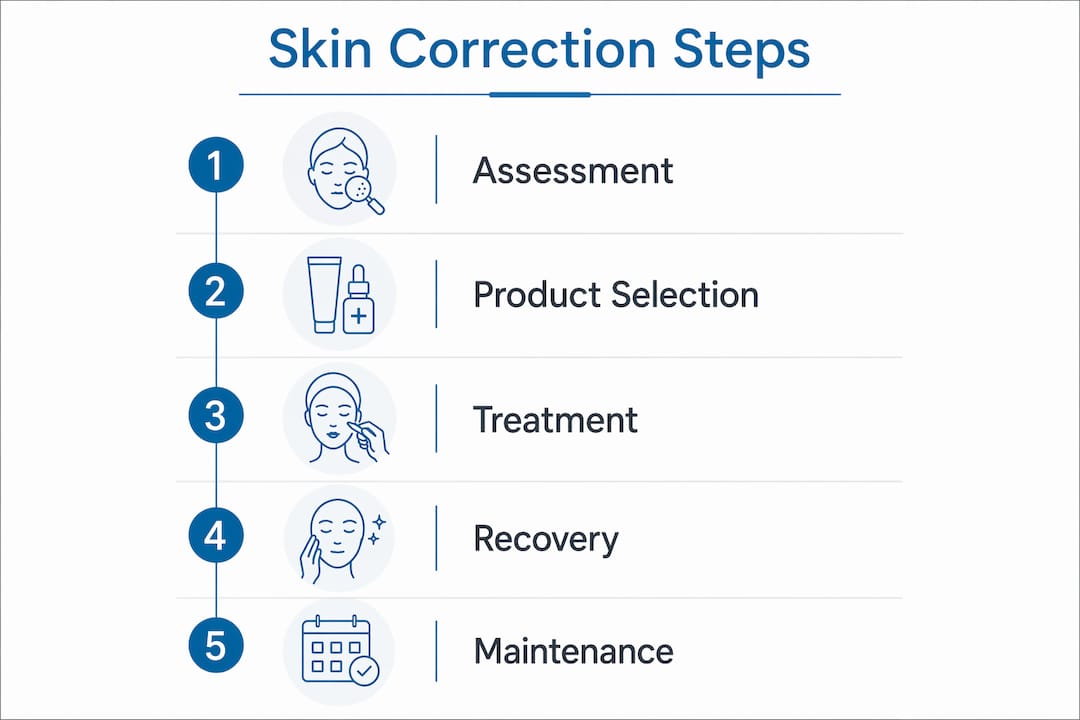
Skin assessment. A licensed provider evaluates skin type, barrier health, and specific concerns before recommending any treatment.
Initial treatment session. The first session establishes a baseline response and identifies how the skin reacts to active ingredients.
Series of corrective sessions. Optimal results typically require 3–6 treatment sessions spaced 10–14 days apart. That spacing allows the skin to recover and respond between sessions without being overwhelmed.
Home care integration. Medical-grade products used between sessions maintain and extend in-clinic results.
Maintenance plan. After the initial series, periodic sessions sustain improvements and address new concerns as they develop.
Pro Tip: One corrective facial produces immediate brightness, but substantial long-term improvements require the full series. Book the complete protocol upfront, not session by session.
Medical-grade results vs. over-the-counter skincare: what the evidence shows
The core difference between medical-grade skin correction and standard skincare is physiological depth. Medical-grade skincare targets long-term outcomes like collagen density and melanin regulation rather than immediate surface effects. A brightening moisturizer from a retail store can improve how skin looks today. A corrective protocol with clinically validated actives changes how skin functions over months.
Clinical evidence backs specific outcomes. Wrinkle reduction, pigmentation correction, and scar remodeling are documented results of professional-grade protocols, not marketing promises. The catch is that professional guidance is required to achieve those outcomes. Without a customized treatment plan and consistent adherence, even the most potent products produce negligible results.
Cost is a real consideration. Medical-grade products and professional sessions carry a higher price than retail alternatives. The investment makes sense when the concern is clinical, meaning scarring, chronic discoloration, or structural aging changes that do not respond to standard care. For general skin maintenance, a well-formulated retail routine may be sufficient.
A common misconception is that buying a product labeled “medical-grade” is enough. The label alone means nothing without a professional assessment. Dermatology specialists note that medical-grade formulations offer more efficacious and stabilized ingredients, but they are not the only path to healthy skin, and skin barrier compatibility matters as much as ingredient strength.
Benefits of skin correction at the clinical level
Addresses concerns that do not respond to retail products, including post-acne scarring and melasma
Produces measurable changes in collagen density and skin texture over a treatment series
Reduces the risk of product misuse through professional oversight and customized protocols
Supports non-surgical skin rejuvenation without the recovery time of invasive procedures
Creates a documented baseline for tracking skin improvement over time
Who should consider medical-grade skin correction?
Medical-grade skin correction is best suited for people with specific, persistent skin concerns that have not responded to standard care. Ideal candidates include those dealing with post-acne scarring, hyperpigmentation, melasma, uneven skin texture, or visible signs of aging like fine lines and loss of firmness. People with mature skin benefit significantly because the slowdown in cell turnover makes professional intervention more necessary with age.
Skin type, barrier health, and sensitivity all shape which protocols are appropriate. Someone with a compromised skin barrier needs a different starting point than someone with resilient, oily skin. A professional consultation is not optional in this process. It is the step that determines whether the treatment plan will produce results or cause setbacks.
Integrating medical-grade correction with daily skincare requires discipline. Daily broad-spectrum SPF is non-negotiable throughout any corrective protocol. Active ingredients like retinoids and acids increase photosensitivity, and sun exposure without protection will undo clinical improvements faster than any treatment can produce them.
Choosing a reputable provider matters as much as choosing the right treatment. Look for licensed estheticians or paramedical skin specialists with documented training in corrective protocols. Ask about the specific products used, the clinical rationale behind the treatment plan, and what results are realistic for your skin type and concern. Providers who offer a thorough skin assessment before recommending any service are the ones worth trusting.
Key Takeaways
Medical-grade skin correction produces lasting results only when clinically validated products are combined with professional treatment protocols and consistent home care.
Point | Details |
Definition matters | Medical-grade refers to clinically validated ingredient concentrations, not an FDA-regulated category. |
Treatments require a series | Optimal results need 3–6 sessions spaced 10–14 days apart, not a single visit. |
Age affects cell turnover | Skin renewal slows from 28 days in your 20s to 60 days by 50, making professional treatment more critical with age. |
Professional guidance is required | Higher-strength actives cause damage without oversight; a customized plan is the difference between results and setbacks. |
SPF is part of the protocol | Daily broad-spectrum sunscreen protects and sustains every clinical improvement made during treatment. |
What I have learned from watching clients commit to corrective protocols
The most common mistake I see is treating medical-grade skin correction like a product purchase rather than a process. People invest in a high-potency serum, use it inconsistently for three weeks, and then conclude it did not work. That is not a product failure. That is a protocol failure.
Structural changes like collagen density take months to develop. The skin does not remodel itself on a four-week timeline because a label promises it will. What I have found is that the clients who see the most meaningful improvements are the ones who commit to the full series, follow the home care plan, and wear SPF every single day without exception.
The other thing worth saying plainly: “medical-grade” is partly a marketing term. The true success of any corrective protocol depends on safe layering of potent actives under professional guidance, not on the label on the bottle. I have seen well-designed retail routines outperform poorly supervised medical-grade regimens. The professional relationship is what makes the difference, not the price point alone.
My honest recommendation: prioritize the consultation over the product. A skilled provider who understands your skin’s biology will always outperform the most expensive serum used without direction.
— Lux
Skin correction treatments at Luxveritae, personalized for your skin
Luxveritae offers customized skin correction protocols that combine medical-grade products with targeted corrective treatments, including chemical peels, corrective facials, and specialized services for discoloration and aging concerns.

Every treatment plan at Luxveritae starts with a thorough skin assessment. That assessment determines which actives, delivery methods, and session schedules will produce real results for your specific concerns, whether that is post-acne scarring, uneven tone, or fine lines. Luxveritae’s BB Glow facial and corrective facial services use pharmaceutical-grade formulations applied by certified professionals. For persistent discoloration, the under-eye lightening treatment offers a targeted approach that standard skincare cannot replicate. Book your consultation and get a protocol built around your skin, not a generic routine.
FAQ
What is medical-grade skin correction, exactly?
Medical-grade skin correction uses clinically formulated products and professional treatments to produce measurable biological changes in the skin. It targets collagen synthesis, melanin regulation, and cell renewal at the dermal level, not just the surface.
Is “medical-grade” skincare regulated by the FDA?
The FDA does not officially recognize or regulate the term “medical-grade” for skincare. The label is used by industry professionals to describe products with higher active concentrations and clinical evidence, typically distributed through licensed providers.
How many sessions does skin correction require?
Most corrective protocols require 3–6 treatment sessions spaced 10–14 days apart for lasting results. A single session produces temporary brightness but does not create the structural skin changes that a full series achieves.
Who benefits most from professional skin correction treatments?
People with persistent concerns like acne scarring, hyperpigmentation, melasma, or visible aging signs benefit most. Those over 35 see particular value because slower cell turnover makes professional intervention more effective than home care alone.
Can I do medical-grade skin correction at home?
Home use of medical-grade products is possible but requires professional guidance. Higher concentrations of retinoids and acids cause irritation or barrier damage without proper oversight, and results without a structured protocol are typically minimal.
Recommended
Comments