


Why Scars Change Color Over Time: A Clear Guide

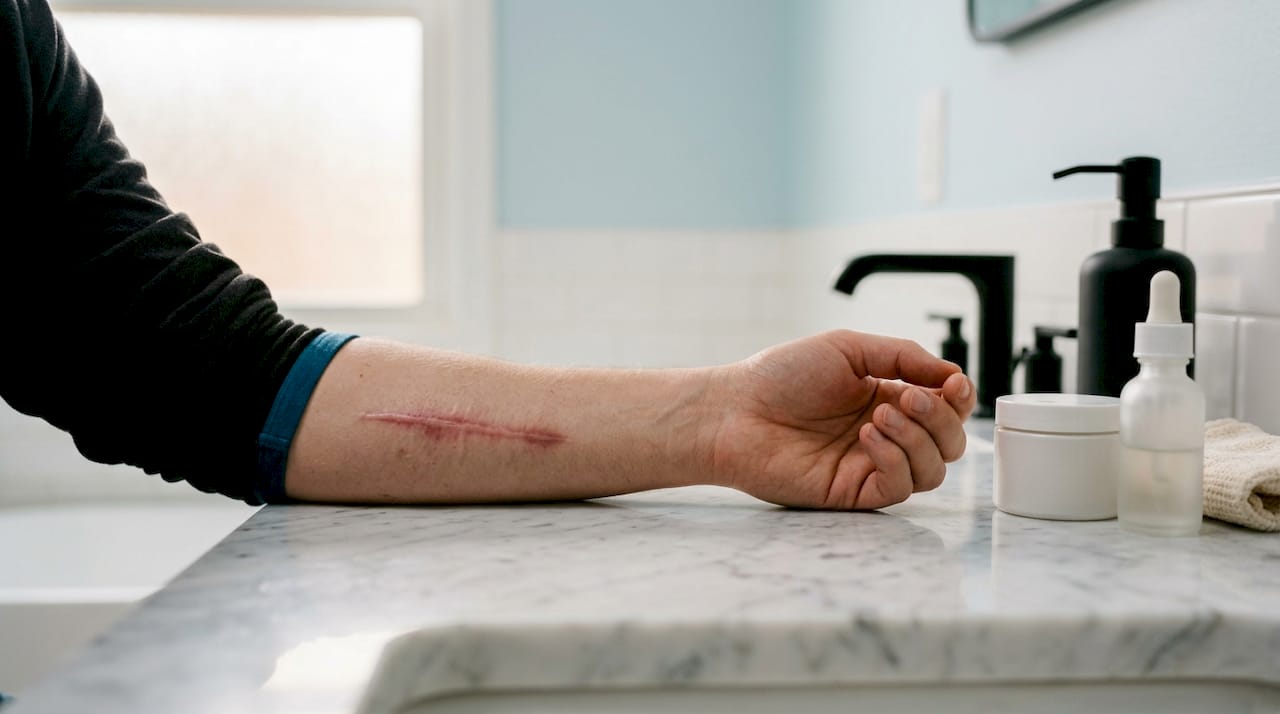
Scar color change is defined as the progressive shift in pigmentation that occurs as your skin repairs damaged tissue through distinct biological phases. The process behind why scars change color over time is not random. Red and purple tones appear first because new blood vessels flood the wound site during active healing. Brown or gray discoloration follows when melanin production spikes during tissue maturation. Understanding these phases, and the external factors that speed up or slow them down, gives you real control over how your scar looks months and years from now.
Why do scars change color over time?
Scars fall into two main color categories: vascular and pigmented. Vascular scars are red or purple due to blood vessel activity, while pigmented scars are brown or gray due to melanin produced during healing. Both types follow a predictable biological timeline, though the exact pace varies by person.
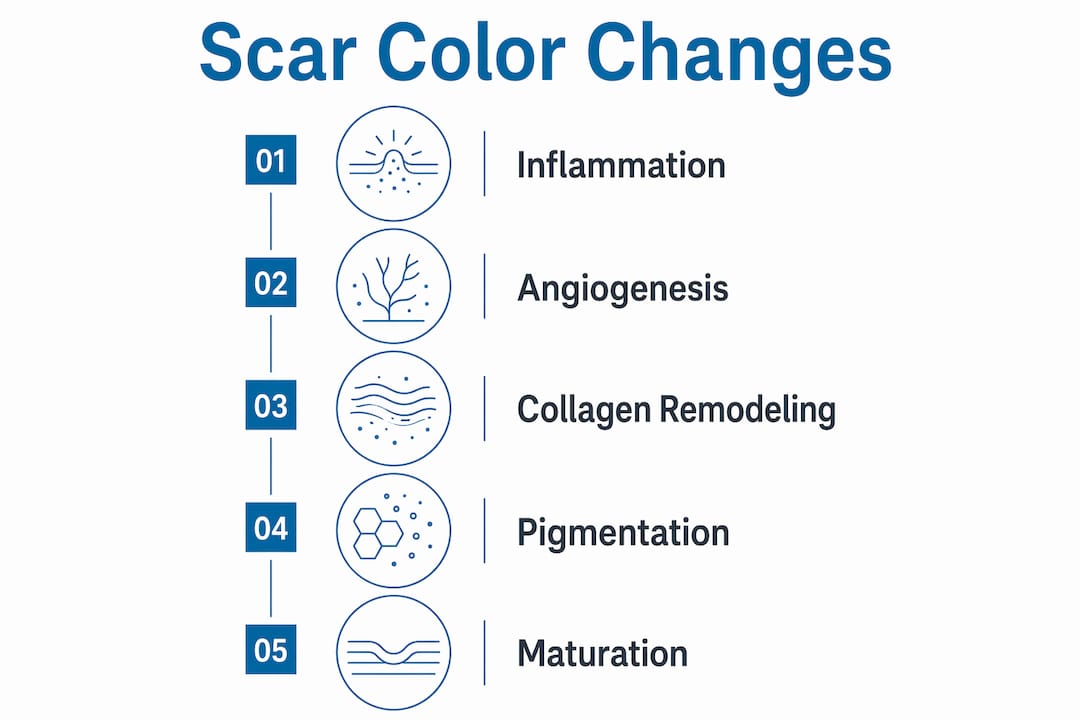
The moment skin is injured, your body launches an inflammatory response. Blood vessels multiply to deliver oxygen and repair cells to the wound. That surge of circulation is what makes a fresh scar look red, pink, or even deep purple. The color is not a sign of infection. Purple or red scars indicate healthy increased blood flow and active collagen remodeling. Think of it as your body’s construction crew working at full capacity.

As the wound closes and collagen fibers organize, blood vessel density gradually decreases. The red fades. For most people, this vascular phase winds down within 6 to 18 months. What replaces it depends heavily on skin tone, sun exposure, and how the wound was cared for during healing.
What causes the red, pink, and purple colors in early scars?
The redness in a new scar comes directly from angiogenesis, the formation of new blood vessels. These vessels are immature and lack the muscular walls that normal vessels have. That structural difference makes them reactive.
Scar redness fluctuates with core temperature, exercise, and alcohol intake because those immature vessels cannot regulate blood flow the way mature ones can. A hot shower, a workout, or a glass of wine can make a scar flush noticeably darker for an hour or two. This is temporary and does not mean healing has reversed.
Key triggers that intensify vascular scar color include:
Heat exposure (hot showers, saunas, direct sunlight)
Aerobic exercise that raises core body temperature
Alcohol consumption, which dilates blood vessels
Emotional stress, which triggers the same vascular response
Most scar redness fades between 6 and 18 months as blood vessel density normalizes. That timeline means patience is not optional during the first year. Treating a vascular scar too aggressively before it matures can disrupt the healing process and worsen the final appearance.
Pro Tip: If your scar flushes red after exercise or heat, apply a cool compress for a few minutes. This temporarily constricts the immature vessels and reduces visible redness without interfering with healing.
Why do scars develop brown or dark pigmentation?
Brown or gray scar discoloration is called post-inflammatory hyperpigmentation, or PIH. It occurs when melanocytes, the cells that produce skin pigment, become overactive during the healing process. The body interprets injury as a signal to ramp up melanin production, and sometimes that response overshoots.
Darker skin tones classified as Fitzpatrick types IV through VI carry a higher risk of permanent dyschromia from scarring. That is not a flaw in darker skin. It reflects the fact that melanocytes in higher-Fitzpatrick skin are more active overall, which means any inflammatory trigger produces more pigment. The same wound that leaves a faint pink mark on very fair skin may leave a visible brown patch on medium or deep skin tones.
Sun exposure makes PIH significantly worse. Unprotected UV exposure activates melanocytes within scar tissue, locking pigment in place and making it far harder to treat later. A scar that might have faded on its own in 12 months can become a permanent dark spot if left unprotected during the healing window.
Factors that increase the risk of brown scar discoloration include:
Medium to deep skin tone (Fitzpatrick IV–VI)
Sun exposure during or immediately after healing
Picking or irritating the wound during the scabbing phase
Hormonal fluctuations that increase baseline melanin activity
Brown pigmentation generally takes 12 to 24 months to mature and may persist beyond two years without intervention. Silicone gels and broad-spectrum SPF 30 or higher applied daily are the two most evidence-supported preventive tools for managing PIH during this window. You can learn more about treating hyperpigmentation professionally if home care is not producing results.
Pro Tip: Apply a broad-spectrum sunscreen to your scar every morning, even on cloudy days or when indoors near windows. UV light penetrates glass and continues to stimulate melanin production long after the wound has closed.
How do external and internal factors influence scar color over months and years?
Scar color is not fixed once the initial healing phases end. Scar maturation is dynamic and can be affected years later by hormonal changes, aging, and environmental exposure. A scar you thought had fully settled can shift in color again when your body changes.
The following factors drive long-term scar color changes:
Sun exposure. UV radiation remains the single most powerful external trigger for scar pigmentation at any stage of healing. Even a mature scar can darken after repeated unprotected sun exposure because the melanocytes in scar tissue remain more reactive than those in surrounding skin.
Hormonal changes. Pregnancy, menopause, and hormonal contraceptives all alter melanin regulation throughout the body. A scar that was nearly invisible can become noticeably darker during pregnancy and may or may not return to its previous shade afterward.
Temperature and lifestyle. Exercise, alcohol, and heat continue to affect vascular scars for as long as the blood vessels within them remain immature. For some scars, this reactivity persists for several years.
Aging. As skin thins and loses collagen with age, older scars can become more visible or shift in tone. Scar collagen architecture is permanent and disorganized, meaning the underlying structure never normalizes. Changes in the surrounding skin make that structural difference more apparent over time.
Skin care routine. Consistent use of SPF, gentle exfoliation, and targeted treatments like vitamin C serums or retinoids can slow or reverse pigment buildup in mature scars. Neglecting skin care accelerates discoloration.
Understanding these triggers gives you real leverage. You cannot change your skin tone or stop aging, but you can control sun protection, manage lifestyle factors, and time treatments strategically. Reviewing a skin types treatment checklist is a practical starting point for building a routine that accounts for your specific risk profile.
What treatment options help manage scar color changes?
Treatment timing matters as much as treatment choice. Intervening too early, before a scar has completed its vascular phase, can disrupt healing and produce worse discoloration. The general rule is to wait at least 6 months before pursuing professional treatment for a red or pink scar.
Laser therapy for vascular scars requires multiple sessions spaced 4 to 8 weeks apart. Corticosteroid injections for raised or keloid scars are typically administered monthly for up to 6 months. Neither approach is a single-session fix, and both carry a risk of permanent color changes if applied incorrectly or too early.
Treatment type | Best for | Timing |
Pulsed dye laser | Red or purple vascular scars | After 6 months of healing |
Corticosteroid injections | Raised, keloid, or hypertrophic scars | Monthly, up to 6 months |
Silicone gel or sheets | All scar types, preventive use | Start as soon as wound closes |
Broad-spectrum SPF | Pigmented scars, all skin tones | Daily from day one of healing |
Chemical peels or retinoids | Brown or gray PIH | After scar is fully closed |
For people exploring non-invasive skin treatment options, there are effective approaches that do not require downtime. Silicone gels, SPF, and vitamin C serums address pigment at the surface level and work well as standalone care for mild discoloration. Professional laser resurfacing is the stronger option for persistent vascular or pigmented scars that have not responded to home care after 12 months.
Pro Tip: Do not judge a scar’s final appearance before the 18-month mark. Many scars that look dark or raised at 6 months fade significantly on their own by month 18 with consistent SPF and silicone use alone.
Key Takeaways
Scar color changes are driven by biology, and managing them well requires understanding the vascular and pigmented phases, protecting skin from UV exposure, and timing any professional treatment correctly.
Point | Details |
Two color phases exist | Vascular (red/purple) and pigmented (brown/gray) phases follow distinct biological timelines. |
Redness fades in 6–18 months | Most vascular scar redness resolves naturally within 18 months without intervention. |
Sun exposure locks in pigment | Unprotected UV exposure activates melanocytes in scar tissue, making brown discoloration harder to treat. |
Darker skin tones carry higher risk | Fitzpatrick types IV–VI are more prone to lasting pigment changes and need earlier preventive care. |
Treatment timing is critical | Waiting at least 6 months before professional treatment prevents disrupting the natural healing process. |
What I’ve learned from watching scars heal over years
Most people come in worried that their scar is getting worse. What they are actually seeing is the normal progression from the vascular phase into the pigmented phase. The color shift from red to brown feels alarming, but it is biology doing exactly what it should.
The mistake I see most often is impatience. People want to treat a scar at the 2-month mark, when it is still actively healing. Aggressive treatment at that stage can cause more damage than the original wound. The first 6 months call for protection, not intervention.
Scar maturation remains dynamic long after most people assume healing is done. I have seen scars darken during pregnancy in people who had stable, faded scars for years. That is not a failure of previous care. It is the body responding to hormonal shifts that reactivate melanin production. Knowing that in advance changes how you approach long-term scar management.
Sun protection is the single most underused tool in scar care. People apply SPF to their face and forget the scar entirely. That one gap in a daily routine can undo months of fading. If I could give one piece of advice to anyone managing a pigmented scar, it would be this: treat your scar like the most sun-sensitive spot on your body, because during healing, it is.
— Lux
Scar color improvement at Luxveritae
Persistent scar discoloration responds well to professional care when the timing and approach are right.
At Luxveritae, treatments are tailored to your skin tone, scar type, and healing stage. Whether you are dealing with a red vascular scar that has not faded or brown post-inflammatory pigmentation that home care has not shifted, the team builds a plan around your specific situation. Pigment correction services and skin brightening treatments address discoloration at multiple depths. For targeted work on stubborn dark areas, under-eye and pigment lightening treatments offer precise correction. Browse the full range of available treatment packages or book a consultation to get a personalized assessment.
FAQ
Why do scars change color over time?
Scars change color because healing progresses through distinct biological phases. The vascular phase produces red and purple tones from new blood vessels, while the pigmented phase produces brown or gray tones from melanin overproduction.
Do all scars eventually fade to skin tone?
Not all scars fade completely. Most vascular scars fade significantly within 6 to 18 months, but pigmented scars, especially in darker skin tones, can persist for 24 months or longer and may require professional treatment.
Why does my scar turn red during exercise?
Immature blood vessels in scar tissue lack the muscular control of normal vessels, so they dilate more easily in response to heat, exercise, and alcohol. The redness is temporary and fades once your body temperature normalizes.
Why do stretch marks change color over time?
Stretch marks follow a similar pattern to scars. They appear red or purple when the dermis is actively stretching and blood vessels are disrupted, then fade to white or silver as the tissue matures and blood vessel activity decreases.
Can a fully healed scar change color years later?
Yes. Scar color can shift long after initial healing due to hormonal changes, pregnancy, aging, or repeated sun exposure. Scar tissue remains structurally different from normal skin and continues to respond to internal and external triggers indefinitely.
Recommended
Comments