


What Does Skin Photoaging Mean for Your Skin?

Skin photoaging is defined as the premature aging of skin caused by chronic exposure to ultraviolet (UV) radiation, producing visible changes that go well beyond what natural aging alone creates. Up to 90% of visible aging in sun-exposed areas like the face, neck, and hands results from UV damage, not the passage of time. That single fact reframes how most people think about wrinkles, dark spots, and sagging skin. Understanding what skin photoaging means is the first step toward protecting what you have and addressing what has already changed.
What does skin photoaging mean, and how is it different from normal aging?
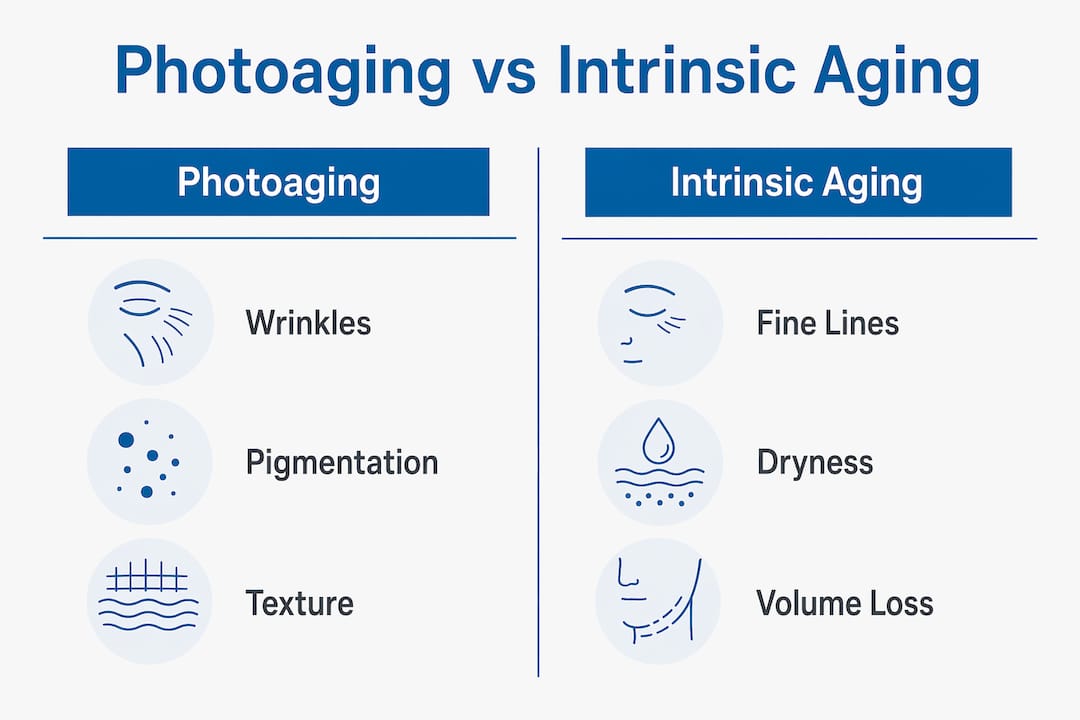
Photoaging is the clinical term for UV-induced skin damage that accumulates over years of sun exposure. It is distinct from intrinsic aging, which is the natural, genetically programmed process every person experiences regardless of sun habits. Photoaging differs from intrinsic aging in one critical way: it is largely preventable.
Intrinsic aging produces fine lines, mild dryness, and gradual loss of skin volume. Photoaging produces coarser wrinkles, uneven pigmentation, rough texture, and visible blood vessels. The two processes can overlap, but the severity of photoaged skin is driven by cumulative UV exposure history, not age alone. A 40-year-old who spent their teens outdoors without sunscreen can show more photoaging than a 55-year-old who protected their skin consistently.

Despite common belief, most visible skin aging signs are UV-induced rather than chronological. That distinction matters because it means the majority of what people call “looking old” is a condition with a known cause and a clear prevention strategy.
What causes skin photoaging, and how does UV radiation damage the skin?
UV radiation reaches the skin in two primary forms, and each causes a different type of damage.
UVB rays affect the outer layer of skin, the epidermis. They cause sunburn and trigger early signs of photoaging like surface-level texture changes and pigmentation shifts.
UVA rays penetrate much deeper, reaching the dermis. UVA damages collagen and elastin fibers at a structural level, causing the skin to lose firmness and develop deep wrinkles over time.
Oxidative stress plays a central role. UV radiation generates free radicals that attack skin cells, triggering inflammatory pathways that break down the extracellular matrix.
Fibroblasts are the cells responsible for producing collagen. UV exposure disrupts fibroblast activity and activates enzymes called matrix metalloproteinases (MMPs) that actively degrade existing collagen.
Melanin provides some natural protection. People with darker skin phototypes have more melanin, which absorbs UV energy and slows photoaging. Lighter skin phototypes are more susceptible to early and severe damage.
Photoaging involves systematic degradation of the skin’s extracellular matrix through inflammatory and oxidative stress pathways. This is not a surface-level process. It is a structural breakdown happening in the deeper layers of skin, which explains why the effects are so difficult to fully reverse.
One fact that surprises most people: sunlight penetrates glass windows, meaning indoor UV exposure contributes to photoaging without any sunburn signal. Sitting near a window for hours each day adds up over years.
Pro Tip: Apply a broad-spectrum SPF 30 or higher every morning, even on cloudy days and even if you work indoors near windows. UVA passes through glass and cloud cover without triggering a visible burn.
What are the visible signs of photoaging skin?
Photoaging produces a recognizable cluster of skin changes that appear primarily on the face, neck, décolletage, and hands. These are the areas with the highest lifetime UV exposure. Recognizing these signs helps you assess your current skin condition and decide when professional evaluation makes sense.
Sign | Description |
Fine and coarse wrinkles | Surface lines from collagen loss; deeper furrows from structural dermis damage |
Solar lentigines | Flat brown spots, commonly called age spots or liver spots, from UV-triggered melanin clusters |
Mottled pigmentation | Uneven skin tone with patches of darker and lighter areas |
Leathery texture | Rough, thickened skin surface from chronic UV-induced epidermal changes |
Sallowness | A yellowish, dull skin tone caused by changes in skin proteins |
Telangiectasia | Visible small blood vessels (spider veins) near the skin surface |
Clinical signs of photoaging include all of the above, and they tend to appear in combination rather than in isolation. A person with significant photoaging rarely has just one of these signs.
The key difference from intrinsic aging is texture and pigmentation. Natural aging produces relatively uniform changes. Photoaging creates a patchwork of damage: some areas deeply lined, others heavily pigmented, others rough and thickened. The hands are a particularly telling area because they receive constant sun exposure but are often overlooked in daily sun protection routines.
How can skin photoaging be prevented effectively?
Prevention is the most powerful tool available because deep structural photoaging has limited reversibility. The following steps address both outdoor and indoor exposure risks.
Apply broad-spectrum sunscreen daily. Choose SPF 30 or higher with UVA and UVB protection. Apply it every morning to the face, neck, hands, and any other exposed skin. Reapply every two hours during outdoor activity.
Wear protective clothing. Long sleeves, wide-brimmed hats, and UV-blocking sunglasses reduce direct UV exposure significantly. UPF-rated clothing provides measurable protection beyond standard fabrics.
Avoid tanning beds entirely. Tanning is classified as a carcinogen, and tanning beds concentrate UV exposure. No safe level of tanning exists. A tan is the skin’s defensive response to DNA damage, not a sign of health.
Protect yourself indoors near windows. UVA passes through standard glass. If you work at a desk near a window or spend long hours driving, daily sunscreen use still applies.
Seek shade during peak UV hours. UV radiation is strongest between 10 a.m. and 4 p.m. Reducing direct exposure during these hours cuts cumulative damage significantly.
Start early and stay consistent. Sun exposure habits in your teens and 20s directly influence your skin condition in your 40s and 50s. Consistent photoprotection at any age slows further damage.
Pro Tip: Keep a travel-size SPF in your car, bag, and desk drawer. Consistency matters more than the product you choose. The best sunscreen is the one you actually use every day.
Chronic sun damage accumulates invisibly over time, often indoors and in low-light conditions where people feel no urgency to protect their skin. Building sun protection into your daily routine removes the decision from the equation entirely.
What treatment options exist for photoaged skin?
Treatment for photoaging addresses visible surface changes and, to a lesser degree, deeper structural damage. No treatment fully reverses deep collagen loss, but several options produce meaningful improvement in texture, tone, and fine lines.
Retinoids are the most studied topical treatment for photoaging. Prescription-strength tretinoin and over-the-counter retinol both stimulate collagen production and accelerate cell turnover. Results require consistent use over months, not weeks. You can learn more about how these work in this topical skin rejuvenation guide.
Alpha-hydroxy acids (AHAs) such as glycolic acid and lactic acid exfoliate the skin surface, improving texture and mild pigmentation. They work best as part of a consistent skincare routine rather than as standalone treatments.
Chemical peels remove damaged outer skin layers and stimulate new cell growth. Superficial and medium-depth peels address pigmentation and texture effectively. Chemical peels improve superficial photoaging but have limited effect on deep wrinkles and structural collagen loss.
Laser skin resurfacing targets both surface texture and deeper skin layers depending on the device and settings used. Fractional laser treatments are among the most effective procedural options for photoaged skin.
Antioxidant serums containing vitamin C, niacinamide, or resveratrol help neutralize free radicals and support skin repair. Pairing antioxidants with daily SPF creates a stronger defense than either alone. Products with antioxidant skin benefits are widely available and work well as a daily complement to professional treatments.
Plasma fibroblast therapy is a newer procedural option that stimulates fibroblast activity to support collagen remodeling. It suits people looking for non-surgical skin tightening with minimal downtime.
Effective treatments address superficial changes, but prevention remains critical given the limited reversibility of deep skin damage. A dermatologist or licensed skin professional can assess your specific photoaging pattern and recommend a treatment sequence that matches your skin type and goals. For a broader look at what procedures are available, the signs of skin aging treatment overview at Luxveritae covers current options in detail.
Key takeaways
Photoaging is a UV-driven process that accounts for the majority of visible skin aging, and consistent sun protection remains the single most effective strategy to prevent and slow it.
Point | Details |
Photoaging vs. intrinsic aging | UV damage, not time alone, causes most visible wrinkles, spots, and texture changes. |
UVA is the deeper threat | UVA rays penetrate glass and reach the dermis, degrading collagen and elastin silently. |
Tanning causes damage | A tan signals DNA damage, not health. Tanning beds are classified as carcinogens. |
Prevention outperforms treatment | Daily broad-spectrum SPF is more effective than any treatment for reversing deep damage. |
Treatments have real limits | Retinoids, peels, and lasers improve surface changes but cannot fully restore structural collagen loss. |
What I’ve learned about photoaging that most people get wrong
People come to Luxveritae expecting a treatment to undo years of sun damage in a few sessions. I understand that hope completely. But the most honest thing I can tell you is this: photoaging is a condition where prevention wins by a wide margin over treatment.
The biggest misconception I see is that photoaging is something that happens to other people, or that it only becomes relevant after 50. The reality is that the UV exposure you accumulate in your 20s and 30s is already writing the story your skin will tell at 45. By the time the wrinkles and spots appear, the structural damage underneath has been building for decades.
That said, I have seen real, meaningful improvement in clients who commit to a consistent protocol. The combination of daily SPF, a retinoid, and one or two targeted professional treatments can genuinely shift how skin looks and feels. The key word is consistent. Sporadic treatment with no sun protection is money and time spent running in place.
The other thing worth saying plainly: not all photoaging looks the same. Skin phototype, geographic location, and lifestyle habits all shape the pattern of damage. A personalized assessment from a trained skin professional is worth far more than a generic skincare routine you found online. Your skin has a specific history, and the best plan addresses that history directly.
— Lux
Skin rejuvenation treatments at Luxveritae
Photoaging shows up differently on every person, and the right response depends on your specific skin history and goals. At Luxveritae, the team works with each client to identify which visible signs are most affecting their confidence and which treatments will deliver the most meaningful results.
Whether you are dealing with under-eye discoloration, uneven pigmentation, or texture changes from years of sun exposure, Luxveritae offers targeted options including under eye lightening treatments, chemical peels, and BB Glow facials designed to improve tone and radiance. Every treatment plan is built around your skin type and lifestyle. Book your appointment and get a personalized assessment from a certified skin professional who can map out a realistic, effective plan for your skin.
FAQ
What does skin photoaging mean exactly?
Skin photoaging is premature skin aging caused by chronic UV radiation exposure, producing wrinkles, pigmentation changes, and texture damage beyond what natural aging alone creates. It accounts for up to 90% of visible aging in sun-exposed areas.
Can photoaging be reversed?
Treatments like retinoids, chemical peels, and laser resurfacing improve superficial photoaging, but deep structural collagen loss has limited reversibility. Prevention and early intervention produce the best long-term outcomes.
Does photoaging happen indoors?
Yes. UVA rays pass through standard glass windows, meaning daily indoor exposure near windows contributes to cumulative photoaging without causing visible sunburn.
What is the difference between UVA and UVB damage?
UVB rays damage the skin’s surface and cause sunburn. UVA rays penetrate deeper into the dermis, degrading collagen and elastin and driving the structural changes associated with photoaging.
At what age should you start protecting against photoaging?
Sun protection is most effective when started early. UV exposure habits in your teens and 20s directly shape your skin’s condition decades later, making daily SPF use relevant at any age from adolescence onward.
Recommended
Comments