


How to Restore Skin Elasticity After 50: A Practical Guide


Skin elasticity is defined as the skin’s ability to stretch and snap back, driven by elastin and collagen fibers in the dermis. After 50, collagen declines roughly 1% per year from age 25, and elastin production becomes nearly static. That combination is why skin starts to sag, crease, and lose its bounce. The good news: you can restore skin elasticity after 50 with a consistent, multi-pronged approach combining topical treatments, nutrition, sun protection, and lifestyle habits. Progress is real, but it takes months, not weeks. Setting that expectation now saves frustration later.
What are the most effective topical treatments to restore skin elasticity after 50?
Retinol is the most clinically supported over-the-counter ingredient for improving skin firmness in mature skin. It stimulates collagen gene expression, increases epidermal thickness, and boosts elastin production with less irritation than prescription tretinoin. A concentration of 0.4% retinol applied three times per week for 24 weeks has shown significant improvement in dermal structural organization. That is a meaningful result for a non-prescription product.
Nanoretinol takes the science a step further. Liposome-encapsulated or biomimetic lipid nanoparticle delivery systems transport retinol intact through the skin barrier, improving both stability and penetration while cutting irritation. The payoff is measurable: nanoretinol shows a 56% increase in elasticity and a 61% increase in firmness after just 56 days. Standard retinol formulations take longer to show comparable results, typically 12–24 weeks.
Pro Tip: Start retinol two nights per week and build to every other night over four weeks. This reduces the risk of redness and peeling, which are the most common reasons people quit before seeing results.
A few common mistakes to avoid:
Applying retinol to damp skin. Moisture accelerates absorption and increases irritation. Apply to completely dry skin.
Skipping moisturizer. Layering a ceramide-rich moisturizer over retinol reduces barrier disruption without blocking efficacy.
Expecting overnight results. Visible firmness improvements from topical retinol treatments appear at 8–12 weeks and become more pronounced at 3–6 months.
Mixing too many actives at once. Retinol combined with vitamin C or acids in the same routine often causes sensitivity in post-menopausal skin.
One ingredient worth pairing with retinol is vitamin C serum. Vitamin C acts as a collagen synthesis cofactor and antioxidant, protecting elastin from oxidative breakdown. Use it in the morning, retinol at night, and you cover both repair and protection.

How does daily sun protection influence skin elasticity after 50?
UV exposure is the single largest cause of lost skin elasticity. UV rays degrade collagen and elastin fibers continuously, and no topical treatment can undo damage that keeps accumulating every day. Daily broad-spectrum SPF 30+ sunscreen is the highest-impact single intervention for preserving what elasticity you have and allowing repair to take hold.
Many people apply sunscreen only at the beach or pool. That habit misses the majority of cumulative UV exposure, which happens during driving, walking, and sitting near windows. UVA rays, which penetrate glass and clouds, are the primary driver of elastin breakdown. Consistent daily use matters more than the exact SPF number above 30.
Here is how to build sunscreen into your morning routine without friction:
Cleanse and apply any serums first. Sunscreen goes on last in your morning skincare routine, after moisturizer.
Use a formula suited to mature skin. Mineral sunscreens with zinc oxide or titanium dioxide sit well on drier, more sensitive skin without clogging pores.
Apply to the neck and chest. These areas show elasticity loss just as visibly as the face and are frequently skipped.
Reapply if you are outdoors for more than two hours. A powder SPF or spray makes midday reapplication practical without disrupting makeup.
Do not skip on overcast days. Up to 80% of UV rays pass through clouds, making daily application non-negotiable year-round.
Pro Tip: Keep a dedicated SPF product on your bathroom counter, separate from your regular moisturizer. The visual cue makes it harder to skip.
What dietary and nutritional strategies support restoring skin elasticity after 50?
Skin firmness is built from the inside out. Adults over 50 need 1.2–1.6g of protein per kilogram of body weight daily to support fibroblast function, the cellular process that builds and repairs the skin’s collagen and elastin matrix. Most people in this age group fall short of that target, which directly limits how much skin repair is possible regardless of what they apply topically.
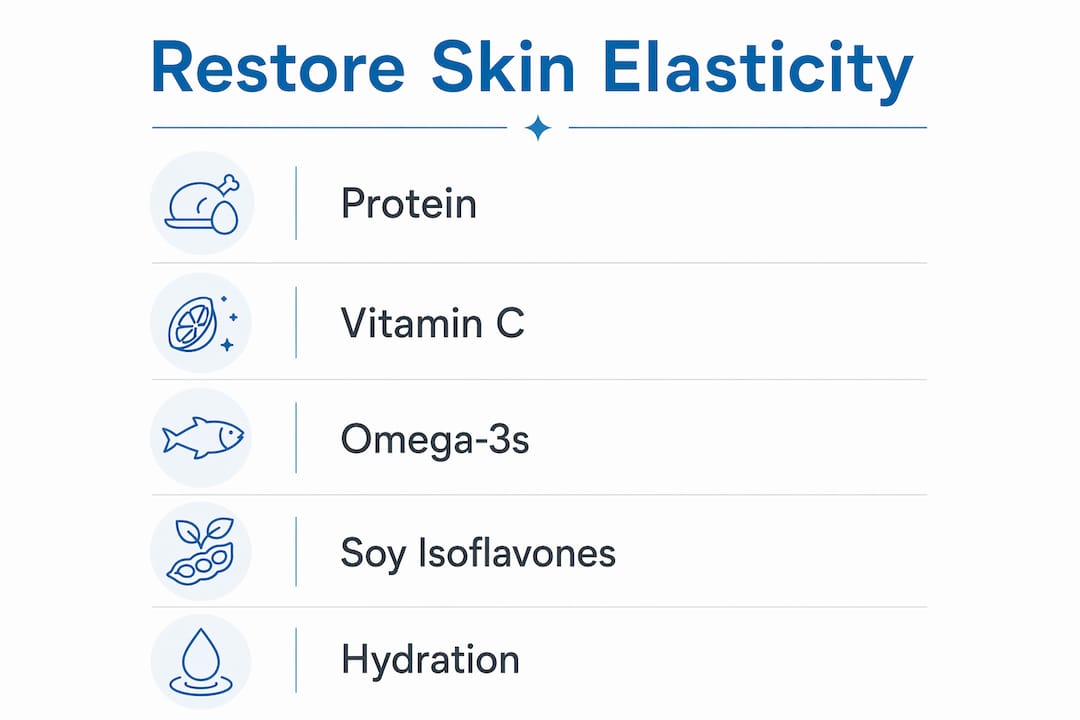
Key nutrients that support skin elasticity in mature adults:
Protein. Eggs, fish, legumes, and Greek yogurt are practical daily sources. Spreading intake across meals improves absorption after 50.
Vitamin C. Found in bell peppers, citrus, and kiwi, vitamin C is a required cofactor for collagen synthesis. Without adequate intake, collagen production stalls even when fibroblasts are active.
Genistein. A plant compound found in soy foods like edamame and tofu, genistein supports skin structure and has shown benefits for post-menopausal skin in clinical research.
Omega-3 fatty acids. Salmon, sardines, and flaxseed support the skin barrier and reduce inflammation that accelerates elastin breakdown.
Zinc. Found in pumpkin seeds and shellfish, zinc supports wound healing and collagen cross-linking.
Nutrient | Primary food sources | Role in skin elasticity |
Protein | Eggs, fish, legumes | Fuels fibroblast collagen and elastin synthesis |
Vitamin C | Bell peppers, citrus | Collagen synthesis cofactor and antioxidant |
Genistein | Soy, edamame, tofu | Supports skin structure in post-menopausal skin |
Omega-3s | Salmon, flaxseed | Reduces inflammation, supports skin barrier |
Zinc | Pumpkin seeds, shellfish | Collagen cross-linking and repair |
Supplementation can fill gaps, but food sources remain the most bioavailable option for most nutrients. If you are considering collagen peptide supplements, be aware that collagen creams hydrate surface skin but do not rebuild deep collagen or elastin the way retinoids and dietary protein do. Oral collagen peptides show more promise than topical collagen products, though the research is still developing.
Which lifestyle habits are essential to naturally improve skin elasticity after 50?
Sleep, exercise, hydration, and a gentle skincare routine each contribute to skin firmness in ways that topical products cannot replicate alone. A multi-pronged approach combining skincare, nutrition, sleep, and exercise produces synergistic benefits that no single product or habit achieves independently.
The most impactful lifestyle habits for mature skin:
Prioritize 7–9 hours of sleep. Deep sleep triggers growth hormone release, which drives skin cell repair and collagen synthesis. Chronic sleep deprivation visibly accelerates skin laxity.
Exercise consistently. Consistent exercise improves dermal thickness and enhances blood flow, delivering oxygen and nutrients that support the skin’s structural repair. Resistance training and aerobic exercise both contribute.
Drink enough water. Hydration maintains the skin barrier and keeps the dermis plump enough for elastin fibers to function properly. Dehydrated skin looks looser and more creased even when elastin levels are adequate.
Use barrier-supportive ingredients. Post-menopausal skin benefits from ceramides and niacinamide to repair the skin barrier and reduce sensitivity. These ingredients work best when you stop overloading your routine with multiple actives.
Avoid over-exfoliation. Exfoliating more than two or three times per week strips the skin barrier and slows repair. Mature skin heals more slowly than younger skin, so recovery from irritation takes longer.
A mature skin care approach that focuses on barrier health first creates the foundation for every other treatment to work better. Think of it as preparing the soil before planting. Retinol, vitamin C, and SPF all perform better on a healthy, intact barrier.
What can you realistically expect from skin firmness treatments after 50?
Elastin regeneration after 50 is slow and limited by biology. Expect 3–6 months to see measurable changes in skin firmness from topical and lifestyle interventions. Surface texture, hydration, and tone typically improve first. Deeper structural changes take longer and have a ceiling that topical products cannot exceed.
Topical treatments and lifestyle habits can meaningfully improve skin texture, surface firmness, and hydration in mature skin. They cannot reverse significant skin laxity or deep tissue sagging. That distinction matters for setting goals that are achievable and satisfying rather than disappointing.
The table below clarifies what different intervention types realistically address:
Intervention type | What it improves | What it cannot address |
Topical retinol or nanoretinol | Surface firmness, texture, collagen density | Deep tissue sagging, significant laxity |
SPF 30+ sunscreen | Prevents further elastin breakdown | Does not reverse existing damage |
Nutrition and hydration | Supports collagen synthesis, barrier health | Cannot replace lost elastin fibers |
Non-surgical procedures | Moderate skin tightening, collagen stimulation | Severe or structural skin laxity |
Surgical interventions | Significant skin laxity and sagging | Not appropriate for mild concerns |
Significant skin laxity and deep tissue sagging require procedural or surgical interventions that go beyond what any cream or serum can deliver. Non-surgical options, including energy-based devices and injectables, address moderate laxity and work well alongside a strong at-home routine. For people with mild to moderate concerns, consistent topical and lifestyle strategies produce real, visible results. Understanding where you fall on that spectrum helps you choose the right level of intervention. Luxveritae offers personalized consultations to help you identify exactly that.
Key Takeaways
Restoring skin elasticity after 50 requires combining retinol-based topicals, daily SPF 30+ sunscreen, adequate protein intake, and consistent lifestyle habits over a minimum of three to six months.
Point | Details |
Nanoretinol outperforms standard retinol | Nanoretinol shows 56% elasticity gains in 56 days versus 12–24 weeks for standard formulations. |
Daily SPF 30+ is non-negotiable | UV exposure is the top cause of elastin breakdown; sunscreen prevents ongoing damage that topicals cannot undo. |
Protein intake drives skin repair | Adults over 50 need 1.2–1.6g of protein per kilogram of body weight daily to support collagen and elastin synthesis. |
Lifestyle habits amplify topical results | Sleep, exercise, and hydration each contribute to dermal repair in ways that skincare products cannot replicate alone. |
Expect results in 3–6 months | Surface texture and firmness improve first; deep laxity requires professional intervention beyond topical care. |
What I have learned from working with mature skin every day
The most common mistake I see is the search for one product that does everything. People spend real money on a single “miracle” cream, use it for three weeks, and conclude that nothing works. The biology does not support that timeline or that approach.
What actually works is less exciting but far more reliable. A retinol or nanoretinol product used consistently, a vitamin C serum in the morning, SPF every single day, and enough protein in your diet. Those four habits, maintained for six months, produce results that are visible and lasting. No single product in that list is doing the heavy lifting alone.
The other thing I have noticed is that barrier health is underrated. People with reactive, post-menopausal skin often push through irritation because they think it means the product is working. It does not. Irritation signals barrier damage, and a damaged barrier absorbs actives poorly and heals slowly. Switching to ceramide-rich moisturizers and rotating actives carefully consistently improves both tolerance and results.
My honest advice: focus on what you can control and do it consistently. The signs of skin aging that bother you most are addressable. They just respond to patience and consistency, not urgency and overloading. Pair a well-chosen exfoliating and nourishing product like the Tru-Age body scrub and facial oil set with your daily routine to support surface renewal without stripping the barrier.
— Lux
Personalized skin firming treatments at Luxveritae
At-home routines build the foundation. Professional treatments accelerate and deepen the results that topicals alone cannot reach.
Luxveritae offers skin rejuvenation packages designed specifically for mature skin concerns, including firmness, texture, and tone. Each plan starts with a personalized consultation to match treatments to your skin type, goals, and current routine. Whether you are looking to complement a retinol regimen or address more visible laxity, the team at Luxveritae tailors every session to where your skin actually is, not a generic protocol. Book a treatment and take the next step toward firmer, healthier skin with expert guidance behind every decision.
FAQ
How long does it take to see results from retinol after 50?
Most people see surface texture and firmness improvements from retinol within 8–12 weeks. Measurable structural changes in skin elasticity typically appear at 3–6 months of consistent use.
Can you actually rebuild elastin after 50?
Elastin regeneration is limited after 50 due to low cellular production capacity. Topical treatments and lifestyle habits can slow further loss and improve surface firmness, but significant elastin rebuilding requires professional interventions.
Is nanoretinol better than regular retinol for mature skin?
Nanoretinol delivers retinol deeper into the skin with less irritation, making it better suited for sensitive, post-menopausal skin. Clinical data shows 56% elasticity gains and 61% firmness gains after 56 days, outperforming standard retinol timelines.
What is the best diet for skin elasticity after 50?
A diet high in protein (1.2–1.6g per kilogram of body weight), vitamin C, omega-3 fatty acids, and soy-based genistein supports collagen and elastin synthesis most effectively in adults over 50.
When should you consider professional skin tightening treatments?
Professional treatments are appropriate when topical and lifestyle strategies have been consistent for 3–6 months and significant skin laxity or sagging remains. Non-surgical options address moderate laxity; surgical options are reserved for more advanced cases.
Recommended
Comments