


How Medical Spas Differ from Day Spas: 2026 Guide

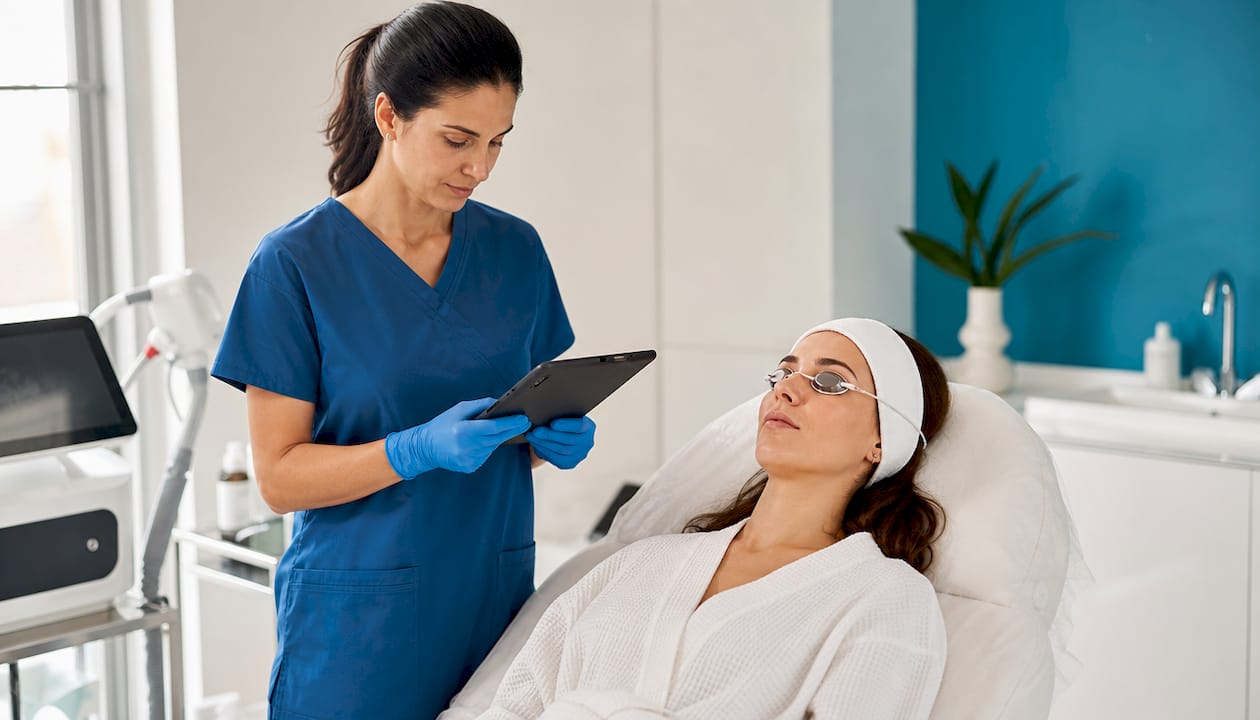
Medical spas are licensed healthcare facilities that deliver clinical aesthetic treatments under physician supervision, while day spas focus on relaxation and non-medical beauty services. Understanding how medical spas differ from day spas determines which environment is right for your skin goals. The distinction goes far deeper than atmosphere or price. It covers treatment intensity, provider credentials, legal accountability, and the kind of results you can realistically expect. With over 8,800 medical spas operating in the United States and the global market valued at $27.6 billion, this industry is no longer a niche. Choosing the wrong setting for a clinical procedure carries real consequences.
How medical spas differ from day spas in treatment type
The clearest line between the two spa types is what they are legally allowed to do to your skin. Day spa services include massages, standard facials, manicures, pedicures, body wraps, and aromatherapy. These treatments work at the surface level. They improve how your skin feels and looks temporarily, but they do not alter tissue beneath the skin.
Medical spas offer a fundamentally different category of treatments:
Injectables: Botox and dermal fillers are prescription medications that can only be administered under physician supervision. A day spa cannot legally offer them.
Laser therapies: Laser hair removal, skin resurfacing, and photofacials use energy that penetrates living tissue. These require medical oversight and trained operators.
Medical-grade chemical peels: Deeper than anything available at a day spa, these peels use higher-concentration acids that require clinical protocols.
Microneedling: When performed with prescription serums or radiofrequency energy, microneedling is a medical procedure, not a cosmetic one.
Body contouring: Technologies like cryolipolysis or radiofrequency body sculpting target fat and muscle tissue beneath the skin.
The key distinction is tissue depth. Day spa treatments stay at or above the skin’s surface. Medical spa procedures affect living tissue, which is why medical oversight is not optional. It is legally required.
Pro Tip: Ask any spa directly whether their chemical peels use medical-grade acids and whether a physician is on-site or on-call. The answer tells you immediately which category you are dealing with.
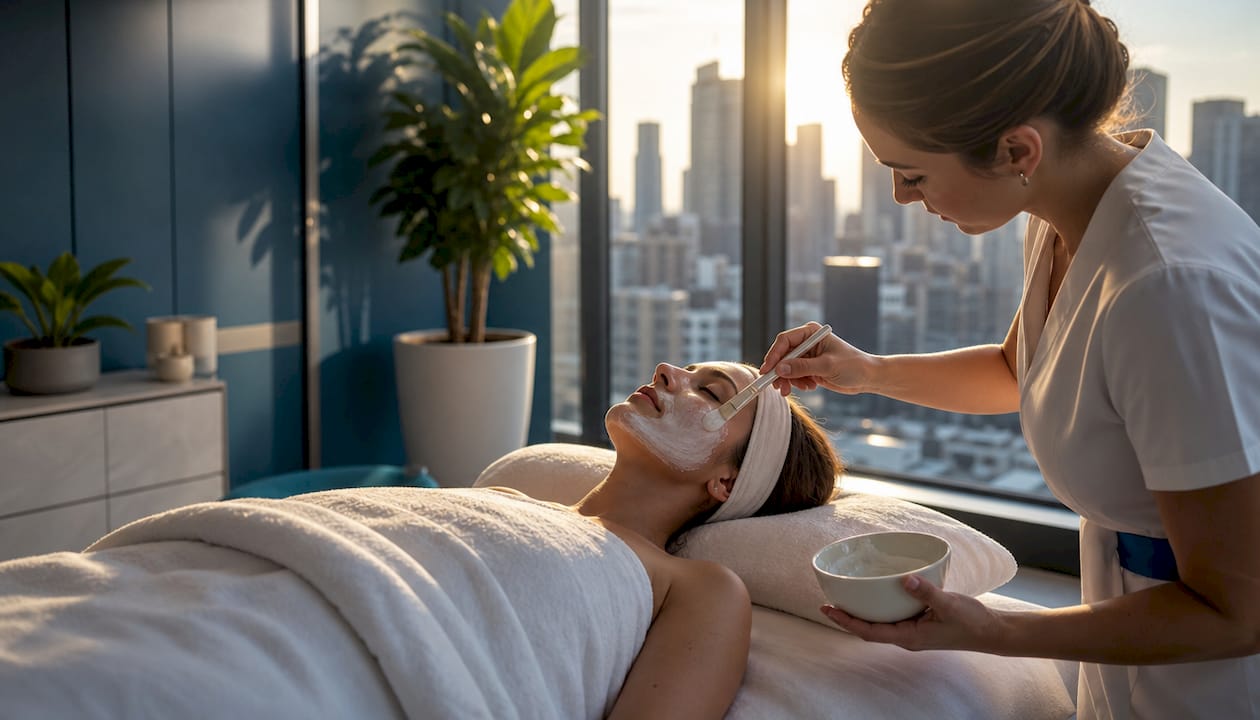
Medical spa treatments also involve pre- and post-treatment protocols to reduce risks like hyperpigmentation or scarring, with downtime ranging from zero to 14 days depending on the procedure. Day spa treatments require no recovery period. That difference in downtime reflects the difference in treatment depth and clinical impact.
What provider qualifications actually mean for your safety
The staff credentials at a medical spa and a day spa are not comparable. This gap matters more than most people realize before they book.
Day spa providers are licensed estheticians or massage therapists. Estheticians complete state-approved cosmetology programs, typically 260–1,500 hours of training depending on the state. They are trained to perform surface-level skin care, waxing, and basic facials. They are not trained in pharmacology, anatomy at a clinical level, or managing adverse reactions to medical procedures.
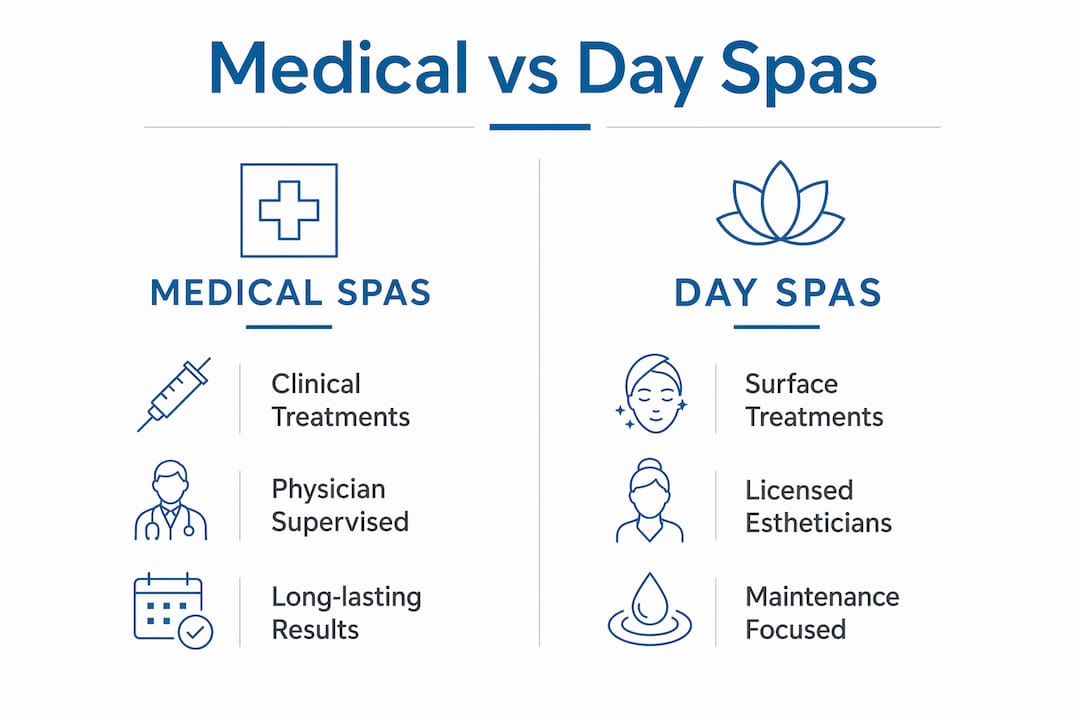
Medical spas operate under a licensed physician’s oversight. The medical director, who holds an MD or DO designation, carries legal and clinical responsibility for every procedure performed. Providers who administer treatments are typically registered nurses (RNs), nurse practitioners (NPs), or physician assistants (PAs). Each of these roles requires a clinical degree, licensure, and supervised medical training.
Provider type | Typical setting | Training focus | Oversight required |
Licensed esthetician | Day spa | Surface skin care, cosmetology | State cosmetology board |
Registered nurse (RN) | Medical spa | Clinical care, pharmacology | Physician medical director |
Nurse practitioner (NP) | Medical spa | Advanced clinical practice | Physician or independent |
Physician assistant (PA) | Medical spa | Medical diagnosis and treatment | Supervising physician |
Clinical accountability under a medical director is the defining difference that allows medical spas to offer procedures affecting living tissue beneath the skin. That accountability also means informed consent is required before any procedure. Day spas do not require informed consent because their treatments carry no clinical risk.
Pro Tip: Before booking any injectable or laser treatment, verify that the medical spa lists its medical director by name on its website. If that information is not publicly available, ask for it directly.
You can also review med spa safety standards before your first appointment to understand what questions to ask and what documentation to expect.
Cost, frequency, and how long results actually last
The financial and scheduling differences between the two spa types reflect the clinical gap between them.
The average cost per visit at a day spa is approximately $124, compared to $617 per visit at a medical spa for clinical aesthetic procedures. That price difference is not arbitrary. It reflects the cost of physician oversight, medical-grade technology, prescription products, and clinically trained staff. A single Botox session or laser resurfacing treatment requires equipment, consumables, and expertise that a day spa simply does not carry.
Treatment frequency also differs significantly. Day spa treatments like facials are typically sought weekly or monthly. Medical spa treatments follow protocols spaced 3–6 months apart. That spacing is clinical, not arbitrary. Procedures like Botox wear off over three to four months. Laser treatments require healing time between sessions. Rushing the schedule increases risk and reduces results.
The nature of results differs just as much as the cost. Day spa treatments provide maintenance. A monthly facial keeps your skin clean, hydrated, and temporarily brighter. Medical spa treatments provide correction. Laser resurfacing reduces wrinkles and sun damage at a structural level. Dermal fillers restore volume. These results last months to years, not days to weeks.
Downtime is the practical trade-off. A facial at a day spa requires no recovery. A deep chemical peel or fractional laser treatment may require 7–14 days of healing before you are comfortable in public. That scheduling reality affects when and how often you can realistically pursue medical spa treatments.
How to decide which spa type fits your skin goals
Choosing between a medical spa and a day spa comes down to four questions.
What is your primary goal? If you want to relax, decompress, and maintain healthy skin, a day spa delivers exactly that. If you want to correct wrinkles, reduce pigmentation, remove unwanted hair permanently, or restore facial volume, you need a medical spa.
Do you have any health conditions or contraindications? Medical spa procedures are not appropriate for everyone. Pregnancy, certain autoimmune conditions, active skin infections, and some medications can disqualify you from specific treatments. A medical spa will screen for these. A day spa cannot and does not.
Are you prepared for downtime? If your schedule cannot absorb a recovery period, medical spa treatments that involve downtime are not practical right now. Day spa services fit into any schedule without disruption.
Have you verified the provider’s credentials? Before booking any clinical procedure, confirm that the facility operates under a licensed medical director and that the provider administering your treatment holds the appropriate clinical license. The American Med Spa Association (AmSpa) publishes a patient guide that outlines what to verify before your visit.
One important boundary: medical spas are not dermatologists. They cannot diagnose or treat skin diseases like skin cancer or severe acne. If you have a medical skin condition, a board-certified dermatologist is the right provider, not a medical spa or a day spa.
Pro Tip: Start with a consultation at a medical spa before committing to any treatment. A reputable facility will assess your skin, review your health history, and recommend a protocol. If a spa skips this step and pushes you straight to booking, walk away.
For a full breakdown of what to expect before, during, and after your first visit, the 2026 medical spa guide at Luxveritae covers the process in detail.
Key Takeaways
Medical spas and day spas serve fundamentally different purposes: one corrects skin at a clinical level under medical supervision, and the other maintains and relaxes without medical oversight.
Point | Details |
Treatment depth | Medical spas affect living tissue; day spas work only at the skin’s surface. |
Provider credentials | Medical spas require physician oversight and clinically licensed staff; day spas employ estheticians. |
Cost difference | Medical spa visits average $617 versus $124 at a day spa, reflecting clinical expertise and equipment. |
Results and frequency | Medical spa results last months to years; day spa results are temporary and require weekly or monthly upkeep. |
Decision factor | Match your choice to your goal: relaxation and maintenance for day spas, clinical correction for medical spas. |
Why getting this choice right matters more than most people think
Clients often underestimate how much the setting shapes the outcome. The relaxed, candle-lit atmosphere of a medical spa can feel indistinguishable from a day spa. That similarity is exactly what makes the distinction so important to understand before you book.
I have seen what happens when people choose the wrong setting for a clinical concern. Someone with significant sun damage books a series of facials at a day spa because it is more affordable and more convenient. Months later, the pigmentation is unchanged. The facials felt wonderful, but the underlying issue required a medical-grade intervention that surface treatments cannot reach.
The reverse also happens. Someone books a laser treatment at a facility that looks professional but operates without proper medical oversight. The procedure is performed by someone without clinical training. The result is a burn or a pigment change that takes months to resolve. The relaxing spa environment can be genuinely deceptive. Without proper pre- and post-care protocols, the risk of complications like scarring or pigment changes is real and avoidable.
The right approach is to be specific about what you want your skin to do. If the goal is correction, verify credentials, ask about the medical director, and read the informed consent document carefully. If the goal is maintenance and relaxation, a day spa is the right fit and a genuinely good one. Neither option is better in the abstract. The better option is the one that matches your actual skin goal.
— Lux
Advanced skin treatments at Luxveritae
Luxveritae operates as a licensed aesthetic facility with a focus on clinical results that look natural. Every treatment plan starts with a skin assessment, not a sales pitch.

Whether you are considering your first clinical treatment or looking to build a consistent protocol, Luxveritae offers services designed around your specific skin type, goals, and lifestyle. From signature BB Glow treatments to paramedical techniques that correct rather than cover, the approach prioritizes results that hold up over time. Review the full range of treatment packages and pricing to find the right starting point, then book a consultation to get a personalized recommendation before committing to any procedure.
FAQ
What is a medical spa, exactly?
A medical spa is a licensed healthcare facility that combines a spa-like environment with clinical aesthetic procedures performed under physician supervision. Unlike day spas, medical spas must operate under a licensed medical director and follow informed consent protocols.
Can a day spa offer Botox or fillers?
No. Botox and dermal fillers are prescription medications that can only be legally administered in a medical spa under physician oversight. A day spa is not licensed to offer injectables.
How much more expensive is a medical spa than a day spa?
The average medical spa visit costs approximately $617, compared to $124 at a day spa. The price difference reflects physician oversight, medical-grade technology, and clinically trained providers.
How often do you need medical spa treatments?
Most medical spa treatments are spaced 3–6 months apart, depending on the procedure. Day spa services like facials are typically done weekly or monthly for maintenance.
When should I see a dermatologist instead of a medical spa?
See a dermatologist if you have a diagnosed skin disease, suspected skin cancer, or severe acne. Medical spas provide aesthetic correction, not medical diagnosis or disease treatment.
Recommended
Comments