


Benefits of non-surgical skin treatments: what you need to know


The world of aesthetic medicine has never offered more options, and that abundance creates a real problem: how do you know which treatment is actually worth your time and money? The benefits of non-surgical skin treatments are well documented, but not all treatments work the same way, target the same concerns, or deliver results on the same timeline. Understanding what separates a procedure that genuinely tightens and rejuvenates skin from one that simply sounds impressive is the difference between a result you love and a budget you regret. This guide cuts through the noise.
Table of Contents
How to evaluate non-surgical skin treatments: key benefits to consider
Microfocused ultrasound (Ultherapy): lifting with FDA-cleared precision
Radiofrequency treatments: Thermage and RF microneedling for versatile tightening
Red light therapy: gentle collagen boost and skin rejuvenation
Comparing non-surgical skin treatments: effectiveness, downtime, and best use cases
Why combining non-surgical treatments with consistent skincare is the key to lasting results
Explore non-surgical skin treatments at Lux Veritae Skin Spa
Key Takeaways
Point | Details |
Best for mild to moderate laxity | Non-surgical treatments work optimally when skin still has some snap-back elasticity. |
Stimulate natural collagen | They encourage your body to produce collagen gradually for natural-looking firmness. |
Minimal downtime | Most treatments have little to no downtime, fitting into busy lifestyles easily. |
Combine with skincare | Use retinoids and sunscreen daily to enhance and sustain treatment benefits. |
Treatment choices vary | Ultrasound, radiofrequency, and light therapies differ in effectiveness, sessions, and suited skin concerns. |
How to evaluate non-surgical skin treatments: key benefits to consider
Before you commit to any treatment, it helps to have a clear framework. Not every non-surgical anti-aging treatments overview is built the same, and the benefits that matter most to a 32-year-old dealing with early fine lines differ from what a 47-year-old with moderate skin laxity needs. Here is what to assess before booking anything.
Collagen stimulation and skin tightening: The best non-invasive skin treatments work at the level of the dermis, triggering your skin’s own repair response to produce new collagen and elastin. Look for clinical evidence of measurable tightening, not just “improvement in appearance.”
Downtime and comfort: One of the defining non-surgical skin care advantages is that most procedures let you return to your normal day immediately or within 24 to 48 hours. Your tolerance for redness, swelling, or temporary sensitivity matters here.
Session count and result longevity: Some treatments deliver visible results after a single session lasting up to 12 months. Others work cumulatively and require three to six sessions before you see the full picture. Know which category you are entering.
Suitability for your skin concern: Non-surgical options work best for mild to moderate laxity, where skin still has enough elasticity to respond. If your skin snaps back when gently pinched, you are a strong candidate.
Compatibility with your skincare routine: Certain treatments work better when paired with active topicals like retinoids or peptides. Others require a pause from exfoliating acids. Understanding this interaction protects your results and your skin barrier.
Having set the selection criteria, next we explore popular individual treatments and their distinct benefits.
Microfocused ultrasound (Ultherapy): lifting with FDA-cleared precision
Microfocused ultrasound, widely known as Ultherapy, is one of the most clinically validated options in the non-surgical space. It is the only FDA-cleared device for non-invasive lifting of the face, neck, and brow, and it earns that distinction through a mechanism most surface treatments cannot replicate.
The treatment delivers focused ultrasound energy at precise depths below the skin surface, targeting the same tissue layer addressed in a surgical facelift without any incision. That energy creates controlled thermal injury, which triggers a collagen remodeling response that continues for months after your appointment. The results are not immediate, which is actually a sign the treatment is working correctly. You are watching real biological regeneration, not temporary inflammation.
Key benefits of using Ultherapy for facial lifting include:
FDA-cleared specifically for brow, neck, and chin lifting
A single session is typically sufficient for initial results
Visible lifting and firming develop gradually over 2 to 6 months
Results maintain for up to one year with no required downtime
Works at multiple tissue depths for layered collagen remodeling
Best suited for mild to moderate laxity
The clinical evidence behind this treatment is strong. MFU improves 93% of patients at six months with one session, and results last up to one year. That is a remarkably consistent outcome for a single appointment with no recovery period.
Pro Tip: Schedule your Ultherapy session at least three months before a significant event. The gradual collagen buildup means your best results appear well after your appointment, not the next morning.
Next, we examine radiofrequency-based treatments offering collagen boosts with minimal discomfort.
Radiofrequency treatments: Thermage and RF microneedling for versatile tightening
Radiofrequency energy is the workhorse of non-invasive skin treatments, and for good reason. It heats the deeper layers of skin to a precise temperature range that contracts existing collagen and signals the body to produce new collagen types I and III. Two distinct technologies deliver this energy very differently, and understanding the difference helps you match the right tool to your concern.
Monopolar RF (Thermage) delivers energy through a single electrode, penetrating deep into the dermis and subcutaneous tissue. One session produces measurable tightening, and the procedure requires no downtime. Thermage shows 70 to 75% improvement in skin tightening at three months with a single session, which positions it as one of the most efficient single-treatment options available.
RF microneedling combines two proven mechanisms: microneedles create controlled micro-injuries in the skin while simultaneously delivering radiofrequency energy directly into the dermis. The result is a collagen remodeling cascade that outperforms traditional microneedling, with improvements appearing within 30 days. It is particularly effective for texture irregularities, mild laxity, and enlarged pores, and it works well across different skin tones.
Here is how to decide between the two:
Choose Thermage if you want a single session, minimal sensitivity, and full-face or body tightening with no downtime.
Choose RF microneedling if texture, scarring, or pore size is your primary concern alongside tightening.
Consider both sequentially if you have moderate laxity plus significant texture issues.
Consult an expert to assess depth of laxity before committing. Both options have depth limits that surgery does not.
Both treatments suit mild to moderate laxity and can address areas beyond the face, including the neck, décolletage, and abdomen. Expert insights on Thermage confirm that when combined with consistent sun protection and retinoids, RF-based treatments deliver results that hold significantly longer than treatment alone.
Pro Tip: For RF microneedling, a series of three sessions spaced four weeks apart typically produces the most visible outcome, especially for acne scarring or skin texture concerns.
We now turn to light-based therapies that improve skin texture and firmness through a different mechanism.
Red light therapy: gentle collagen boost and skin rejuvenation
Red light therapy occupies a different category from ultrasound and radiofrequency. It is not a one-session dramatic lifter. Instead, it is a consistent, cumulative treatment that supports collagen synthesis and skin firmness over time, with benefits extending to elasticity and photoaging reduction.
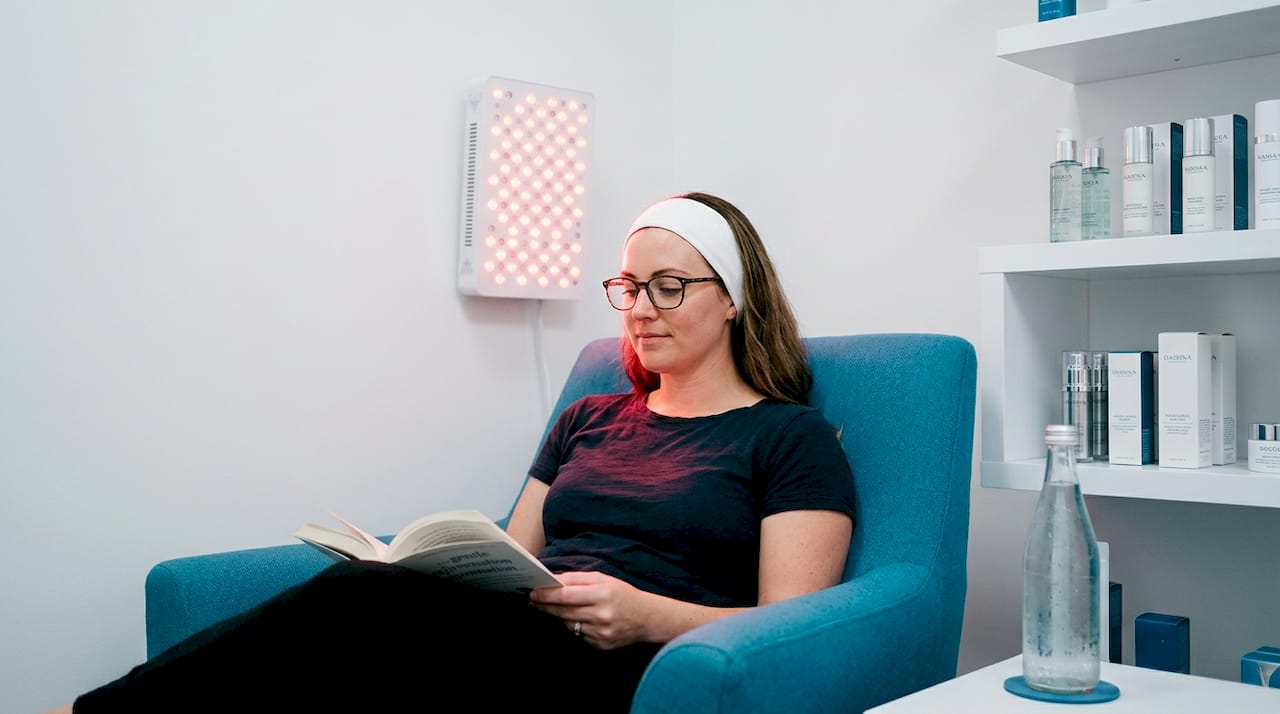
The therapy uses wavelengths between 630 and 660 nanometers (and near-infrared at 800 to 850 nm) to penetrate the epidermis and stimulate mitochondrial activity in skin cells. Put simply, the light energizes cells to work more efficiently, producing more collagen and responding better to oxidative stress, which is the biological process that accelerates visible aging.
Key skin rejuvenation benefits of professional red light therapy include:
Stimulates collagen and elastin without heat or injury
Reduces fine wrinkles and improves skin elasticity over a series of sessions
No downtime, no discomfort, and safe for all skin tones
Complements other treatments as a maintenance option between sessions
Enhances penetration and effectiveness of topical actives applied afterward
The distinction between professional and consumer devices matters more than most people realize. Professional red light therapy delivers significantly higher fluence (energy output per square centimeter) than LED masks sold for home use, which means faster and more clinically meaningful outcomes. A home device used daily for months may approximate what one or two professional sessions deliver.
Pro Tip: Apply a vitamin C serum before your red light therapy session. The light increases cell receptivity, which may amplify the antioxidant benefit of your topical immediately after.
Having covered popular treatment types, let us review a concise comparison to assess which might be best for your needs.
Comparing non-surgical skin treatments: effectiveness, downtime, and best use cases
Understanding the effects of non-surgical procedures side by side makes it much easier to match a treatment to your specific goals, budget, and lifestyle. Use this table as a starting point, not a final answer.
Treatment | Primary benefit | Sessions needed | Downtime | Best for |
Ultherapy (MFU) | Deep lifting and tightening | 1 | None | Mild to moderate facial and neck laxity |
Thermage (monopolar RF) | Collagen tightening, firming | 1 | None | Full-face tightening, body areas |
RF microneedling | Texture, tightening, collagen | 3 to 4 | Minimal (1 to 2 days) | Texture, pores, mild laxity |
Red light therapy | Collagen support, tone | Ongoing (6 to 12+) | None | Maintenance, fine lines, all skin types |
A few additional points to keep in mind when reviewing these non-surgical treatment packages:
Downtime tolerance is often the deciding factor. If your schedule cannot accommodate even 48 hours of visible redness, Thermage or Ultherapy is the more practical path.
Results timeline varies widely. Thermage improvements appear at three months, Ultherapy peaks at six months, and RF microneedling shows early results within 30 days.
Combination approaches outperform single modalities for clients with multiple concerns. Red light therapy between RF sessions, for instance, supports ongoing collagen activity.
With the comparison in mind, we can explore how to make the best decision based on your individual skin and goals.
How to choose the right non-surgical skin treatment for you
Choosing well means being honest about where your skin is right now, not where you wish it were. The best non-surgical skin options require that you assess your actual skin laxity, not your frustration level with the mirror.
Pinch test your skin. Pinch and release skin on your cheek or jaw. If it springs back quickly, you are a good candidate for non-surgical tightening. If it releases slowly or stays folded, a surgical consultation may serve you better.
Consider your age and baseline. Starting Thermage or Ultherapy in your 30s or 40s combined with daily retinoids and sunscreen produces optimal anti-aging outcomes. Earlier intervention means less correction needed per session.
Match treatment to your primary concern. Laxity calls for ultrasound or RF. Texture and pores respond better to RF microneedling. Tone and fine lines benefit from red light therapy or chemical peels.
Plan around your schedule. Some treatments require 24 to 48 hours of reduced social visibility. Others have zero downtime. Choose the timing strategically.
Build a maintenance plan before you start. Reviewing expert skincare routine tips before your first appointment helps you understand what topicals to introduce and when, so your treatment result has the best possible foundation to last.
Pro Tip: Ask your provider to photograph your skin in consistent lighting at your consultation and again at your three-month follow-up. Gradual improvement is easy to dismiss without a side-by-side comparison, and seeing the actual change reinforces the value of your investment.
Next, we share a fresh perspective on maximizing benefits and avoiding common misconceptions about these treatments.
Why combining non-surgical treatments with consistent skincare is the key to lasting results
Here is the part most treatment providers underemphasize: no device does the work alone.
It is tempting to walk out of an Ultherapy or RF microneedling session and assume the hard work is done. In reality, the session initiates a biological process that your daily skincare routine either supports or undermines. The procedure creates the stimulus. Your topicals provide the raw materials your skin needs to respond fully to that stimulus.
No device treatment works optimally without an evidence-based topical baseline like retinol to address collagen deficit. This is not a footnote. It is arguably the most important variable in how long your results last. Clients who combine professional treatments with consistent retinol, peptide serums, and daily SPF routinely outperform clients who receive the same treatment with no supporting skincare. The difference is visible at the six-month mark and even more pronounced at twelve months.
The practical approach we recommend at Lux Veritae Skin Spa is to begin retinol four to six weeks before any collagen-stimulating treatment. This primes the skin’s cellular machinery and ensures it is ready to capitalize on the inflammatory signal the device creates. Introducing retinol after the treatment, when skin may be temporarily sensitive, delays that benefit and risks irritation.
The importance of skincare with treatments is not about selling products. It is about protecting your investment. A $1,200 treatment that fades in four months because the patient skipped daily SPF is a worse outcome than a less expensive treatment maintained correctly for twelve months. Consistency in your routine is the most cost-effective skin solution available to you, and it dramatically amplifies every professional procedure you choose.
Explore non-surgical skin treatments at Lux Veritae Skin Spa
At Lux Veritae Skin Spa, we believe that the right treatment, matched to the right skin, delivered by the right hands, produces results that speak for themselves. Our treatment packages are structured to give you flexibility in both budget and treatment goals, whether you are addressing early fine lines or more visible laxity.
Our team specializes in personalized skin rejuvenation plans that combine proven modalities with the topical support your skin needs to maintain results long-term. For clients interested in lifting and resurfacing, our plasma fibroblast therapy offers a compelling non-surgical option backed by clinical technique and careful artistry. Every plan begins with a thorough consultation. Book your session online and take the first step toward skin that genuinely reflects how you want to look and feel.
Frequently asked questions
What skin issues do non-surgical skin treatments best address?
They are most effective for mild to moderate skin laxity, fine lines, wrinkles, and uneven skin texture, specifically in cases where skin snaps back when gently pinched and surgery is not yet warranted.
How long do results from non-surgical skin treatments typically last?
Results generally develop over 2 to 6 months and can last up to a year, with MFU maintaining results at one year and Thermage showing visible improvement at three to six months after a single session.
Are these treatments safe and do they require downtime?
Yes, most carry minimal to no downtime, and Thermage patients resume activities immediately after treatment, with only mild temporary redness possible across all non-invasive options.
Can I combine non-surgical treatments with my existing skincare routine?
Absolutely. Starting retinol before treatment and maintaining daily sunscreen use actively extends your results and amplifies the collagen benefits each session delivers.
How many sessions do non-surgical skin treatments usually require?
Ultherapy and Thermage typically need a single session for results, while RF microneedling generally requires three to four sessions and red light therapy benefits from ongoing maintenance use.
Recommended
Comments