


Why Skin Type Analysis Is Important for Your Skin


Skin type analysis is the process of identifying your skin’s specific biological traits, including oil production, sensitivity, pigmentation risk, and aging tendency, to build a skincare routine that actually works for you. Without this foundation, you are essentially guessing. The Baumann Skin Typing System classifies skin into 16 distinct types based on four measurable factors, a framework that has fundamentally changed how dermatologists and estheticians approach personalized care. AI-powered tools now achieve 94.2% diagnostic accuracy, making precise skin assessment more accessible than ever. Understanding why skin type analysis is important is not a luxury for skincare enthusiasts. It is the difference between a routine that transforms your skin and one that quietly damages it.
Why skin type analysis is important for effective skincare
Skin type analysis goes far beyond labeling your skin as dry, oily, or combination. Those three categories were designed for simplicity, not precision. They tell you almost nothing about how your skin will react to retinol, niacinamide, or a chemical exfoliant.
The Baumann Skin Typing System addresses this gap directly. Its 16 skin types are built from four binary traits: oily versus dry, sensitive versus resistant, pigmented versus non-pigmented, and wrinkle-prone versus tight. Every combination of these traits produces a unique skin profile. An OSPW type (oily, sensitive, pigmented, wrinkle-prone) needs a completely different routine than an DRNT type (dry, resistant, non-pigmented, tight), even though both might casually describe themselves as “normal.”

Modern skin assessment also factors in conditions that shift over time. Redness, visible pore size, acne activity, and rosacea markers all influence which ingredients your skin can tolerate. AI-powered tools now map these conditions zone by zone across the face, producing a level of detail no mirror self-check can replicate. When you combine that imaging data with a targeted questionnaire, the result is a skin profile grounded in objective evidence rather than guesswork.
Pro Tip: Modern skin diagnosis questionnaires require only about 15 questions and a few minutes to complete. That small time investment can prevent months of using the wrong products.
What a thorough skin assessment actually evaluates
Most people think of skin analysis as a quick visual check. A thorough skin assessment is far more structured. It evaluates multiple overlapping factors simultaneously, because skin conditions rarely appear in isolation.
The four core dimensions of a complete skin type evaluation are:
Oil production: Determines whether your barrier is overproducing sebum, underproducing it, or doing so unevenly across zones.
Sensitivity level: Identifies inflammatory tendencies, reactivity to actives, and predisposition to conditions like rosacea or contact dermatitis.
Pigmentation risk: Flags whether your skin is prone to post-inflammatory hyperpigmentation, melasma, or uneven tone after sun exposure or treatment.
Aging tendency: Distinguishes between intrinsic aging patterns (fine lines, loss of elasticity) and extrinsic damage (sun spots, textural roughness).
It is worth separating cosmetic skin analysis from clinical integumentary assessment. In clinical settings, integumentary assessment focuses on wound healing, systemic health indicators, and precise documentation using grading scales like edema ratings from 1+ to 4+. That is a medical process. Cosmetic skin analysis targets routine optimization and treatment planning, which is the context most relevant to you if you are pursuing better skin health rather than wound care.
Accurate analysis combines questionnaire responses with imaging and AI pattern recognition to distinguish closely related conditions. Dehydration and true dryness look almost identical to the naked eye but require opposite treatment approaches. One needs water-binding humectants. The other needs lipid-rich emollients. Getting that distinction wrong sets your skin back weeks.
How skin type knowledge prevents product mismatch and irritation
The skincare market reached $129.11 billion in 2026, yet a significant share of that spending goes toward products that do not match the buyer’s actual skin needs. That is not a marketing problem. It is an analysis problem.
At least half of people misidentify their skin type, and the most common error is confusing dehydration with dryness. Someone with dehydrated oily skin often strips their barrier further by reaching for mattifying products, triggering rebound oil production and chronic inflammation. The cycle continues until someone correctly identifies what is actually happening at the skin barrier level.
Here is how accurate skin type knowledge changes your product decisions in practice:
Retinoid tolerance: Sensitive skin types require buffered retinol formulas or low-percentage retinaldehyde before progressing to prescription-strength retinoids. Resistant skin types can often start higher without irritation.
Exfoliation frequency: Oily, resistant skin handles daily chemical exfoliation well. Dry, sensitive skin breaks down with the same frequency, leading to micro-tears and inflammation.
Active ingredient layering: Pigmented skin types benefit from vitamin C combined with niacinamide, but the Baumann system flags which pigmented types are also sensitive, requiring a slower introduction to avoid rebound pigmentation.
SPF formulation: Oily skin types perform better with gel or fluid sunscreens. Dry types need cream-based formulas with added emollients to avoid a tight, uncomfortable finish.
Skin also changes. Hormonal shifts, seasonal transitions, stress, and aging all alter your skin’s behavior. A skin type evaluation done once in your twenties does not account for the perimenopausal skin changes that shift oil production and barrier integrity a decade later. Re-assessment is not optional. It is part of maintaining an effective routine. You can find a practical framework for this in a skincare routine guide that walks through routine-building by skin type.
Pro Tip: If your skin feels tight after cleansing but looks shiny by midday, you likely have dehydrated oily skin, not combination skin. These require different product strategies, and misreading this pattern is one of the most common reasons routines fail.
How AI has transformed skin type analysis accuracy
AI has moved skin type analysis from a subjective conversation to a data-driven diagnostic process. The shift matters because human visual assessment, even by trained professionals, carries inherent inconsistency. AI removes that variable.
“AI-driven skin analysis tools are rapidly becoming a standard part of dermatological and cosmetic assessments due to their objectivity and reproducibility.” — AI Skin Report, May 2026
The numbers behind this shift are significant. AI tools achieve 94.2% accuracy in skin condition detection, and 94% of physicians either use or plan to integrate AI skin analysis into their practice by 2026. That level of adoption signals a profession-wide recognition that AI produces better baseline data than traditional methods alone.
What makes AI analysis particularly useful for ongoing skin management is its memory function. AI skin reports with persistent memory track your skin history, log past product reactions, and adjust recommendations as your skin changes. A single dermatologist visit captures one moment in time. An AI tool with longitudinal tracking captures a pattern, which is far more useful for managing conditions like hormonal acne or seasonal sensitivity.
Consumer-facing AI tools do have limitations. They depend on photo quality, lighting consistency, and honest questionnaire responses. They also cannot replace a professional assessment for complex conditions like cystic acne, rosacea subtypes, or suspected skin pathology. The best approach combines AI-generated data with professional interpretation, which is exactly how Luxveritae structures its skin consultations.
Comparing skin type classification methods
Not all skin typing frameworks serve the same purpose. Choosing the right one depends on whether your goal is cosmetic optimization or clinical monitoring.
Method | Classification depth | Best use case | Limitation |
Simple 3-type model (dry, oily, combination) | Low | Quick product labeling | Misses sensitivity, pigmentation, aging factors |
Baumann 16-type system | High | Personalized routine building, treatment planning | Requires validated questionnaire |
AI imaging analysis | High | Objective condition mapping, progress tracking | Dependent on photo quality and tool calibration |
Clinical integumentary assessment | Medical-grade | Wound care, systemic health monitoring | Not designed for cosmetic routine optimization |
The simple three-type model still appears on most drugstore product labels because it is easy to communicate at scale. It is not designed for precision. The Baumann system is the gold standard for cosmetic skin typing because it accounts for the four traits that actually determine how skin responds to ingredients and treatments. Clinical integumentary assessment, as practiced in nursing and wound care, uses systematic documentation with objective grading to track wound progress and systemic skin health. These two worlds rarely overlap, but understanding the distinction helps you ask better questions when seeking professional care.
For most people pursuing better skin health, the Baumann framework combined with AI imaging provides the most complete picture. You can explore how different skin types translate into specific treatment decisions through a skin types treatment checklist that maps analysis results to routine adjustments.
Steps to analyze your skin type accurately
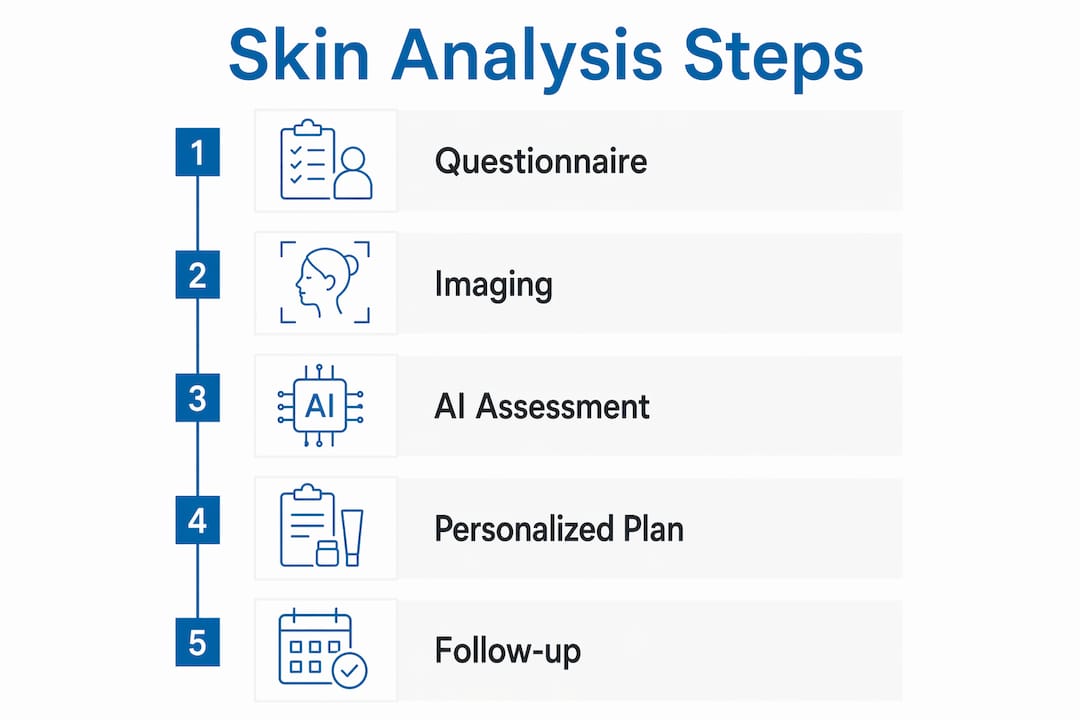
Getting an accurate skin type evaluation does not require a dermatology appointment, though professional analysis remains the most reliable option. Here is a practical sequence that produces usable results:
Start with a validated questionnaire. The Baumann Skin Type Indicator is the most clinically validated self-assessment tool available. It takes roughly 15 questions and a few minutes to complete, and it produces a specific skin type designation rather than a vague category.
Photograph your skin in natural light. Take photos in the morning before applying any products, and again at midday after your skin has had time to behave naturally. Comparing these two snapshots reveals your true oil production pattern.
Use an AI skin analysis tool for objective imaging. Apps and professional tools that analyze pore size, redness distribution, pigmentation spots, and texture give you data points your eyes alone cannot capture accurately.
Book a professional consultation for interpretation. A trained esthetician or dermatologist can contextualize your results, especially if your skin shows signs of sensitivity, rosacea, or post-inflammatory pigmentation that require ingredient-specific guidance.
Re-assess every six months. Seasonal changes, hormonal cycles, and aging all shift your skin’s behavior. A routine that worked perfectly in summer may actively cause dryness and irritation in winter if you do not adjust for your skin’s changed state.
Pro Tip: Do your skin assessment after a full week of your normal routine, not after trying new products. New products temporarily alter oil production, hydration levels, and redness, which skews your results.
Key takeaways
Skin type analysis is the single most important step before choosing any skincare product or treatment, because without it, every decision is based on incomplete information.
Point | Details |
Analysis goes beyond basic categories | The Baumann 16-type system captures oil, sensitivity, pigmentation, and aging factors that simple labels miss. |
Misidentification causes real damage | At least half of people misread their skin type, leading to barrier disruption and ineffective routines. |
AI raises the accuracy bar | AI tools achieve 94.2% accuracy and track skin changes over time for continuously updated recommendations. |
Cosmetic vs. clinical analysis differ | Cosmetic skin typing optimizes routines; clinical integumentary assessment monitors wound and systemic health. |
Re-assessment is non-negotiable | Skin changes with hormones, seasons, and age, making periodic re-evaluation a core part of any effective routine. |
What I have learned from watching skin type analysis change real outcomes
I have seen the same pattern repeat itself more times than I can count. Someone comes in frustrated after spending hundreds of dollars on products that did not work. They have tried everything. What they have not done is start with an accurate skin type assessment.
The most common mistake I see is people treating their skin based on how it looks in the mirror rather than how it actually behaves over a full day. Oily-looking skin is not always oily skin. Tight-feeling skin is not always dry skin. These distinctions matter enormously when you are choosing between a ceramide-rich moisturizer and a lightweight gel, or deciding whether your skin can handle a 10% glycolic acid toner.
What I find most telling is how quickly skin improves once the analysis is accurate. Not weeks. Often days. When you stop fighting your skin with the wrong ingredients and start working with its actual biology, the response is almost immediate. Redness calms. Breakouts reduce. Texture smooths. The skin was not the problem. The mismatch was.
The broader skincare industry still defaults to overgeneralized advice because it scales better commercially. “For all skin types” is a marketing phrase, not a dermatological claim. Personalized skin typing, whether through the Baumann framework, AI diagnostics, or professional consultation, is the only approach that consistently produces results worth keeping. If you are serious about your skin, that is where you start.
— Lux
Discover your skin type with Luxveritae
Luxveritae specializes in skin analysis and personalized treatment planning that goes well beyond surface-level assessments. Every client consultation begins with a thorough skin type evaluation, combining professional expertise with advanced diagnostic tools to identify your skin’s exact needs.
Whether you are dealing with persistent sensitivity, uneven pigmentation, or a routine that has stopped delivering results, Luxveritae’s team builds treatment plans around your specific skin profile. Signature services like BB Glow are selected and customized based on your analysis results, not applied as a one-size solution. Ready to stop guessing and start seeing real change? Book your skin analysis online and get a personalized plan built around your skin’s actual biology.
FAQ
What is skin type analysis?
Skin type analysis is a structured evaluation of your skin’s key biological traits, including oil production, sensitivity, pigmentation tendency, and aging patterns. Modern methods combine questionnaires with AI imaging to produce a detailed, personalized skin profile.
How often should you re-analyze your skin type?
Re-assess your skin type at least every six months, or after any significant hormonal change, seasonal shift, or new medication. Skin behavior changes over time, and a routine built on outdated analysis loses effectiveness.
What is the Baumann Skin Typing System?
The Baumann Skin Typing System classifies skin into 16 types based on four binary traits: oily or dry, sensitive or resistant, pigmented or non-pigmented, and wrinkle-prone or tight. It is the most clinically validated framework for personalized cosmetic skincare.
Can AI replace a professional skin analysis?
AI tools achieve high accuracy for condition detection but work best when combined with professional interpretation. Complex conditions like rosacea subtypes or cystic acne require clinical judgment that AI imaging alone cannot fully provide.
Why do people misidentify their skin type?
At least half of people confuse related but distinct conditions, most commonly mistaking dehydration for dryness. These conditions look similar but require opposite treatment approaches, making accurate analysis critical before selecting any products.
Recommended
Comments