


What Is Skin Barrier Function? Your Complete Guide


Skin barrier function is defined as the skin’s selective permeability system that blocks harmful substances from entering while preventing moisture from escaping. The outermost layer of skin, called the stratum corneum, manages this process through a structure of corneocytes (skin cells) embedded in a lipid matrix. Supporting that physical layer are epidermal tight junctions, the acid mantle, and the skin microbiome. Together, these components determine how resilient, hydrated, and healthy your skin looks and feels every day.
What is skin barrier function at a biological level?
The stratum corneum is the primary site of skin barrier function. It sits at the very surface of the epidermis and acts as the skin’s main checkpoint, regulating what passes in and what stays out. Dermatologists often describe its structure as “bricks and mortar.” The corneocytes are the bricks, and the lipid matrix filling the spaces between them is the mortar.
That lipid matrix is not random fat. It is organized into multilamellar bilayers made up of ceramides, cholesterol, and free fatty acids. Each of these lipid types plays a specific role. Ceramides hold water in. Cholesterol keeps the membrane fluid. Free fatty acids maintain the acidic pH that the barrier needs to function correctly.
Sitting just beneath the stratum corneum, in the granular layer, are epidermal tight junctions. These protein structures act as a secondary checkpoint. They control what moves between skin cells and play a direct role in immune signaling. When tight junctions are compromised, allergens and pathogens can penetrate deeper into the skin.
The acid mantle is the thin film of sweat and sebum that coats the skin’s surface. Its pH sits between 4.5 and 5.0. That acidic environment activates the enzymes responsible for lipid synthesis and cell turnover. Shift the pH too high with alkaline soaps or harsh cleansers, and those enzymes slow down, weakening the barrier over time.
The skin microbiome adds another layer of defense. Beneficial bacteria like Staphylococcus epidermidis compete with pathogens for space and nutrients. They also produce antimicrobial peptides and help modulate immune response. A disrupted microbiome does not just affect skin feel. It directly weakens the barrier’s ability to fight infection and control inflammation.
Pro Tip: Avoid antibacterial soaps on your face. They strip beneficial bacteria along with harmful ones, leaving your microbiome unbalanced and your barrier more vulnerable.
How does the skin barrier regulate moisture and block threats?
Transepidermal water loss, known as TEWL, is the single most reliable metric for measuring barrier integrity. TEWL measures passive water diffusion through the epidermis, completely separate from sweating. When the barrier is intact, TEWL stays low. When the barrier is damaged, water escapes freely, and skin becomes dry, tight, and reactive.
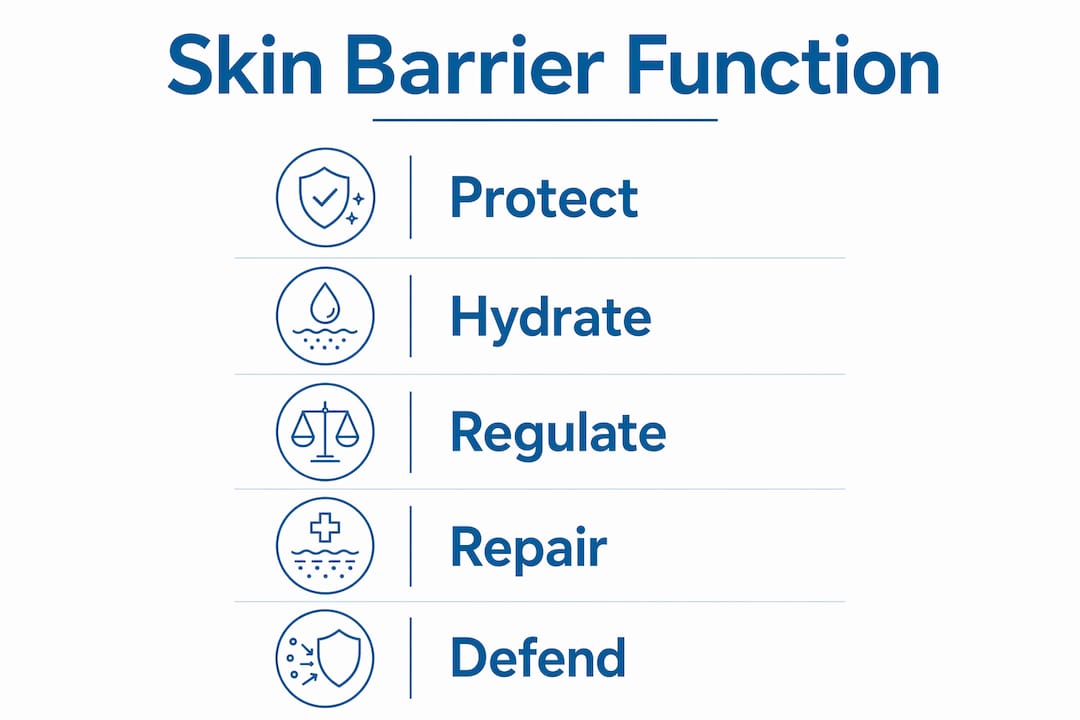
The multilamellar lipid matrix is the primary structure that limits water loss. Think of it as a series of overlapping wax seals. Each lipid bilayer adds another layer of resistance to water movement. Remove or disrupt those layers, and the seals break.
Beyond moisture, the barrier blocks a wide range of external threats:
Allergens and irritants such as pollen, dust mites, and synthetic fragrances are physically blocked by intact corneocytes and lipid layers.
Pathogens including bacteria, fungi, and viruses are repelled by the acid mantle’s low pH and the microbiome’s competitive exclusion.
UV radiation triggers melanin production and activates antioxidant defenses within the epidermis.
Chemicals and pollutants from urban environments are slowed by the lipid matrix before they can reach living skin cells.
The barrier also plays an active immunological role. Keratinocytes in the epidermis release cytokines in response to damage or invasion. This triggers inflammation as a protective response. When the barrier is chronically compromised, that immune signaling stays switched on, contributing to conditions like eczema, psoriasis, and rosacea.
“Skin barrier function encompasses physical, chemical, microbial, and immunological defenses working together. Addressing all four is the key to effective repair.” — Mechanisms and Repair of Skin Barrier Dysfunction
What damages the skin barrier?
Barrier disruption comes from two directions: external stressors and internal factors. Both alter the stratum corneum’s lipid structure, shift the skin’s pH, and disturb the microbiome. The result is increased water loss, reduced lipid integrity, and sensitivity.
External stressors include:
Over-cleansing with harsh surfactants that strip lipids from the stratum corneum
UV exposure that degrades ceramides and triggers oxidative stress in skin cells
Air pollution from particulate matter and ozone that generates free radicals on the skin surface
Low humidity environments that accelerate TEWL and dehydrate the stratum corneum
Aggressive exfoliation with high-concentration acids or physical scrubs that remove the outermost corneocyte layers
Internal factors are equally disruptive. Genetics determine baseline ceramide production and tight junction protein expression. People with filaggrin gene mutations, for example, have structurally weaker barriers and higher rates of atopic dermatitis. Aging reduces lipid synthesis naturally, which is why skin becomes drier and more sensitive after age 30. Chronic stress elevates cortisol, which suppresses the enzymes that build the lipid matrix.
Clinical signs of a damaged barrier are easy to recognize. Skin feels tight after washing. Redness appears without a clear cause. Products that previously felt fine now sting or burn. Dryness persists even after moisturizing. These are not just cosmetic complaints. They are signals that the barrier’s physical, chemical, and microbial defenses are all under strain.
Pro Tip: If your toner or serum stings, your barrier is likely compromised. Pause active ingredients like retinoids and AHAs until the barrier recovers, then reintroduce them slowly.
How to strengthen your skin barrier through skincare and lifestyle
Barrier repair is not a single-ingredient fix. Restoring lipid bilayer organization and moisture retention must happen simultaneously. Single-ingredient approaches consistently fall short because the barrier is a multilayered system. Effective repair requires addressing lipids, pH, hydration, and the microbiome at the same time.
The TLC repair strategy provides a clear framework:
Target the disruption. Identify and remove the stressor. Stop using the product that is stripping your barrier. Reduce exfoliation frequency. Add a physical SPF to limit UV damage.
Lock in moisture. Apply a ceramide-rich moisturizer to a damp face. Ceramides are the dominant lipid in the stratum corneum and the most direct way to replenish what is lost.
Connect skin cells. Use niacinamide to support tight junction integrity and reduce inflammation. Niacinamide also helps regulate sebum and supports the acid mantle’s pH.
The table below compares the most effective barrier-supporting ingredients by their primary mechanism:
Ingredient | Primary mechanism | Best for |
Ceramides | Replenishes lipid matrix | Dry, compromised, or aging skin |
Niacinamide | Supports tight junctions and pH | Sensitive, reactive, or oily skin |
Hyaluronic acid | Draws water into the epidermis | Dehydrated skin of all types |
Colloidal oatmeal | Soothes inflammation and seals surface | Eczema-prone or irritated skin |
Prebiotics and postbiotics | Feeds and supports beneficial microbiome | Microbiome-disrupted or acne-prone skin |
Daily habits matter as much as product choices. Wash your face with a pH-balanced cleanser, ideally between pH 4.5 and 5.5. Avoid hot water, which dissolves lipids. Apply moisturizer within 60 seconds of cleansing to trap residual moisture. Drink enough water to support systemic hydration. Sleep is also a direct factor. Skin barrier repair peaks during deep sleep, when keratinocyte turnover accelerates.
For a personalized approach to building a routine that protects your barrier, a skin type routine guide can help you match products to your specific needs without guessing.
Key takeaways
The skin barrier is a multilayered defense system, and repairing it requires addressing lipids, pH, hydration, and the microbiome together, not one at a time.
Point | Details |
Stratum corneum is the core | The outermost skin layer controls permeability, moisture retention, and pathogen defense. |
TEWL is the key metric | Elevated transepidermal water loss signals barrier damage before visible symptoms appear. |
pH balance is non-negotiable | Keeping skin pH between 4.5 and 5.0 activates lipid synthesis and protects the microbiome. |
Ceramides are the foundation | Replenishing ceramides directly restores the lipid matrix that holds moisture in. |
Repair requires multiple approaches | Combining ceramides, niacinamide, gentle cleansing, and microbiome support outperforms any single fix. |
What I’ve learned from watching skin barrier science evolve
The biggest misconception I see is that skin barrier repair is just about moisturizing more. People reach for the thickest cream they can find, slather it on, and wonder why their skin is still reactive two weeks later. Moisturizer alone does not rebuild a damaged lipid matrix. It sits on top of the problem.
What the research now makes clear is that barrier formation involves liquid-liquid phase separation and filaggrin condensates at the cellular level. This is not passive architecture. The barrier is actively constructed through regulated differentiation. That means the skin needs the right internal conditions, not just topical products, to rebuild itself properly.
The second thing I have seen people get wrong is ignoring pH. You can use the most expensive ceramide serum on the market, but if you are washing your face with an alkaline bar soap, you are undoing the repair every single morning. The acid mantle is not optional. It is the environment that makes every other barrier component work.
The third mistake is treating the microbiome as an afterthought. Probiotic and prebiotic skincare is not a trend. Barrier health is strongly linked to microbiome balance, and that connection runs both ways. A disrupted barrier lets harmful bacteria in. A disrupted microbiome weakens the barrier further. You have to address both.
For natural approaches that complement professional care, repairing the barrier naturally offers practical ingredient guidance worth reading alongside clinical options.
— Lux
Professional treatments that support your skin barrier
Your home routine builds the foundation, but some barrier concerns benefit from professional support. At Luxveritae, every treatment is designed around your skin’s actual condition, not a generic protocol.
The BB Glow treatment at Luxveritae infuses micro-tinted serums into the skin, improving surface hydration and evening tone while supporting the skin’s natural moisture balance. For clients dealing with under-eye concerns linked to barrier thinning and dehydration, the under eye lightening service offers targeted correction with paramedical precision. Every session at Luxveritae begins with a skin assessment so treatments work with your barrier, not against it. Book your appointment and get a plan built specifically for your skin.
FAQ
What is the skin barrier, in simple terms?
The skin barrier is the outermost layer of your skin that blocks harmful substances from entering and prevents moisture from escaping. It is primarily made up of the stratum corneum, a layer of dead skin cells held together by lipids.
How do I know if my skin barrier is damaged?
Signs of a damaged barrier include persistent dryness, stinging when applying products, redness, and increased sensitivity. Elevated transepidermal water loss is the clinical indicator, but these visible symptoms are reliable signals in everyday skincare.
What ingredients repair the skin barrier fastest?
Ceramides, niacinamide, and hyaluronic acid are the most evidence-backed ingredients for barrier repair. Ceramides directly replenish the lipid matrix, niacinamide supports tight junctions, and hyaluronic acid restores water content in the epidermis.
Can the skin barrier repair itself naturally?
Yes, the skin barrier regenerates through continuous keratinocyte turnover and lipid synthesis. The process is faster when you remove stressors, maintain a pH-balanced routine, and support it with barrier-friendly ingredients.
Does diet affect skin barrier health?
Diet directly influences barrier function. Essential fatty acids from foods like salmon, flaxseed, and walnuts support ceramide and lipid production. Deficiencies in zinc, vitamin D, and omega-3s are linked to weaker barrier integrity and higher rates of skin sensitivity.
Recommended
Comments