


What Is Non-Invasive Skin Treatment: Your 2026 Guide


Non-invasive skin treatment is defined as any cosmetic procedure that improves skin appearance without breaking the skin surface, requiring incisions, or penetrating beyond the body’s natural openings. The industry term for this category is “non-invasive cosmetic procedure,” and it covers a wide spectrum of energy-based, light-based, and injectable methods used to address scars, discoloration, fine lines, and uneven texture. If you are between 25 and 50 and researching ways to improve your skin without surgery or significant downtime, this guide covers every major treatment type, what to realistically expect, and how to choose the right option for your specific concerns.
What is non-invasive skin treatment and how does it work?
A non-invasive procedure is medically defined as one that does not break the skin or contact mucosa beyond natural openings. In cosmetic practice, this means treatments that deliver energy, light, or injectable substances to the skin without cutting or wounding it. The goal is to trigger the skin’s own repair and renewal processes, producing improvements in texture, tone, and structure over time.
The core mechanism behind most non-invasive facial treatments is collagen stimulation. Collagen is the structural protein responsible for skin firmness and smoothness. As you age, collagen production slows, which leads to fine lines, sagging, and uneven texture. Energy-based treatments like lasers and radiofrequency devices heat the deeper layers of skin to trigger new collagen production without damaging the outer surface. Light-based therapies like red light therapy and intense pulsed light (IPL) work similarly, using specific wavelengths to target pigment, redness, or cellular repair pathways.
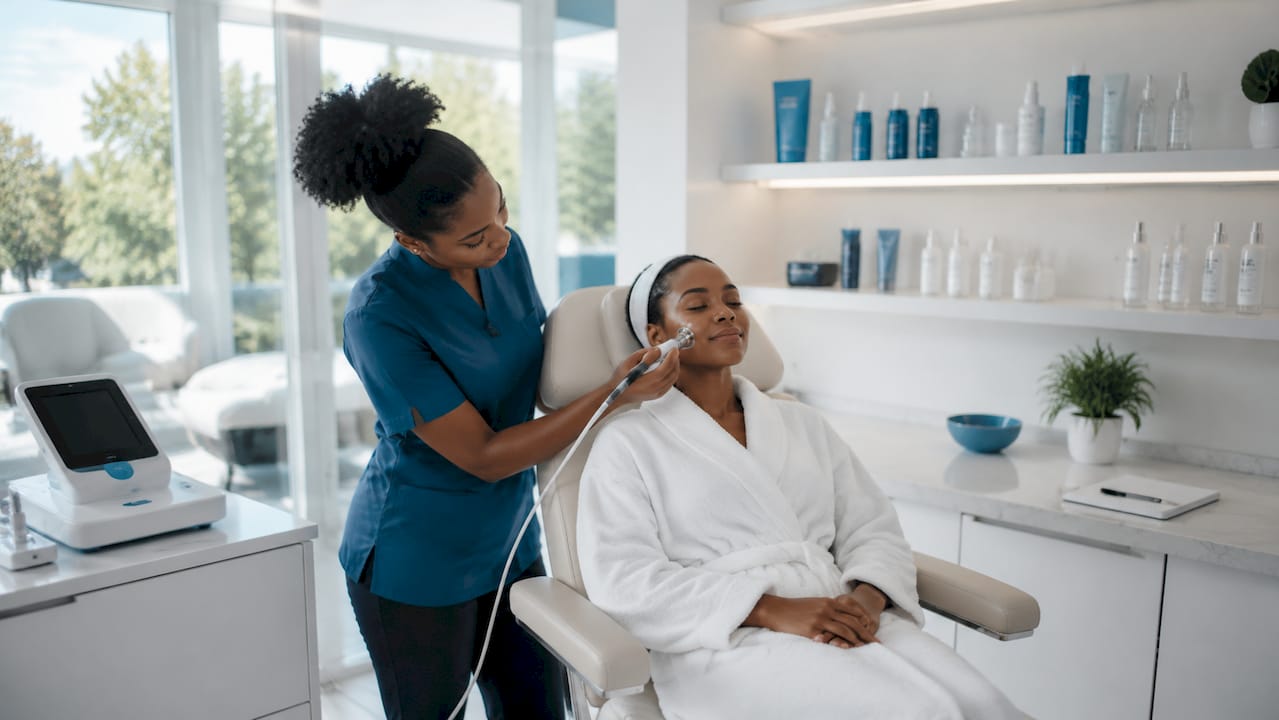
Injectables like botulinum toxin (Botox) and dermal fillers are also classified as non-invasive in most cosmetic contexts, even though they involve a needle. The distinction is that no incision or skin removal occurs. Botulinum toxin reduces dynamic wrinkles by relaxing the muscles that cause expression lines, while dermal fillers restore lost volume beneath the skin surface. Both are among the most popular non-surgical skin rejuvenation options available today, and their effects are measurable and well-documented.
Types of non-invasive procedures: what are your main options?
The category of non-invasive skin treatments is broader than most people realize. Here are the primary types you will encounter:
Ablative lasers (such as CO2 and Erbium lasers) remove the outer skin layer to resurface texture and reduce scars. They deliver faster results but require more recovery time, typically one to two weeks.
Nonablative lasers stimulate collagen without removing the skin surface. Nonablative lasers require 4 to 6 sessions with gradual improvements and fewer side effects, making them a strong choice for people who cannot afford downtime.
Intense pulsed light (IPL) uses broad-spectrum light to target pigmentation, redness, and sun damage. It is particularly effective for discoloration and uneven skin tone.
Red light therapy uses red and near-infrared LEDs to stimulate collagen, reduce fine lines, and address dark spots. It is FDA-approved and noninvasive, though it requires consistent sessions and works best alongside a solid sun protection routine.
Ultrasound and radiofrequency (RF) treatments like Ultherapy and Thermage deliver heat energy to deeper skin layers to tighten and lift without any surface disruption.
Injectable neurotoxins and fillers address wrinkles and volume loss without surgery, with results lasting from three months to two years depending on the product used.
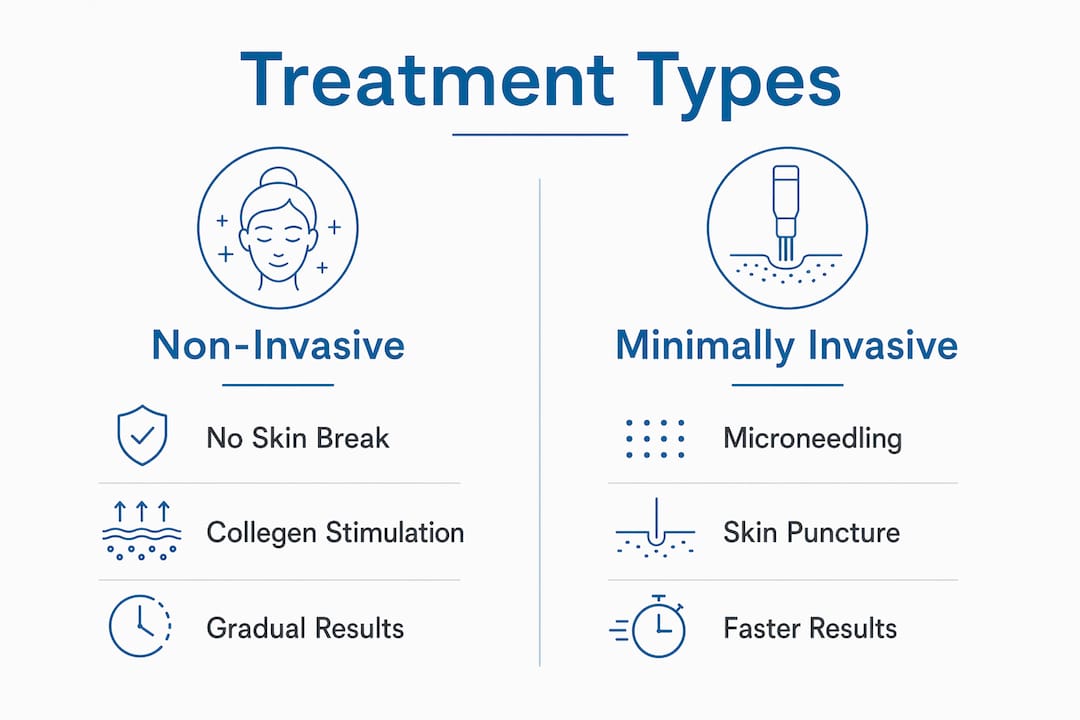
One important distinction worth knowing: microneedling is often marketed as non-invasive, but it is technically classified as minimally invasive because it punctures the skin. This matters when you are evaluating recovery time and risk. Always ask your provider exactly what the procedure involves before booking.
Pro Tip: Ask any provider to specify whether a treatment is truly non-invasive or minimally invasive. The difference affects your recovery time, risk of side effects, and suitability for your skin type.
Benefits and limitations of non-invasive skin treatments
Non-invasive treatments offer a compelling set of advantages for adults who want real results without surgical risk or extended recovery. Understanding both sides helps you set accurate expectations.
Key benefits include:
Minimal to no downtime. Most non-invasive facial treatments allow you to return to normal activities the same day or within 24 to 48 hours. This is a significant advantage over surgical options that require weeks of recovery.
Suitability for a range of skin types. Nonablative lasers carry less risk of hypopigmentation, making them appropriate for darker skin tones that are prone to pigmentation changes after treatment. This is a critical factor if you are treating discoloration.
Gradual, natural-looking results. Because these treatments work by stimulating your skin’s own processes, improvements appear over weeks and months rather than overnight. This means results tend to look authentic rather than dramatic or artificial.
Lower risk profile. Without incisions or general anesthesia, the risks of infection, scarring, and systemic complications are significantly lower than with surgical procedures.
Flexibility and customization. Treatments can be combined and adjusted based on your skin’s response, allowing providers to tailor protocols to your specific concerns over time.
The limitations are equally worth knowing. Non-invasive options produce more gradual results than surgery, and non-surgical facial rejuvenation often requires 4 to 6 sessions spaced over several months before final outcomes are visible. For deep scars or significant volume loss, surgical intervention may still be the more effective long-term solution. Cost also accumulates across multiple sessions, which can make the total investment comparable to or higher than a one-time surgical procedure.
Pro Tip: Before committing to a treatment series, ask your provider for a realistic timeline and total cost estimate. Knowing the full picture upfront prevents surprises and helps you plan your skin care budget accurately.
You can read more about the advantages of non-surgical options and what outcomes to realistically expect from each modality.
How to choose the right treatment for scars and discoloration
Choosing the best non-invasive skin care option for your specific concern requires more than reading a list of treatments. It requires matching the treatment mechanism to your skin’s actual condition.
Concern | Recommended treatment type | Key consideration |
Post-acne discoloration | IPL or nonablative laser | Skin tone affects laser selection; darker tones need gentler wavelengths |
Flat acne scars | Nonablative laser or RF microneedling | RF microneedling is minimally invasive, not strictly non-invasive |
Sun damage and uneven tone | IPL or red light therapy | Requires sun protection before and after treatment |
Fine lines and mild laxity | Botulinum toxin, RF, or ultrasound | Injectable results are faster; energy-based results are more gradual |
Under-eye discoloration | Specialized lightening treatments | Requires a provider experienced with delicate periorbital skin |
For treating hyperpigmentation effectively, the most important factor is matching the treatment to your Fitzpatrick skin type. Using an ablative laser on a darker skin tone without proper assessment can worsen discoloration rather than improve it. A professional consultation is not optional here. It is the step that determines whether your treatment works or backfires.
When comparing treatment schedules and cost, ultrasound skin tightening averages $993 nationally, with a range from $770 to $1,862 depending on provider and location. This gives you a useful benchmark for budgeting, though laser and light-based treatments vary widely. Reviewing treatment packages at your chosen spa before your consultation helps you understand what is included and what additional sessions might cost.
Key questions to ask your provider before starting:
Is this treatment truly non-invasive, or does it involve skin puncture?
How many sessions will I need before seeing results?
What are the risks for my specific skin tone and condition?
What post-treatment care is required, and for how long?
What to expect during and after your sessions
Understanding the practical reality of non-invasive skin treatments helps you prepare and get the most from each session.
Session length typically ranges from 20 to 60 minutes depending on the treatment area and modality. IPL and red light therapy sessions are often shorter, while RF and ultrasound treatments take longer.
Sensation during treatment varies. Most patients describe laser and RF treatments as a warm snapping or prickling sensation. Injectables involve a brief sting. Red light therapy is painless.
Immediate side effects are usually mild. Temporary redness, slight swelling, or warmth in the treated area is normal and typically resolves within a few hours to two days.
Post-treatment care is non-negotiable. Sun protection with SPF 30 or higher is required after any laser or light-based treatment to protect the skin while it heals and to prevent new pigmentation. Gentle moisturizing and avoiding active ingredients like retinol or acids for several days post-treatment are standard protocols.
Results timeline follows the collagen remodeling cycle. Most patients see initial changes within two to four weeks, with full results visible after the complete treatment series and a further three to six months of collagen maturation.
Home devices like consumer-grade red light therapy panels are safe but less powerful than professional treatments. They work best as maintenance tools between professional sessions, not as replacements for them. For active scar treatment or significant discoloration, professional-grade equipment delivers the energy levels needed to produce meaningful change.
For a broader understanding of what skin rejuvenation actually means for your skin at a cellular level, it helps to understand how collagen remodeling and cellular turnover drive visible improvements.
Key takeaways
Non-invasive skin treatments work by triggering the skin’s own collagen and repair processes through energy, light, or injectable methods, without incisions or skin breaks, making them the most accessible category of cosmetic skin improvement available.
Point | Details |
Definition matters | Non-invasive means no skin break; microneedling is minimally invasive, not non-invasive. |
Multiple sessions are standard | Most treatments require 4 to 6 sessions over several months for full results. |
Skin type drives treatment choice | Nonablative lasers are safer for darker skin tones prone to pigmentation changes. |
Cost varies significantly | Ultrasound skin tightening averages $993 nationally; total series costs can rival surgical options. |
Home devices supplement, not replace | At-home red light devices maintain results but cannot replace professional treatment for scars or discoloration. |
What I have learned from years of treating real skin concerns
The most common mistake I see clients make is choosing a treatment based on what worked for someone else’s skin. Non-invasive does not mean one-size-fits-all. The same laser setting that clears post-acne marks on fair skin can trigger a hyperpigmentation flare on a deeper skin tone if the provider has not properly assessed the Fitzpatrick scale and adjusted accordingly.
The second thing I want you to understand is that “non-invasive” is a marketing term as much as a medical one. Providers use it loosely. I have seen treatments labeled non-invasive that involve skin puncture, chemical burns, or significant inflammation. Clarifying exactly what happens to your skin during a procedure is your right as a client, and any reputable provider will answer that question clearly and without hesitation.
What actually works for scars and discoloration is a combination approach: a professional treatment series that targets the specific concern, paired with a consistent home care routine that protects and supports the skin between sessions. Expecting one treatment to fix years of sun damage or deep scarring is unrealistic. Expecting a well-designed series of treatments to produce a meaningful, visible improvement is entirely reasonable.
The clients who get the best results are the ones who show up consistently, follow post-treatment protocols, and communicate openly with their provider about what they are seeing. That is the real secret to non-invasive skin improvement.
— Lux
Start your skin improvement journey with Luxveritae
Luxveritae specializes in personalized, non-surgical skin rejuvenation for clients who want real results without surgery or extended downtime. Whether you are addressing post-acne discoloration, under-eye darkness, or uneven skin tone, the team at Luxveritae builds treatment plans around your specific skin type, lifestyle, and goals. Signature services include BB Glow for overall tone improvement and scar camouflage for clients dealing with visible scarring. For under-eye discoloration specifically, the under-eye lightening treatment at Luxveritae is a specialized option designed for the delicate periorbital area. Book your consultation to get a professional assessment and a treatment plan built for your skin.
FAQ
What is non-invasive skin treatment in simple terms?
A non-invasive skin treatment is any cosmetic procedure that improves skin appearance without cutting, puncturing, or surgically altering the skin. Common examples include laser therapy, IPL, red light therapy, and injectable fillers.
How many sessions does a non-invasive treatment typically require?
Most non-invasive facial treatments require 4 to 6 sessions spaced over several months, with final results visible after the full series and an additional collagen maturation period of three to six months.
Is non-invasive skin treatment safe for darker skin tones?
Yes, when the correct modality is selected. Nonablative lasers carry a lower risk of hypopigmentation than ablative options, making them the preferred choice for pigment-prone or darker skin tones. A professional skin assessment is required before treatment.
How much does non-invasive skin treatment cost?
Costs vary widely by modality. Ultrasound skin tightening averages $993 nationally, with a range of $770 to $1,862. Laser and light-based series costs depend on the number of sessions and the provider’s pricing structure.
Is microneedling a non-invasive treatment?
Microneedling is classified as minimally invasive, not non-invasive, because it punctures the skin to stimulate collagen. This distinction matters for recovery time, risk assessment, and suitability for sensitive or pigment-prone skin types.
Recommended
Comments