


What Is a Medical Spa Consultation: Your Guide


Walking into a medical spa for the first time can feel uncertain, especially when you’re not sure what to expect. Understanding what is a medical spa consultation before you arrive changes everything. This isn’t a sales pitch dressed up in white coats. It’s a clinically structured appointment where a licensed medical professional evaluates your health history, examines your skin, and builds a treatment plan around your specific goals and anatomy. Think of it as the foundation that makes every treatment both safer and more effective.
Table of Contents
Key takeaways
Point | Details |
Consultations are clinical, not commercial | A medical spa consultation is a required medical interaction, not a selling opportunity. |
Physician oversight is non-negotiable | Medical spas operate under licensed practitioners who are qualified to assess risks and prescribe treatments. |
Preparation improves your results | Arriving with your medical history and clear goals helps your provider build a more precise treatment plan. |
Consultations are legally required | Most states mandate a face-to-face consultation before any medical aesthetic treatment can begin. |
Personalized plans follow every consultation | Your provider creates recommendations tailored to your anatomy, goals, and health status, not a generic menu. |
What a medical spa consultation actually involves
A lot of people assume they’ll sit across from someone who tries to sell them on the most expensive treatment available. The reality is quite different. Consultations are a required clinical step before any treatment can begin, and they follow a structured process that mirrors what you’d find in a medical office.
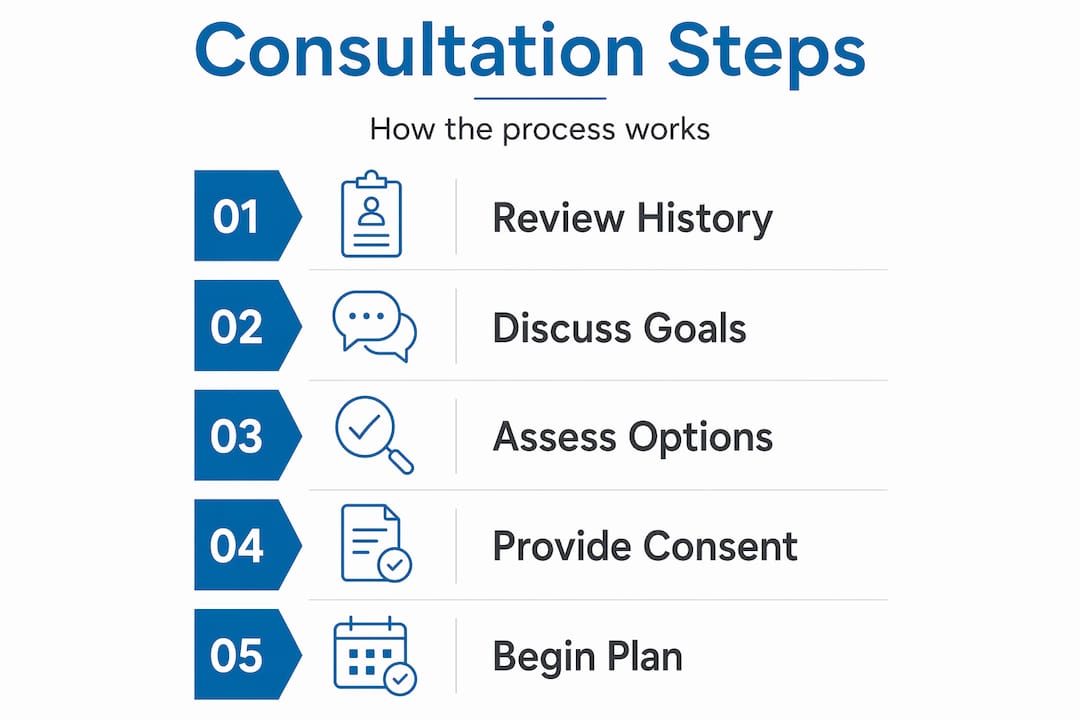
You’ll typically meet with a prescribing practitioner. That means a medical doctor, nurse practitioner, or physician assistant. This person is qualified to review your health status and determine whether a treatment is appropriate for you. The conversation covers your medical history, current medications, past procedures, allergies, and any chronic conditions that might affect treatment safety.
From there, the appointment moves into your aesthetic goals. This is where you describe what’s bothering you, what you’d like to improve, and what you hope the results will look like. Your provider isn’t just listening for talking points. They’re evaluating individual anatomy and aging patterns alongside your stated goals to figure out what’s actually possible and appropriate for your skin.
The physical assessment is the part most people don’t anticipate. Your provider will examine the treatment area using diagnostic tools that measure skin tone, texture, hydration levels, and condition. This isn’t a visual once-over. It produces objective data that informs every recommendation they make.
Here’s what the consultation covers in practical terms:
Medical history review: Current medications, past surgeries, allergies, and skin conditions
Lifestyle assessment: Sun exposure habits, skincare routine, diet factors that affect skin health
Aesthetic goals discussion: What bothers you, what you’d like to achieve, and your realistic expectations
Physical skin examination: Texture, tone, pigmentation, volume loss, and elasticity
Treatment options overview: Which services apply to your concerns, what each involves, and what recovery looks like
Risk and contraindication review: Identifying anything that could make a treatment unsafe for you specifically
Pro Tip: Bring photos of results you admire and results you want to avoid. Visual references give your provider much more to work with than verbal descriptions alone.
Why consultations are legally required and medically significant
Here’s something most people don’t know until they’re deep in their research. Most states legally require an initial face-to-face consultation with a licensed prescribing practitioner before any medical aesthetic treatment can take place. This isn’t a formality some medical spas invented to seem more professional. It’s a regulatory requirement built into how these facilities operate.
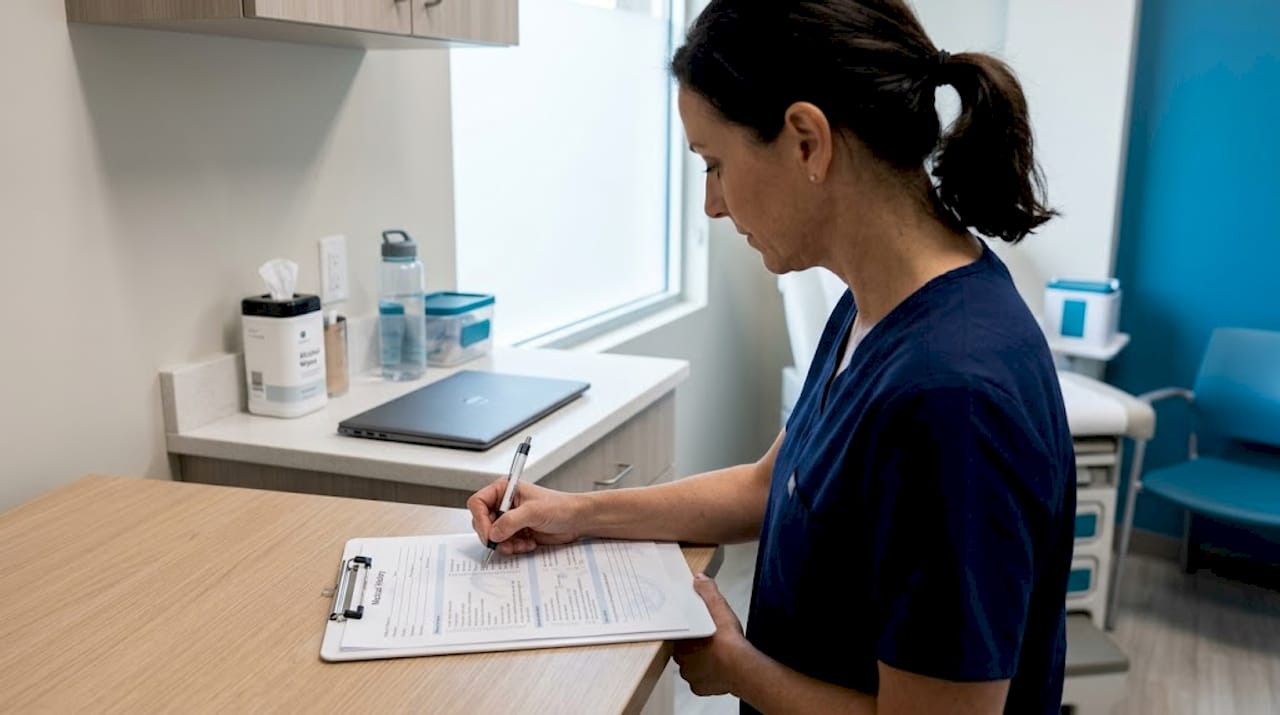
The consultation establishes the practitioner-patient relationship, which is the legal foundation that allows a medical professional to prescribe, treat, and take responsibility for your care. Without it, no licensed provider can ethically or legally proceed with treatments like injectables, laser therapy, or chemical peels at medical-grade strengths.
This is where the difference between a medical spa and a standard beauty clinic becomes concrete. Medical spas require physician oversight, prescribing authority, and emergency readiness in ways that beauty clinics typically don’t. A licensed aesthetician at a day spa can provide excellent facials. They cannot administer neurotoxins, assess cardiovascular contraindications, or manage adverse reactions to medical-grade treatments.
Feature | Medical spa | Beauty clinic |
Licensed medical oversight | Required | Not required |
Prescription treatments available | Yes | No |
Emergency preparedness protocols | Mandatory | Varies |
Documented informed consent | Required | Not always required |
Consultation before treatment | Legally mandated | Optional |
Treatment scope | Medical-grade and clinical | Cosmetic and wellness only |
“Consultations are not a formality. They are the legal and clinical safeguard that protects you as a patient and holds your provider accountable for every decision made during your care.” American Med Spa Association
Proper documentation of medical history and informed consent during consultation also protects you if something unexpected happens. You have a recorded record of what was discussed, agreed upon, and planned. That matters. For more on what distinguishes a medically supervised facility from a basic spa, the Luxveritae guide to med spa safety breaks it down clearly.
How to prepare for a medical spa consultation
Most people arrive underprepared, which limits what their provider can actually do for them. Patients often overlook thorough preparation as a factor in treatment quality and safety. Thirty minutes of preparation before your appointment changes the depth and precision of the plan you’ll receive.
Here’s exactly how to prepare:
Compile your medical history. List all current medications, including supplements and over-the-counter products. Note any previous cosmetic procedures and their outcomes, especially if there were complications.
Document your current skincare routine. Bring the products you use daily, or write them down. Active ingredients like retinoids, vitamin C, and exfoliating acids matter to your provider.
Note any known sensitivities or allergies. This includes reactions to topical products, anesthetics, or previous injectables.
Define your goals clearly. Think about what specifically bothers you, whether that’s uneven skin tone, fine lines, volume loss, or texture. Vague goals produce vague plans.
Set a realistic budget range in your mind. You don’t have to disclose it immediately, but knowing what you’re comfortable spending helps your provider prioritize recommendations.
Prepare your questions in advance. Write them down so you don’t forget them once you’re in the room.
Speaking of questions, knowing what to ask is half the value of questions to ask at a medical spa consultation. Here are the ones that actually matter:
What are your credentials and specific training for this treatment?
What results are realistic for someone with my skin type and concerns?
What are the possible side effects and how are they managed here?
What is the recovery timeline, and are there activity restrictions afterward?
How many sessions will I likely need to see meaningful results?
What happens if I have an adverse reaction?
Pro Tip: If a provider is defensive or dismissive when you ask about credentials or risks, treat that as a signal worth paying attention to. Confident, competent providers welcome these questions.
What happens after your consultation
The consultation doesn’t end with a list of services and a price quote. What comes next is where the real value shows up. After consultation, patients receive personalized treatment plans that account for individual anatomy, skin health, and long-term aesthetic goals rather than generic protocols.
Your plan will typically include:
Recommended treatments in priority order, based on what will have the greatest impact on your specific concerns
A treatment timeline, outlining when each service should occur and how they interact with each other
Pre-treatment instructions, which might include stopping certain medications, avoiding sun exposure, or adjusting your skincare products
Expected outcomes and realistic timeframes for seeing results, calibrated to your skin type and the treatments selected
Follow-up scheduling, because most medical spa services require multiple sessions or maintenance appointments to sustain results
Long-term care strategies, including at-home skincare recommendations that support and extend the effects of in-office treatments
One thing that surprises many first-time clients is how the consultation shapes not just the first appointment but the months that follow. Personalized plans reduce risks and improve satisfaction specifically because they account for factors unique to your body. Two people with similar concerns may receive entirely different recommendations based on their anatomy, health history, and lifestyle.
The benefits of medical spa consultations extend beyond safety. They create a framework for consistent, trackable improvement over time. You leave knowing exactly what’s planned, why it was chosen, and what to watch for.
My honest take on what makes consultations worth it
I’ve watched consultations transform what was going to be a basic treatment session into a genuinely life-changing experience for clients. And I’ve also seen what happens when people skip or rush through this step.
In my experience, the clients who got the best results were always the ones who showed up prepared, asked hard questions, and treated the consultation as a real medical appointment rather than a formality. They came in with photos, wrote down their goals, and pushed back when something didn’t make sense. That engagement is not accidental. It shapes everything the provider does.
What I find genuinely frustrating is when people choose a facility based on price alone, without checking whether the consultation is thorough or even real. Lack of medical supervision risks unsafe treatments and poor outcomes. A $50 savings on a consultation-free appointment is not worth the risk of an adverse reaction managed by someone without the training to handle it.
My advice is simple. Walk in with your questions written down. Expect the provider to review your history seriously. If the consultation feels like a checkout counter, leave. The right provider will spend time understanding you before they touch your skin. That’s the standard, and anything less isn’t worth your time or money.
— Lux
Start your skin journey with Luxveritae
At Luxveritae, every client relationship begins with exactly the kind of thorough, personalized consultation described in this article. The team approaches each appointment as a clinical conversation, not a service menu review, which is what makes the results feel authentic rather than overdone.
Whether you’re exploring your first aesthetic treatment or looking to build on results you’ve already achieved, Luxveritae’s approach starts with understanding your skin, your goals, and your health history before recommending anything. Browse the available treatment options and packages to see what’s included, or book your consultation directly online. Signature services like BB Glow are matched to each client’s skin type through exactly the consultation process outlined here.
FAQ
What is a medical spa consultation?
A medical spa consultation is a required clinical appointment where a licensed practitioner reviews your medical history, examines your skin, discusses your aesthetic goals, and outlines treatment options tailored to your specific health status and anatomy.
How long does a medical spa consultation take?
Most consultations last between 30 and 60 minutes, depending on the complexity of your concerns and how many treatment areas you want to discuss.
Is a consultation required before medical spa treatments?
Yes. Most states legally require a face-to-face consultation with a licensed prescribing practitioner before any medical aesthetic treatment can begin, making it both a legal and clinical requirement.
What questions should I ask during a medical spa consultation?
Ask about the provider’s credentials, realistic outcomes for your skin type, potential side effects, recovery time, and how adverse reactions are handled. Transparent communication during this step directly improves your safety and results.
What is the difference between a medical spa and a beauty clinic?
Medical spas operate under physician oversight, offer prescription-level treatments, require documented informed consent, and must maintain emergency readiness. Beauty clinics typically provide cosmetic-only services without the same level of medical supervision or regulatory requirements.
Recommended
Comments