


Why Weight Loss Affects Skin Appearance: What You Need to Know


Weight loss affects skin appearance primarily because it reduces the three structural elements that keep skin firm: collagen, elastin, and subcutaneous fat. When these supports shrink faster than skin can adapt, the result is sagging, hollowing, and texture changes that no amount of moisturizer alone can fix. Understanding why this happens gives you a real advantage in managing what your skin does during and after a diet. Genetics, age, and the speed of your weight loss all shape how dramatic those changes become.
Why weight loss affects skin appearance: the biology behind it
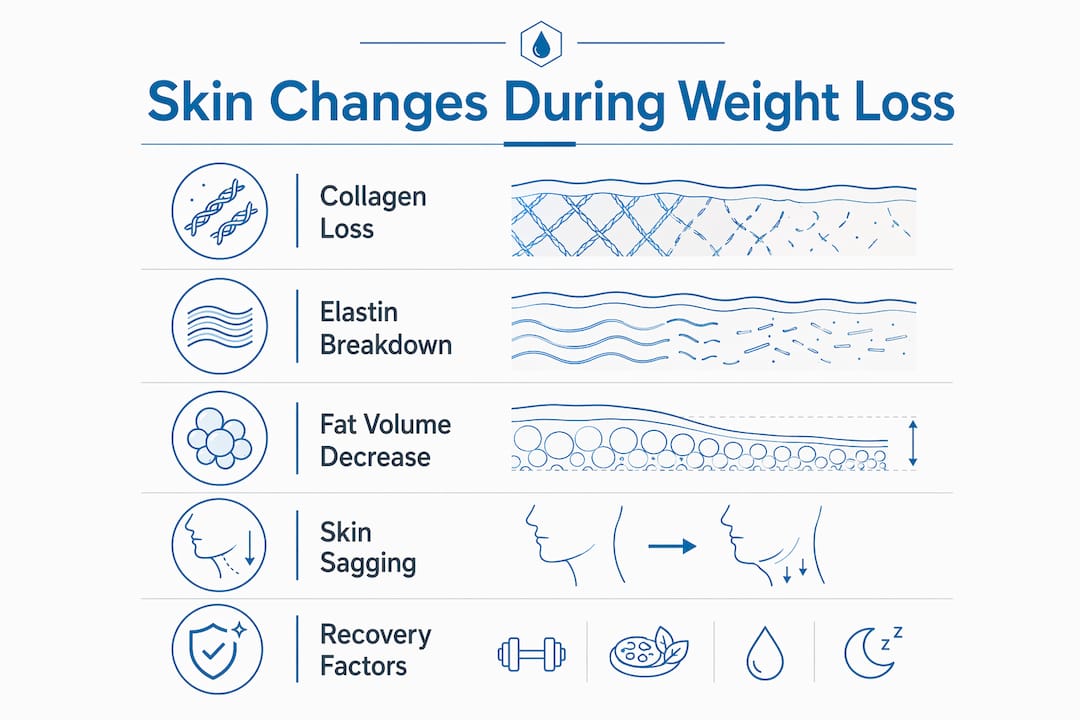
Skin firmness depends on collagen and elastin fibers woven through the dermis, plus a layer of subcutaneous fat that acts as padding beneath the surface. When you lose weight, fat volume shrinks and those fibers face mechanical stress they were not designed to handle quickly. The skin does not simply snap back like a rubber band. It needs time, nutrients, and the right conditions to remodel itself.
Genetics plays a major role in how your skin responds to these changes. Two people losing the same amount of weight at the same pace can end up with very different outcomes based on their inherited collagen density and fiber quality. Age compounds the problem further, because collagen and elastin production decline naturally over time, leaving less reserve capacity for recovery.
How does collagen and elastin loss cause skin sagging?
Collagen provides tensile strength. Elastin provides recoil. Together, they determine whether skin bounces back after being stretched. Rapid weight loss stresses both proteins simultaneously, reducing their density and degrading fiber quality faster than the body can rebuild them.
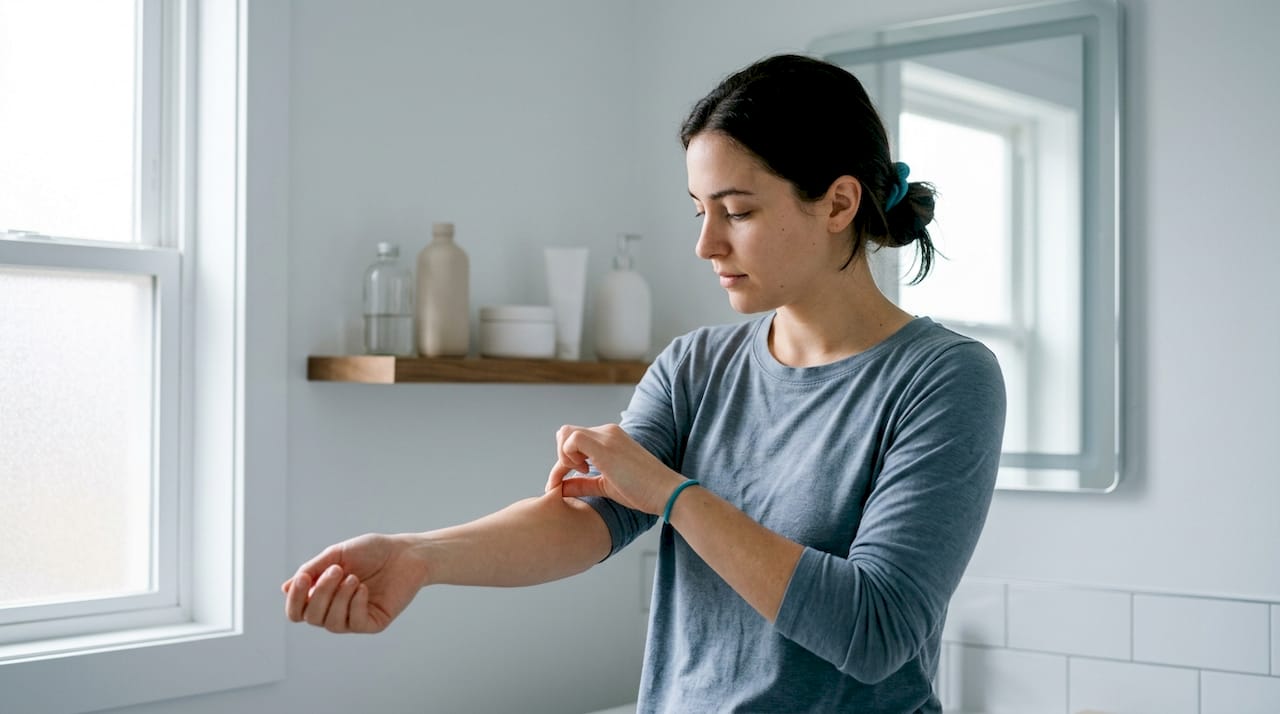
Age reduces collagen and elastin production, which means adults over 40 face a compounded disadvantage. Younger skin has more reserve capacity to remodel after weight loss. Older skin does not, so the same 30-pound loss looks very different on a 25-year-old versus a 50-year-old.
The key factors that damage collagen and elastin during weight loss include:
Speed of loss. Rapid fat reduction stretches fibers beyond their remodeling capacity.
Caloric restriction. Severe deficits reduce the amino acids the body needs to synthesize new collagen.
UV exposure. Sun damage breaks down existing collagen fibers, worsening laxity during an already vulnerable period.
Dehydration. Dry skin loses pliability, making sagging more visible and texture changes more pronounced.
Rapid weight loss is a significant physiological event that stresses collagen and elastin fibers, reducing skin’s bounce and resilience faster than rebuilding can occur. That gap between breakdown and repair is where visible sagging originates.
Pro Tip: If you are over 35 and planning a significant weight loss, consider adding a collagen-supporting supplement like vitamin C and glycine-rich protein sources before you start. Building collagen reserves before the deficit begins gives your skin more to work with during the process.
What does fat volume loss do to skin support?
Subcutaneous fat is not just stored energy. It is structural scaffolding that gives skin its shape, particularly in the face, upper arms, thighs, and abdomen. When that volume disappears, the skin above it has nothing to rest on and begins to drape rather than sit.
The facial consequences are especially visible. People lose approximately 7% of midfacial volume per 22 pounds lost, affecting the cheeks, temples, and jawline. That statistic explains why significant weight loss can make someone look older in the face even as their body becomes leaner.
The sequence of visible changes typically follows this pattern:
Cheek hollowing. Midface fat pads deflate, creating a gaunt appearance under the eyes and along the cheekbones.
Jowl formation. Jawline fat loss combined with skin laxity allows skin to descend toward the neck.
Neck laxity. Reduced fat support under the chin creates loose skin along the neck and jaw.
Under-eye shadowing. Volume loss in the tear trough area deepens the appearance of dark circles and hollows.
Facial fat loss combined with skin laxity and hair shedding often overlap during rapid weight loss, compounding an aged appearance. This combination is particularly common with GLP-1 medications like semaglutide, where fat loss occurs faster than skin adaptation allows.
Gradual fat loss gives the skin time to contract incrementally. Rapid fat loss removes the scaffolding before the skin has any chance to adjust. The difference in outcome between the two approaches is significant and visible.
Does the speed of weight loss change how skin responds?
The speed of weight loss is one of the strongest predictors of skin outcome. Losing more than 1–2 pounds per week is linked to worse skin recoil and more redundant skin. That threshold exists because skin remodeling is a biological process with a fixed pace. You cannot rush it.
Weight loss pace | Skin remodeling outcome |
0.5–1 lb per week | Skin has time to contract gradually; laxity is minimal |
1–2 lbs per week | Moderate laxity possible; manageable with nutrition and skincare |
More than 2 lbs per week | High risk of redundant skin; collagen fibers cannot keep pace |
Skin cannot retract instantaneously. Remodeling requires time proportional to the speed of loss for optimal skin recovery. Crash diets that produce 10 or more pounds of loss in a month consistently produce worse skin outcomes than programs that spread the same loss over three to four months.
Sustainable programs that target 0.5–1 pound per week allow protein synthesis to keep pace with fat reduction. The skin contracts alongside the body rather than being left behind. That timing difference is the single most controllable factor in skin outcome after weight loss.
Pro Tip: If you are already mid-diet and losing faster than 1–2 pounds per week, slow down intentionally. Adding 200–300 calories of protein-rich food per day can reduce your loss rate while actively supporting collagen repair.
What lifestyle habits protect skin during weight loss?
Nutrition and daily habits directly control how well your skin holds up during a caloric deficit. The body prioritizes organ function over skin repair when resources are scarce, so skin is often the first tissue to show the effects of nutritional gaps.
The most effective habits for protecting skin during weight loss include:
Eat adequate protein. Collagen is made from amino acids, primarily glycine, proline, and hydroxyproline. Reducing protein intake during rapid weight loss hampers collagen synthesis and weakens skin resilience. Aim for at least 0.7–1 gram of protein per pound of body weight daily.
Stay hydrated. Proper hydration enhances skin elasticity, resilience, and texture, especially during weight loss. Dehydration makes existing laxity look worse and slows the skin barrier’s ability to repair itself.
Protect from UV exposure. Sun damage degrades collagen fibers that are already under stress. Daily SPF 30 or higher is non-negotiable during any weight loss period.
Use a barrier-supporting moisturizer. Ingredients like ceramides, hyaluronic acid, and niacinamide help maintain the skin barrier while the dermis is remodeling.
Avoid smoking. Smoking directly inhibits collagen synthesis and accelerates elastin degradation, worsening every skin change that weight loss triggers.
Maintaining protein and hydration during weight loss can measurably reduce visible skin changes and improve long-term outcomes. These are not optional additions to a weight loss plan. They are structural requirements for skin health.
What treatment options exist for loose skin after weight loss?
Not all loose skin responds to lifestyle changes alone. When laxity is moderate to significant, professional treatments become the most effective path forward. The right option depends on how much excess skin exists, where it is located, and how quickly you want results.
Energy-based devices and biostimulatory injectables improve mild to moderate skin laxity but are less effective with extensive loose skin. This distinction matters because many people pursue non-surgical options expecting surgical results, then feel disappointed when the outcome is partial.
Non-surgical and minimally invasive options include:
Radiofrequency and ultrasound devices. These heat the dermis to stimulate collagen production and tighten existing fibers. Results build over three to six months.
Biostimulatory injectables. Products like poly-L-lactic acid and calcium hydroxylapatite stimulate the body’s own collagen production rather than simply filling volume.
Microneedling with radiofrequency. Combines mechanical collagen induction with thermal tightening for improved texture and firmness.
BB Glow treatments. Improve overall skin tone and radiance, addressing the dull, uneven complexion that often accompanies significant weight loss. You can learn more about skin rejuvenation options to understand which approach fits your skin’s current condition.
Surgical options like body contouring and panniculectomy are reserved for cases where skin excess is large enough to cause hygiene issues or significant functional discomfort. A board-certified plastic surgeon makes that determination based on the amount of redundant tissue and overall health status.
Early intervention produces better results than waiting. Starting non-surgical treatments while the skin is still actively remodeling gives those treatments more biological material to work with. Reviewing non-surgical skin treatment benefits can help you set realistic expectations before booking a consultation.
Key Takeaways
Weight loss changes skin appearance because it reduces collagen, elastin, and subcutaneous fat faster than skin can structurally adapt, with speed of loss, age, and nutrition determining how severe those changes become.
Point | Details |
Collagen and elastin drive firmness | Both proteins degrade faster during rapid weight loss than the body can rebuild them. |
Fat volume loss causes facial aging | Losing 22 lbs removes roughly 7% of midfacial volume, hollowing cheeks and deepening shadows. |
Speed of loss is the top risk factor | Losing more than 1–2 lbs per week significantly increases the risk of redundant, sagging skin. |
Protein and hydration are non-negotiable | Both directly support collagen synthesis and skin barrier function during a caloric deficit. |
Non-surgical treatments work for mild to moderate laxity | Energy-based devices and biostimulants improve firmness but cannot replace surgical correction for severe cases. |
What I have learned working with skin after weight loss
The clients who come to me after significant weight loss share a common frustration. They did everything right with their diet and still feel like their skin let them down. What I tell them is that their skin did not fail. It simply ran out of time.
The most overlooked factor is not collagen cream or radiofrequency. It is protein. Most people cutting calories also cut protein without realizing it, and that is the single fastest way to accelerate skin laxity. Skin is not a priority organ. When amino acids are scarce, the body routes them to the heart, liver, and immune system first. The dermis gets whatever is left.
The psychological weight of loose skin after weight loss is real and often underestimated. People reach a goal weight and expect to feel better, then find themselves focused on a new set of concerns. I always recommend addressing that emotional layer alongside the physical one, because unrealistic expectations about skin recovery lead to decisions made in frustration rather than strategy.
My honest recommendation is this: slow down, eat more protein than you think you need, and start professional skin support before the laxity becomes severe. The window for non-surgical intervention is real, and it closes faster than most people expect.
— Lux
Skin support at Luxveritae after your weight loss
Significant weight loss changes more than your body shape. It changes your skin’s texture, tone, and volume in ways that require targeted professional care. At Luxveritae, treatments are designed to address exactly these concerns, from facial volume loss and under-eye hollowing to overall skin firmness and radiance.
The under eye lightening treatment at Luxveritae targets the shadowing and hollowing that weight loss often intensifies around the eyes. For broader skin tone and texture concerns, the BB Glow facial restores radiance and evening to skin that has lost its glow during a caloric deficit. Every plan at Luxveritae is personalized to your skin’s current condition, not a generic protocol. Book a consultation to find out which treatments fit where your skin is right now.
FAQ
Why does weight loss cause sagging skin?
Sagging skin after weight loss occurs because subcutaneous fat that supported the skin from below is removed faster than collagen and elastin fibers can contract. The skin is left without its structural scaffolding and begins to drape.
Does losing weight slowly really protect skin?
Losing weight at 0.5–1 pound per week gives skin time to remodel incrementally alongside fat loss. Faster rates, above 1–2 pounds per week, consistently produce more redundant skin because the remodeling process cannot keep pace.
Can diet affect how skin looks after weight loss?
Protein intake directly supports collagen synthesis, and hydration maintains skin elasticity and barrier function. Cutting both during a caloric deficit accelerates visible skin changes and slows recovery after weight loss.
At what age does skin stop bouncing back after weight loss?
Collagen and elastin production decline progressively with age, meaning skin recoil diminishes throughout adulthood. Adults over 40 typically see more pronounced laxity after the same amount of weight loss compared to younger adults.
Do non-surgical treatments actually tighten loose skin?
Energy-based devices and biostimulatory injectables effectively improve mild to moderate skin laxity by stimulating collagen production. They are less effective for extensive loose skin, where surgical correction may be the more appropriate option.
Recommended
Comments