


Mature Skin Care Approach: What You Need to Know

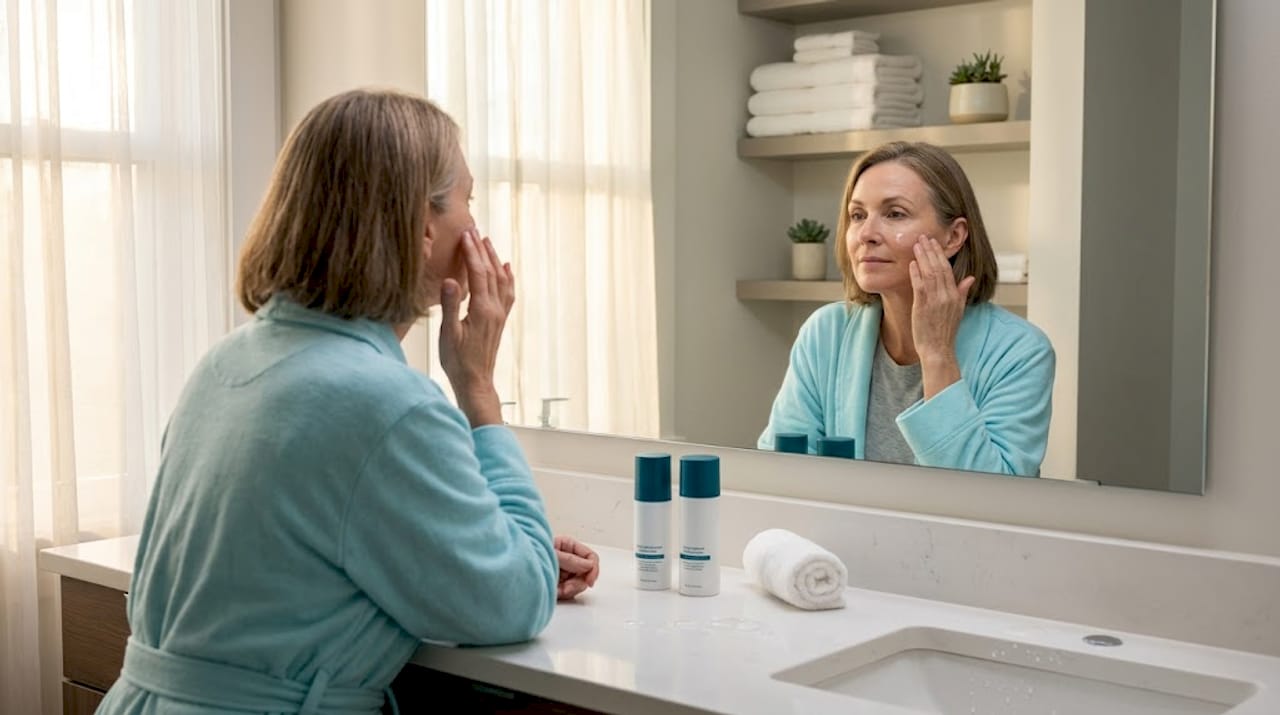
Your skin in your 40s is not your skin in your 20s, and that is not a bad thing. It is biology. Understanding what is mature skin care approach means recognizing that your skin has shifted at a cellular level, and the products and habits that worked a decade ago may now be working against you. This is not about reversing time. It is about supporting your skin’s real needs: deeper hydration, a stronger barrier, and smarter renewal. The sooner you stop treating mature skin like young skin with extra moisturizer, the faster you will see actual results.
Table of Contents
Key Takeaways
Point | Details |
Biology drives your routine | Slower cell turnover and reduced sebum require gentler, more reparative products than standard routines provide. |
Hydration is non-negotiable | Significant water loss occurs in mature skin even when it does not feel dry, making moisturizer a daily requirement. |
Actives need a slow start | Begin retinoids at 0.25% used 2 to 3 nights weekly, introducing one new active every 2 to 4 weeks. |
SPF is your best anti-aging tool | Broad-spectrum SPF 30 or higher applied daily prevents the UV damage responsible for most visible aging. |
Longevity over quick fixes | Consistent, barrier-supportive care over 8 to 12 weeks outperforms any aggressive treatment applied sporadically. |
What is mature skin care approach and why it differs
Mature skin is not simply older skin. Starting in your mid-30s and accelerating through your 40s and 50s, your skin undergoes measurable biological changes that make many standard routines less effective or even counterproductive. Most people know about wrinkles and sagging. Far fewer understand the underlying mechanics driving those changes, which is exactly why so many well-intentioned routines fall short.
Here is what is actually happening beneath the surface:
Slower cell turnover. Skin cells that once renewed every 28 days now take 45 to 60 days in mature skin. Dead cells accumulate on the surface, causing the dullness and rough texture you may be noticing.
Reduced sebum production. Your skin produces less natural oil, which thins the lipid barrier that locks moisture in and keeps irritants out. This is why skin that was once balanced or even oily can suddenly feel tight and dry.
Increased transepidermal water loss. A compromised barrier lets water escape faster than your skin can replenish it. You may not feel dehydrated, but your skin is losing moisture continuously.
Hormonal shifts. Perimenopause and menopause trigger dryness, a measurable loss of elasticity, and reactive conditions including adult acne. Estrogen decline directly affects collagen production and moisture retention.
Thinning skin overall. The dermis loses collagen and elastin steadily after 30, which means skin becomes more fragile and less able to bounce back from irritation or aggressive treatments.
These changes do not call for more products. They call for smarter ones. The mature skin care approach prioritizes repair, protection, and gentle renewal rather than stripping and stimulating.
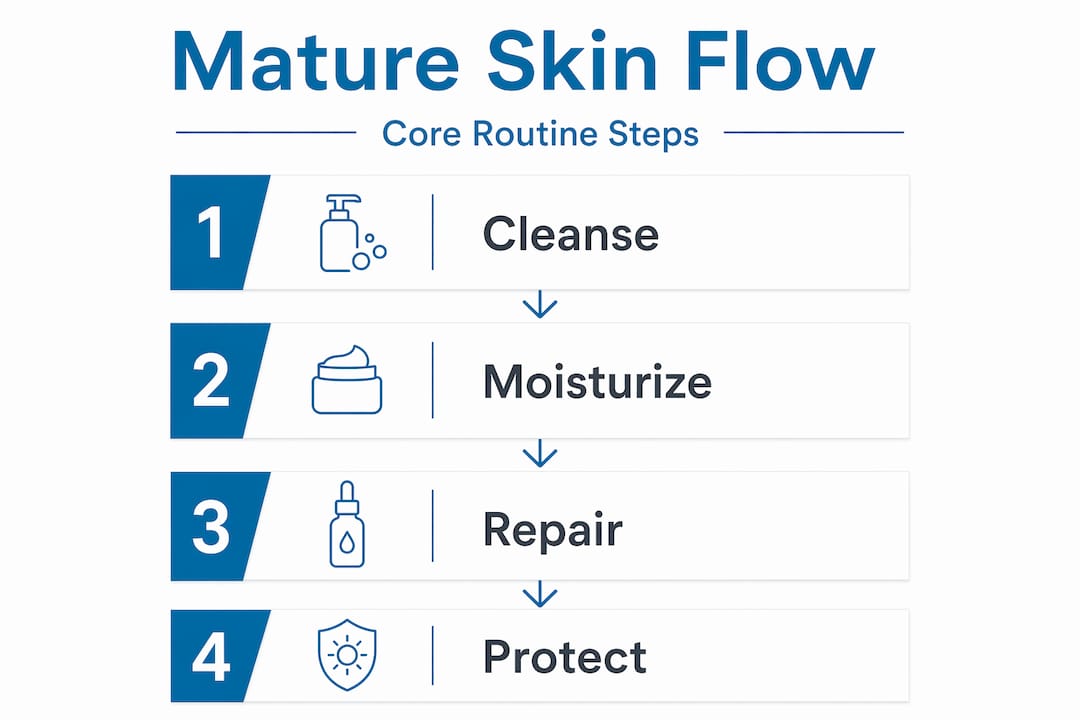
The core routine: cleansing, hydration, repair, and protection
Once you understand the biology, building an effective anti-aging skin routine becomes straightforward. Every step has a specific job, and in mature skin, the order and formulation of each product matters more than in younger skin.
Cleanse without stripping. The foundation of mature skin care is a cream or oil-based cleanser that removes dirt and SPF without dissolving your lipid barrier. Foaming cleansers and anything that leaves skin feeling “squeaky clean” are working against you. That tight, dry sensation after washing is barrier damage, not cleanliness.
Layer your hydration. Apply a hydrating serum with hyaluronic acid or glycerin while skin is still slightly damp. These humectants pull water into the skin from the environment. Follow with a moisturizer that contains emollients like squalane or ceramides to soften and fill gaps in the barrier, then seal with an occlusive ingredient like shea butter to prevent water from escaping.
Add targeted repair with retinoids. Retinoids remain the most evidence-backed ingredient for improving skin texture, boosting collagen production, and speeding up sluggish cell turnover. A routine starting with SPF 30+ and retinoids at a beginner concentration is the proven foundation for mature skin. Start low, go slow.
Use vitamin C in the morning. A stable L-ascorbic acid serum applied before SPF provides antioxidant protection against environmental damage and supports collagen synthesis. Look for formulas between 10% and 15% concentration for efficacy without irritation.
Apply SPF every single morning. Mineral sunscreens at SPF 30+ are preferred for mature skin because zinc oxide and titanium dioxide sit on top of the skin rather than being absorbed, making them better tolerated by a thinner, more reactive barrier. Reapply every two hours if you are spending time outdoors.
Pro Tip: Apply your moisturizer within 60 seconds of finishing your cleanser. The window for trapping residual moisture in the skin is short, and waiting until skin feels dry means you have already lost that advantage.
Learning how to build a skincare routine that accounts for mature skin biology makes each product you use significantly more effective.
Safely adding actives and exfoliation
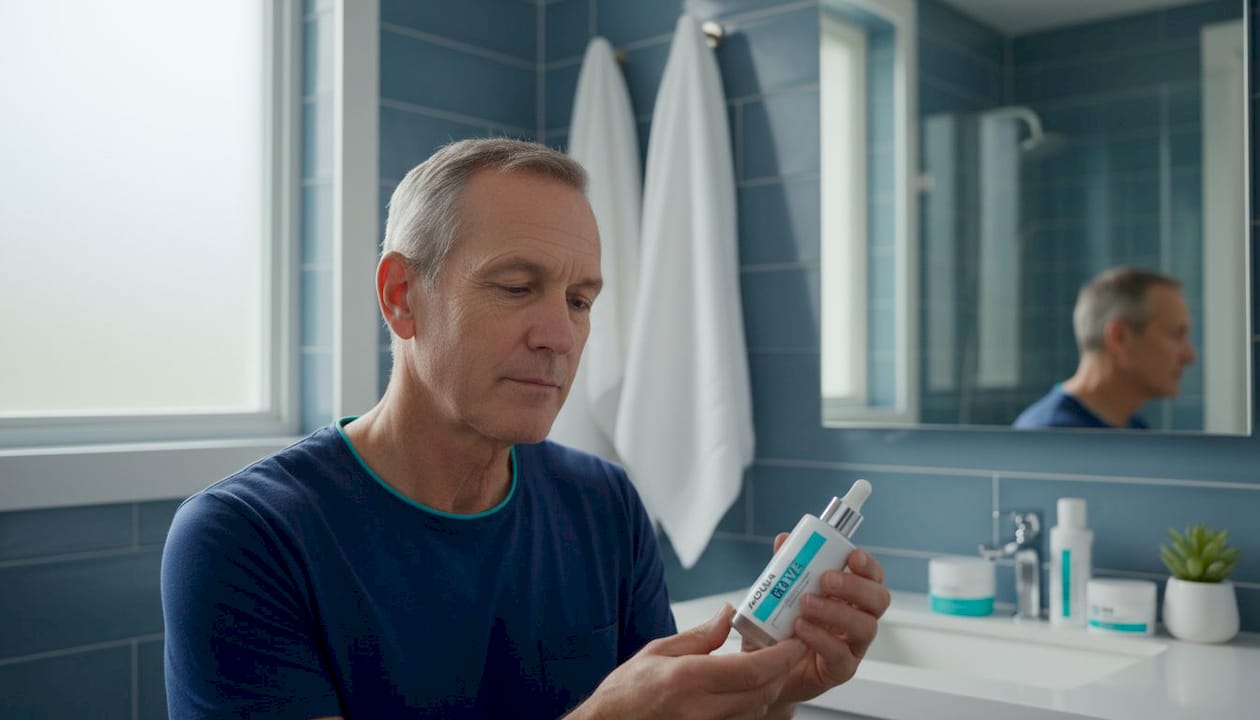
This is where most people either skip an important step or overdo it. Mature skin benefits enormously from active ingredients, but the barrier is more fragile and slower to recover. The goal is steady progress, not fast results that come with a side of irritation and setbacks.
Start retinoids at 0.25 to 0.3% concentration. Use them 2 to 3 nights per week for the first month before increasing frequency. Applying retinoids nightly from the start is one of the most common reasons people give up on them after two weeks of redness and peeling.
Choose chemical exfoliation over physical scrubs. AHAs like glycolic acid at 5 to 10% or lactic acid at 5% dissolve dead cell buildup without the micro-tears that gritty scrubs cause on fragile mature skin. Use them once or twice per week, not daily.
Introduce one active at a time. Adding retinol, a new vitamin C, and an AHA in the same week overloads your barrier’s ability to adapt. Introduce one new active every 2 to 4 weeks and monitor how your skin responds before adding anything else.
Practice pulsing. Pulsing active ingredients in and out of your routine, meaning using them for a few weeks and then taking a short break, reduces chronic irritation and helps your barrier stay intact long-term.
Watch for warning signs. Persistent redness, flaking that does not resolve, or increased sensitivity after adding a new product means you need to pull back, not push through.
Pro Tip: On nights when your skin feels reactive or you have been out in the wind and cold, skip the retinoid and apply a plain moisturizer instead. Listening to your skin week by week produces better long-term results than following a rigid schedule.
Practical tips that most people overlook
Knowing the right products is half the battle. The other half is the routine decisions that seem small but compound over time.
Moisturize even when you do not feel dry. Mature skin loses water steadily through a compromised barrier regardless of how skin feels to the touch. Skipping moisturizer because you “do not feel dry” is a common mistake that accelerates the problem.
Double cleanse at night. Oil cleanser followed by a gentle water-based cleanser fully removes SPF, makeup, and pollutants. Residue left on skin overnight blocks the absorption of serums and treatments and can contribute to breakouts and dullness.
Extend your routine to your neck and décolletage. These areas age at the same rate as your face but rarely get the same attention. Applying SPF, retinoids, and moisturizer below your jawline is one of the most impactful adjustments you can make with zero additional cost.
Commit to a minimum of 8 to 12 weeks. Skin cell turnover in mature skin takes longer, so visible changes from a new routine take time. Switching products every few weeks because you do not see instant results is a cycle that prevents you from ever knowing what actually works.
Lifestyle factors are not optional. Chronic poor sleep disrupts cortisol balance and accelerates collagen breakdown. Smoking measurably impairs circulation to skin tissue. Sun exposure remains the single largest driver of visible aging. A strong product routine does not fully compensate for a lifestyle that undermines it.
For a complete picture of where your skin sits and what it needs, a skin types treatment checklist can help you build a routine mapped to your specific concerns.
My honest take on anti-aging versus longevity skin care
I have worked with enough clients to say this clearly: the biggest mistake I see is people chasing reversal instead of investing in maintenance. There is a growing shift in dermatology away from aggressive anti-aging treatments toward what is now being called longevity skin care. The distinction matters. Longevity care is proactive. It focuses on protecting what you have, supporting your skin’s natural function, and building resilience over time rather than trying to undo damage after it is visible.
In my experience, the clients who see the best results are not the ones who come in with the most products. They are the ones who are consistent, patient, and honest about what their skin actually needs. I have seen people with a five-step routine outperform others using fifteen products, simply because the simpler routine was built around barrier support and worn without variation for twelve weeks.
What I keep coming back to is this: the benefits of non-surgical skin treatments multiply significantly when there is a strong home routine behind them. Professional treatments are not a replacement for daily care. They are an amplifier. When your barrier is healthy, your skin responds better to every treatment you receive.
The most underrated piece of mature skin care is gentleness. Not because mature skin is weak, but because it recovers more slowly. Respecting that recovery time is not babying your skin. It is working with your skin’s actual biology instead of against it.
— Lux
Transform your mature skin with professional care
Understanding the science behind mature skin is the first step. Putting it into practice with professional support is where real, visible change happens.
At Luxveritae, every treatment is designed around your skin’s specific biology and goals, not a one-size-fits-all approach. The team at Lux Veritae Skin Spa combines proven clinical techniques with personalized care plans that complement and accelerate your home routine. Whether you are looking for targeted texture improvement, deeper hydration support, or a signature treatment like BB Glow that works with your natural skin tone, there is a path forward tailored specifically for you.
Explore skin care treatment packages built for mature skin concerns, or book a treatment online to find the right fit for where your skin is right now. Your skin has earned a smarter approach.
FAQ
What does a mature skin care approach actually mean?
A mature skin care approach means adapting your routine to address biological changes like slower cell turnover, reduced oil production, and increased water loss. It prioritizes hydration, barrier support, gentle exfoliation, and daily SPF rather than aggressive treatments.
At what age should you start using mature skin care products?
Most dermatologists recommend adjusting your routine to address mature skin concerns starting in your mid-30s, when cell turnover begins slowing and collagen production starts declining, even if visible signs have not yet appeared.
Can you use retinoids on mature skin?
Yes. Retinoids are one of the most effective ingredients for mature skin, but you should start at 0.25 to 0.3% concentration used 2 to 3 nights per week and increase frequency gradually to avoid irritating a thinner, more sensitive barrier.
How long does it take to see results from a mature skin routine?
Because mature skin cell turnover takes 45 to 60 days instead of the typical 28, most people need a consistent 8 to 12 week commitment before seeing meaningful improvement in texture, tone, and hydration levels.
Is natural mature skin care effective?
Natural ingredients like squalane, shea butter, and plant-based ceramides can be highly effective for supporting the lipid barrier and hydration in mature skin. They work best when combined with evidence-backed actives like vitamin C and low-concentration retinoids rather than used as a complete replacement.
Recommended
Comments