Most skin concerns live on more than one level. Sun spots and dullness sit near the surface, while laxity, lines and acne scarring start deeper. That is why so many of our Scottsdale clients ask about combining the dual-wavelength MultiFrax laser with RF microneedling. Each treatment is strong on its own. Planned together, they cover the whole depth of the skin.
What the MultiFrax laser does
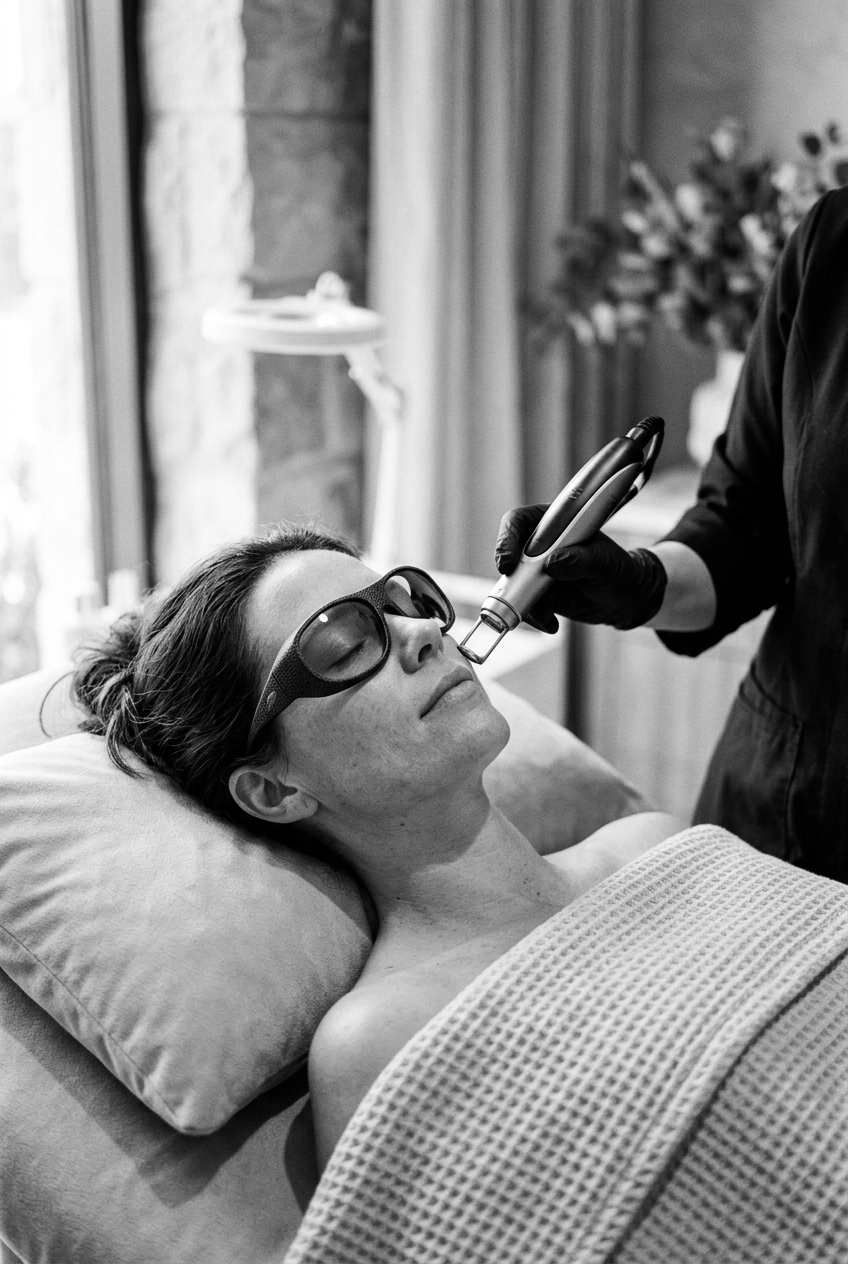
MultiFrax is a non-ablative fractional laser that delivers two wavelengths in one session:
- 1927 nm works near the surface to lift pigment, sun damage and uneven tone, and to brighten dull skin.
- 1550 nm reaches deeper to stimulate collagen, soften fine lines and refine texture and acne scarring.
Because it is fractional, the laser treats tiny columns of skin and leaves healthy tissue in between, which helps the skin recover quickly. It is the technology behind our Glass Skin Laser.
What RF microneedling adds
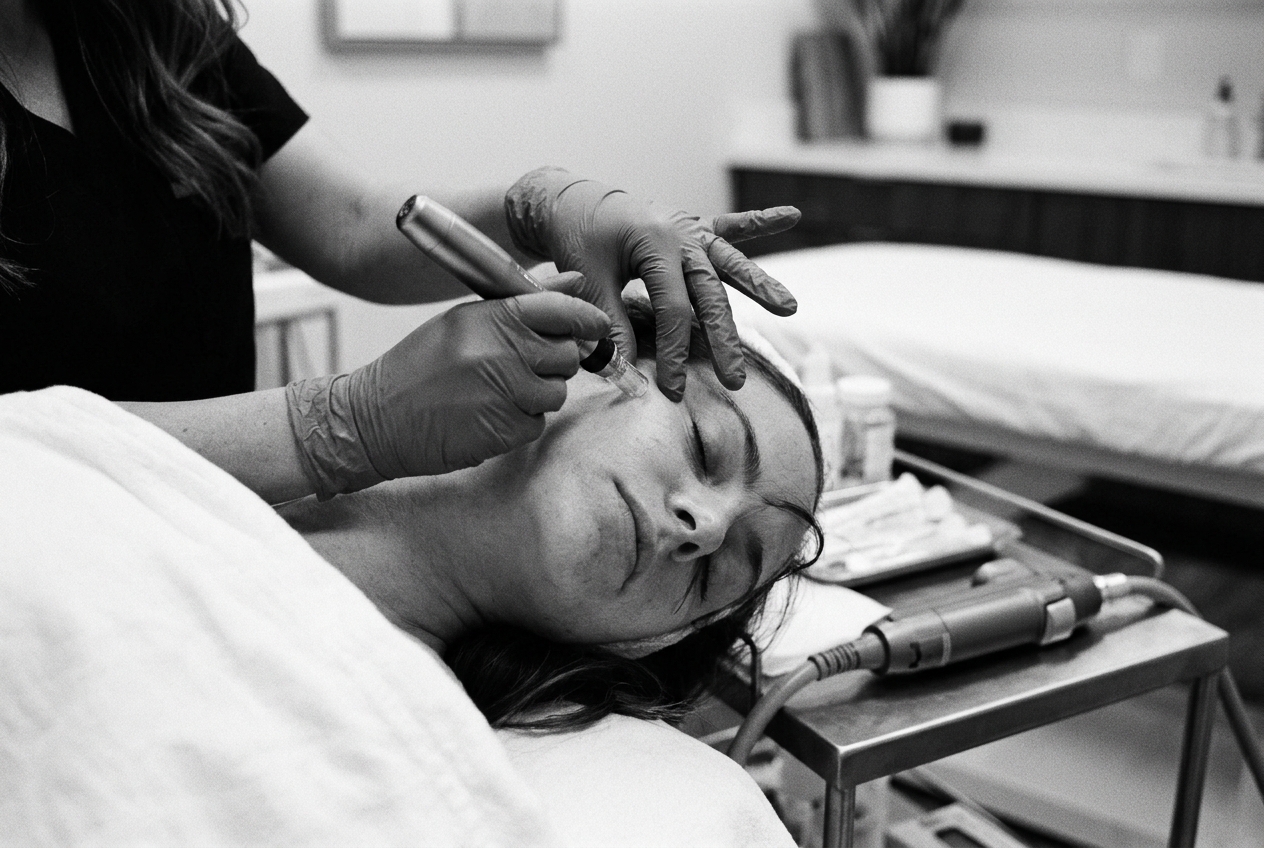
RF microneedling uses very fine needles to deliver radiofrequency energy beneath the surface. The heat triggers the skin to rebuild collagen and elastin, so it looks firmer and smoother over the following months. It is one of our favourite treatments for:
- Loss of firmness on the face, neck and décolleté
- Enlarged pores and crepey texture
- Acne scarring and stretch marks
Why combine them
The laser perfects the surface. Radiofrequency rebuilds the foundation.
- Two depths, one plan. MultiFrax refines tone and texture, while RF microneedling works on structure and firmness.
- More complete results. Pigment, glow, pores, lines and laxity are addressed together rather than one at a time.
- Efficient scheduling. Treatments are alternated or spaced across a series, so your skin has time to recover between sessions.
Your provider decides the order and spacing for your skin. Many clients alternate the two treatments about four weeks apart over a series of three to six visits.
Insulated vs non-insulated needles: what's the difference?
Not all RF microneedling is the same. The needle design changes where the energy goes.
| Insulated needles | Non-insulated needles | |
|---|---|---|
| Where the heat goes | Mainly at the needle tip, deep in the skin | Along the full length of the needle |
| Surface heating | Very little, as the upper skin is protected | More, as the surface is heated too |
| Best suited to | Deeper scarring, laxity, and darker skin tones that need surface protection | Overall texture, pores and fine lines across the skin |
| Downtime | Usually minimal surface redness | Often a little more redness and pinpoint marks |
Insulated needles are coated along the shaft so energy is released at the tip. This targets the deeper layers where collagen remodeling happens and helps protect the surface, which can lower the risk of pigment changes in darker or sun-sensitive skin.
Non-insulated needles release energy along their full length, so they treat every layer the needle passes through. That makes them useful for general resurfacing of texture and pores, sometimes with a little more short-term redness.
Neither is simply "better". The right choice depends on your concern, your skin tone and how much downtime you want. At your consultation we will explain which needle type and depth suit your treatment plan.
Pricing
- RF Microneedling: Face $899 · Neck $499 · Décolleté $699 · All three $1,999
- RF Microneedling + PRX-T33: Face $1,199 · Neck $799 · Décolleté $999 · All three $2,900
- Glass Skin Laser (MultiFrax): Face $750 · Neck $200 · Décolleté $300 · All three $1,200
Cherry® financing is available. Book your consultation to build your combined plan in Scottsdale.