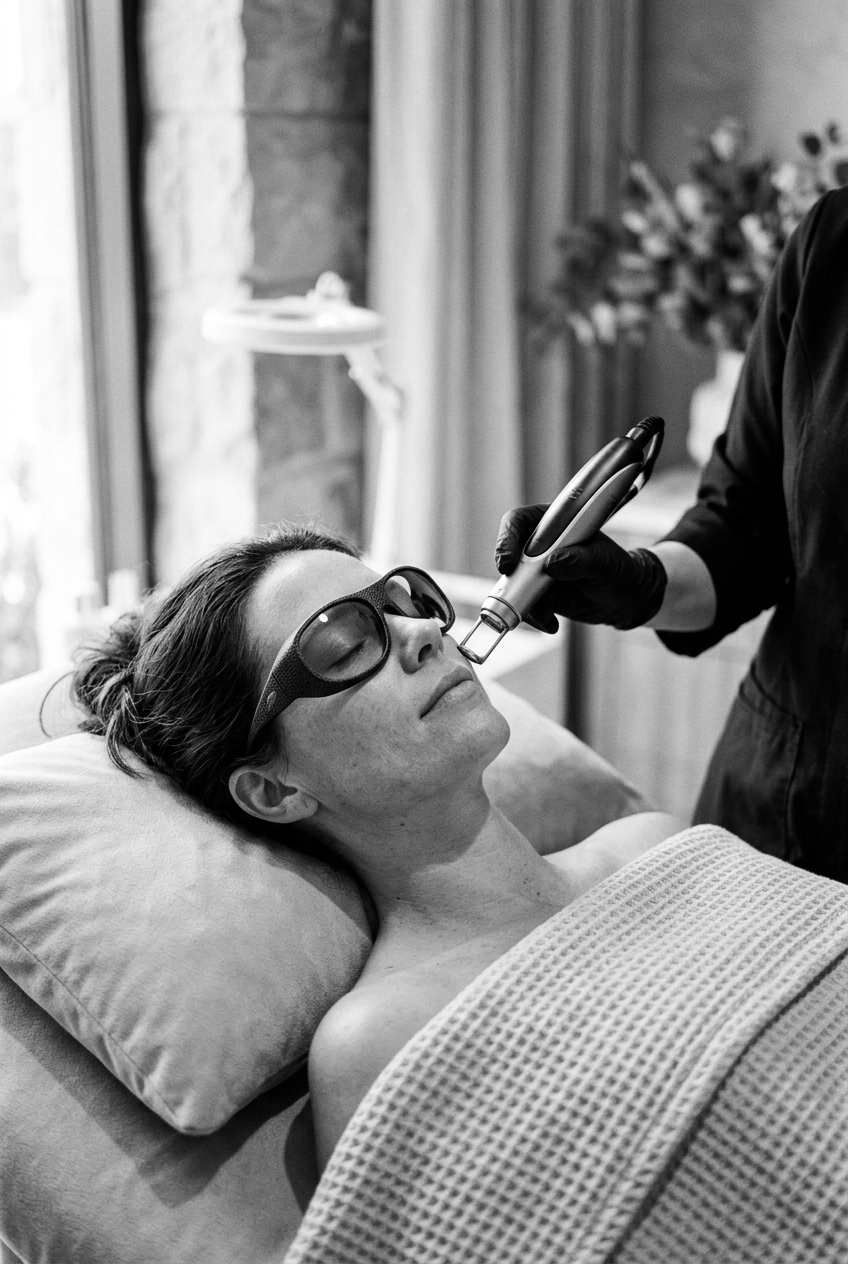

If you have been researching erbium vs CO₂ laser: which is right for you, you have probably noticed that both are described as resurfacing powerhouses, and that most explanations stop there. For Scottsdale residents, whose skin has often spent years in strong desert sunlight, the distinction matters. The two lasers behave differently in the skin, and the better choice depends on your concerns, your tolerance for downtime, and your skin type.
This guide explains the differences plainly, so you arrive at a consultation informed rather than overwhelmed.
What is the difference between erbium and CO₂ laser resurfacing?
Both are ablative lasers. They remove microscopic columns or layers of skin in a controlled way, and the skin then rebuilds itself with fresh tissue and new collagen. The difference lies in the wavelength each device uses, and how that wavelength interacts with water in the skin.
- CO₂ laser (about 10,600 nm): Absorbed by water more gently, so energy travels deeper and creates more heat in the surrounding tissue. That heat is associated with stronger collagen remodeling and tightening.
- Erbium laser (about 2,940 nm): Absorbed by water very efficiently, so it vaporizes tissue precisely with less residual heat. This typically means a more superficial, finely controlled treatment.
A helpful comparison is a chisel versus a scalpel. CO₂ works more deeply and warms the tissue as it goes. Erbium works with greater precision and less thermal spread.
The right laser is rarely the strongest one. It is the one that matches your concern, your skin, and the downtime you can realistically give it.
You can read more about each approach on our CO₂ laser resurfacing and erbium laser resurfacing pages.
How do recovery and downtime compare?
Because CO₂ treatment reaches deeper and generates more heat, recovery is generally longer. Because erbium is more superficial with less thermal effect, recovery is often shorter and gentler. Individual healing varies, and your treatment settings strongly influence the experience.
In general terms, you can expect:
- With CO₂: More noticeable redness, swelling, and peeling or crusting, with a more structured aftercare routine. Pinkness can linger for some time as the skin remodels.
- With erbium: Typically milder redness and a quicker return to makeup and social activity, though you should still expect a real healing period.
Neither treatment is a lunchtime procedure. Plan your calendar around healing, particularly around events, travel, and any time outdoors in strong sun.
Which laser is better for wrinkles, texture, or scarring?
The answer depends on depth. Here is a general framework we use to start the conversation. It is not a promise of results, and suitability is always confirmed at consultation.
CO₂ may be considered when you want:
- Improvement in moderate to deeper lines and lax-looking skin
- Meaningful collagen stimulation and a firmer feel
- Help with more established texture irregularities or certain scars
Erbium may be considered when you want:
- Refinement of fine lines and surface texture
- Smoother tone with a shorter recovery
- A more conservative, controlled approach, or treatment of delicate areas such as around the eyes, neck, or hands
Some people benefit from a thoughtful combination, or from a staged plan: a gentler session first, then a deeper one if you want more change. Results vary, and more than one treatment may be advised.
Which laser makes sense for Scottsdale skin and sun exposure?
Living in Arizona means cumulative sun exposure is part of nearly everyone's skin history. That often shows up as uneven pigment, fine crinkling, rough texture, and sun-related changes that have built up over years. It also shapes how we plan treatment.
A few considerations specific to our climate:
- Sun avoidance is essential. Freshly resurfaced skin is vulnerable. Healing in the cooler months is often easier to manage, although the right timing is individual.
- Skin tone matters. Deeper or more reactive skin types can be more prone to post-inflammatory pigmentation after ablative treatment. A careful assessment, and sometimes a gentler or different option, is part of responsible planning.
- Prep and aftercare count. Skin conditioning beforehand and diligent sun protection afterward influence how comfortably you heal.
If pigment is your primary concern rather than texture or lines, a resurfacing laser may not be the first step. A targeted approach such as a Cosmelan depigmentation peel is sometimes better suited, and we would rather say so than recommend more than you need.
Are there alternatives if I want less downtime?
Yes. Ablative lasers are not the answer for everyone, and a good provider will say so. Depending on your goals, you may want to explore:
- Radiofrequency microneedling, which targets texture and firmness with a different healing profile
- Radiofrequency-based tightening, for skin laxity without surface removal
- Non-ablative or glass-skin style laser treatments, for brightness and refinement with less recovery
- Plasma fibroblast, for select areas of lax skin, such as the eyelids
Browse the full range on our treatments page. Often the best plan layers a stronger intervention with a maintenance approach, so the results you invest in are supported over time.
Frequently asked questions
Is erbium or CO₂ laser better for anti-aging?
Neither is universally better. CO₂ is often associated with stronger tightening and deeper remodeling, while erbium offers precision and a gentler recovery for fine lines and surface texture. The best choice depends on your skin, your concerns, and your downtime, and your provider should help you weigh these at consultation.
How long will I need to avoid the sun after laser resurfacing?
There is no single timeline, as it depends on the treatment depth and how your skin heals. Expect to avoid direct sun exposure during the healing period and to use diligent daily protection afterward. You will receive specific instructions based on your plan.
Can I have both lasers in the same treatment plan?
Sometimes. Some plans use different lasers on different areas of the face, or at different stages. Whether a combination is appropriate depends on your skin, health history, and goals, which we review during a consultation.
Ready to find your right fit?
Choosing between erbium and CO₂ is easier with someone examining your skin in person. We invite you to book a private consultation at Lux Veritae Skin Spa in Scottsdale, where we will discuss your goals, assess your skin, and recommend only what suits you.